Soekarno-Hatta Airport Conducts Cybersecurity Resilience Test Through Ransomware Attack Simulation Ahead of Year-End Holidays
TANGERANG NEWS –Ahead of the busy 2025 Christmas and 2026 New Year period (Nataru), PT Angkasa Pura Indonesia (InJourney Airports) Soekarno-Hatta International Airport (Soetta) Branch Office conducted the Cyber Security Exercise 2025.
This strategic exercise aims to test and strengthen the airport’s operational preparedness in facing potential cyber threats that could disrupt vital services.
Soetta Airport, as the largest and busiest airport in the Asia Pacific, recognizes that cyber disruptions can have a significant impact on national mobility and the country’s reputation.
This exercise focused on strengthening the response to threats that could disrupt vital operational systems, such as check-in, baggage handling, SCADA, and IoT.
The peak of the exercise simulated a ransomware attack on domestic check-in services at Terminal 3.
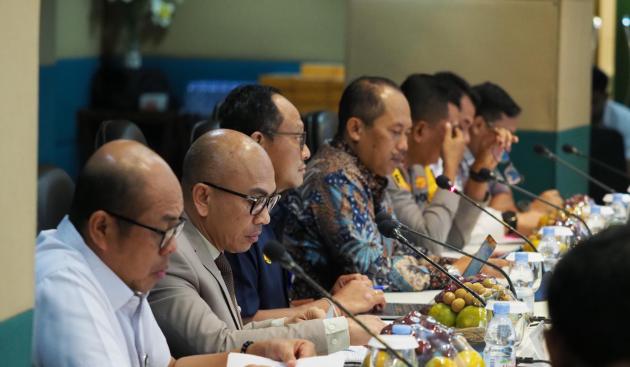
This realistically designed exercise involved not only internal airport personnel but also collaboration between key national stakeholders.
Participating agencies included the Coordinating Ministry for Political, Legal, and Security Affairs, the National Cyber and Crypto Agency (BSSN), the State Intelligence Agency (BIN), the Ministry of Transportation, and the Indonesian National Police.
This collaboration aligns with the national cybersecurity framework regulated under Presidential Regulation No. 82 of 2022 and BSSN Regulation of 2024, which mandate the strengthening of security for critical infrastructure in the air transportation sector.
Operational Readiness Ensures Best Service
The General Manager of the Soekarno-Hatta International Airport Branch Office stated that cyber resilience is an integral part of the airport’s operational readiness.
“Operational readiness is not only determined by on-the-ground services but also by the resilience of the entire digital system supporting passenger and aircraft movement,” he said.
Ahead of the peak Nataru holiday period, which historically records a significant increase in passenger traffic, cyber resilience becomes extremely crucial.
“We are committed to ensuring all systems operate optimally so that service to the public remains safe, smooth, and reliable,” he concluded, hoping that synergy from all parties can strengthen the airport’s recovery capabilities against cyber incidents.
Soekarno-Hatta International Airport
Soekarno-Hatta International Airport is Indonesia’s primary international gateway, located in Jakarta. Named after the country’s first president and vice president, it opened in 1985 to replace the overburdened Kemayoran Airport. The airport’s design incorporates traditional Indonesian architectural elements, such as Javanese *joglo* roofs, within its modern terminals.
Terminal 3
Terminal 3 is a major passenger terminal at Beijing Capital International Airport, which was constructed specifically for the 2008 Summer Olympics. Opened in 2008, it was designed by renowned architect Norman Foster and is one of the world’s largest airport terminals, featuring a dramatic dragon-inspired roof design. It serves as a primary international gateway to China and a symbol of the country’s modern infrastructure and rapid development.
Coordinating Ministry for Political, Legal, and Security Affairs
The Coordinating Ministry for Political, Legal, and Security Affairs is a key Indonesian government institution responsible for synchronizing policies across ministries in the areas of politics, law, and national security. It was formally established in the late 1990s during a period of administrative reform, evolving from earlier coordinating bodies to help ensure cohesive governance and stability in the post-Suharto era.
National Cyber and Crypto Agency (BSSN)
The National Cyber and Crypto Agency (BSSN) is Indonesia’s central institution responsible for cybersecurity, cryptography, and signals intelligence. It was officially established as a standalone agency in 2017, evolving from previous cyber units within the country’s intelligence and communications structures, to address growing digital threats. Its mandate is to protect Indonesia’s national critical information infrastructure and coordinate the national response to cyber incidents.
State Intelligence Agency (BIN)
The State Intelligence Agency of Indonesia, known as BIN (Badan Intelijen Negara), is the country’s primary intelligence service, responsible for both domestic and foreign intelligence. It was formally established in its current structure in 2001, succeeding several previous intelligence bodies dating back to the early years of Indonesian independence. BIN plays a key role in national security, reporting directly to the President of Indonesia.
Ministry of Transportation
The Ministry of Transportation is a government department responsible for national transport policy, infrastructure, and regulation. Its history is tied to the development of modern state administration, typically emerging in the 19th or 20th century as countries industrialized and sought to standardize and expand their road, rail, and later air networks. For example, the U.S. Department of Transportation was established in 1966 to coordinate federal transportation projects and ensure safety across all modes of travel.
Indonesian National Police
The Indonesian National Police (POLRI) is the national law enforcement agency of Indonesia, established in its modern form in 1946 following the country’s independence. It was originally part of the Indonesian military (ABRI) until 1999, when it was formally separated to become a independent civilian force focused on public security and order.