Shanghai, Jiangsu, Zhejiang, and Anhui Conduct the Nation’s First Regional Collaborative Legislation in the Government Services Sector
|
|
|
Yaohai District in Hefei, Anhui, has set up a comprehensive service window for the ‘One-Network Service’ government service platform in the Yangtze River Delta region at its government service hall. The photo shows staff explaining procedures to a citizen.
|
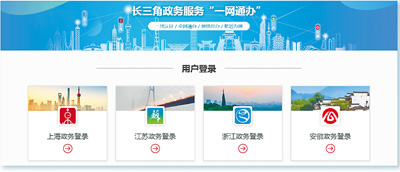
An invisible “road” has been laid across the Yangtze River Delta region. This “road” is not a physical one carrying traffic and goods, but a “highway” flowing with information, data, and services—the Yangtze River Delta “One-Network Service” for government services.
In late March, the standing committees of the people’s congresses of Shanghai, Jiangsu, Zhejiang, and Anhui successively voted to adopt the “Regulations on Promoting the ‘One-Network Service’ for Government Services in the Yangtze River Delta” (hereinafter referred to as the “Regulations”), which will take effect simultaneously on May 1st this year.
As the nation’s first regional collaborative legislation in the government services sector, it is not merely a written regulation but a “joint action” with highly coordinated content and synchronized steps. It signifies that after years of practical exploration, the Yangtze River Delta “One-Network Service” has solidified this reform and innovation achievement in legal form, establishing unified, clear, and efficient “traffic rules” for this government services “highway.”
Building Consensus and Unifying Rules
From “Potted Landscapes” to a “Vast View”
The Yangtze River Delta region, with less than 4% of the nation’s land area, generates nearly a quarter of the country’s total economic output. The high-frequency flow of economic factors and dense personnel exchanges create a natural demand for cross-regional government services.
In November 2018, the integrated development of the Yangtze River Delta region was elevated to a national strategy, accelerating the realization of the “One-Network Service” vision. To date, the platform jointly developed by the three provinces and one municipality has opened over 300 government service items, handling more than 15.32 million fully online procedures.
However, the process has not been smooth sailing. “In the past, we mostly signed spontaneous cooperation agreements ‘point-to-point’ with closely interacting neighboring provinces, like ‘pairing up’,” said a director from a district government service center in Shanghai. While this model could solve some problems, it was difficult to form regional synergy. Inconsistent standards and scattered items were like isolated “potted landscapes,” hard to connect into a cohesive “vast view.”
The real bottleneck lies at a deeper institutional level. Business establishment, social and medical insurance transfers, cross-regional housing fund withdrawals… Behind each
Shanghai
Shanghai is a major global metropolis and financial hub on China’s east coast, which grew from a modest fishing village into a significant treaty port following the 19th-century Opium Wars. Its iconic skyline, symbolized by the Pudong district’s modern towers, reflects its rapid 20th and 21st-century development, while areas like the Bund preserve its colonial-era history and architectural legacy.
Jiangsu
Jiangsu is a coastal province in eastern China, historically renowned as a cultural and economic heartland for centuries. It was a core region of the Wu culture and the later Southern Dynasties, and its Grand Canal cities like Yangzhou and Suzhou flourished as pivotal hubs of trade, scholarship, and arts. Today, it is one of China’s most prosperous provinces, famous for its classical gardens, silk production, and historic water towns.
Zhejiang
Zhejiang is a coastal province in eastern China, historically renowned as a center of culture, commerce, and silk production since ancient times. It is home to significant cultural sites like the West Lake in Hangzhou, a UNESCO World Heritage site celebrated for its classical gardens and temples, and the ancient water towns such as Wuzhen. The province has a profound intellectual legacy, being the birthplace of the influential Neo-Confucian scholar Zhu Xi during the Song Dynasty.
Anhui
Anhui is a province in eastern China known for its picturesque Huangshan (Yellow Mountains) and well-preserved ancient villages like Hongcun and Xidi, which are UNESCO World Heritage sites. Historically, it was part of significant cultural movements, being the birthplace of Huizhou culture—a merchant-based society from the Ming and Qing dynasties that greatly influenced Chinese architecture, commerce, and arts. The province is also famed for its traditional Anhui-style architecture, distinctive local opera, and as a center for ink production and Chinese literati culture.
Yangtze River Delta
The Yangtze River Delta is a highly developed and economically vital region in eastern China, centered on Shanghai and encompassing parts of Jiangsu, Zhejiang, and Anhui provinces. Historically a fertile agricultural area and a hub of trade and culture for centuries, it was a key center of the Wu and Yue cultures. Since China’s economic reforms, it has become the country’s leading commercial and industrial powerhouse, driving national growth.
Yaohai District
Yaohai District is a central urban district of Hefei, the capital of Anhui Province in eastern China. Historically, it was a significant commercial and transportation hub, with parts of its development closely tied to the old Hefei railway station and the city’s industrial growth. Today, it is a modern administrative and residential center that retains elements of Hefei’s historical urban core.
Hefei
Hefei is the capital city of Anhui Province in eastern China, historically known as a strategic military stronghold during the Three Kingdoms period (220-280 AD). Today, it is a major modern hub for science, education, and manufacturing, home to institutions like the University of Science and Technology of China.
Puyida platform
The Puyida platform is a historical site located in the ancient city of Jiaohe, Xinjiang, China. It served as a Buddhist monastery and teaching platform, dating back to the period when Jiaohe was a major hub along the Silk Road (approximately from the 2nd century BC to the 14th century AD). The platform’s ruins reflect the region’s significant role in the spread of Buddhism and cultural exchange.