When traveling from Tokyo Station towards Nagoya and Osaka on the conventional line (Tokaido Main Line), have you ever noticed the atmosphere inside the train changes slightly at Atami Station?
That’s no coincidence, as the operating company changes at this very station.
The section from Tokyo to Atami is the area of JR East, but from Atami onward, it becomes the territory of JR Central.
The color of the station signs and the uniforms of the crew change completely here.
But what about the Tokaido Shinkansen?
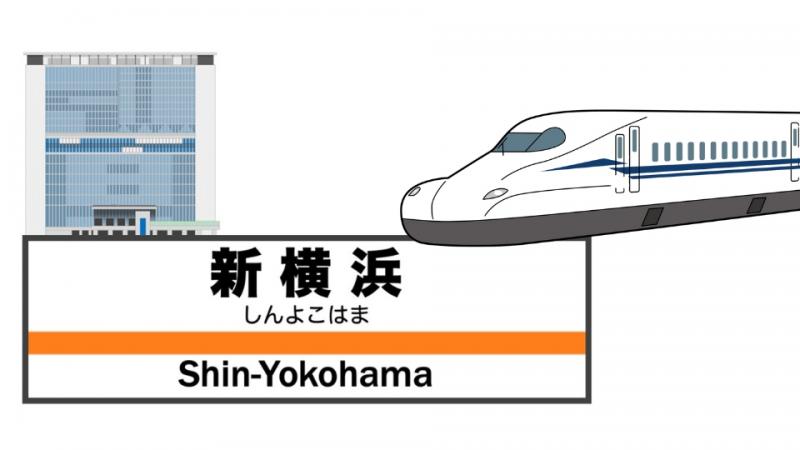
Departing from Tokyo Station, passing through Shinagawa and Shin-Yokohama—areas deep within JR East’s territory—and even after Atami Station, the entire route to Shin-Osaka Station is consistently operated by JR Central.
“The conventional line splits east and west at Atami, so why is the Shinkansen from Tokyo to Shin-Osaka handled by JR Central? Wouldn’t it make sense for Shin-Yokohama to be JR East’s responsibility?”
This is a question many have, not just railway enthusiasts.
In fact, hidden within this is a complex and grand drama involving politics, economics, and the non-negotiable “practical interests” of railway personnel from about 35 years ago, when the Japanese National Railways (JNR) was privatized.
The Reason the Conventional Line Was Split at Atami: “Local Focus” and “Management Balance”
First, let’s unravel the story of the conventional line.
When JNR was divided and privatized, the highest priority was “management closely tied to local regions.”
Learning from the JNR era, where a single central organization managed everything from Hokkaido to Kyushu, the goal was to create companies of a size appropriate to the actual conditions of each region.
“JR East,” with its massive network supporting commuters and students across the Kanto region, and “JR Central,” responsible for transportation in the Chukyo region centered on Nagoya and Shizuoka.
Where to draw the boundary between these two companies?
The arrow pointed to Atami, a geographical boundary where the flow of people changes significantly.
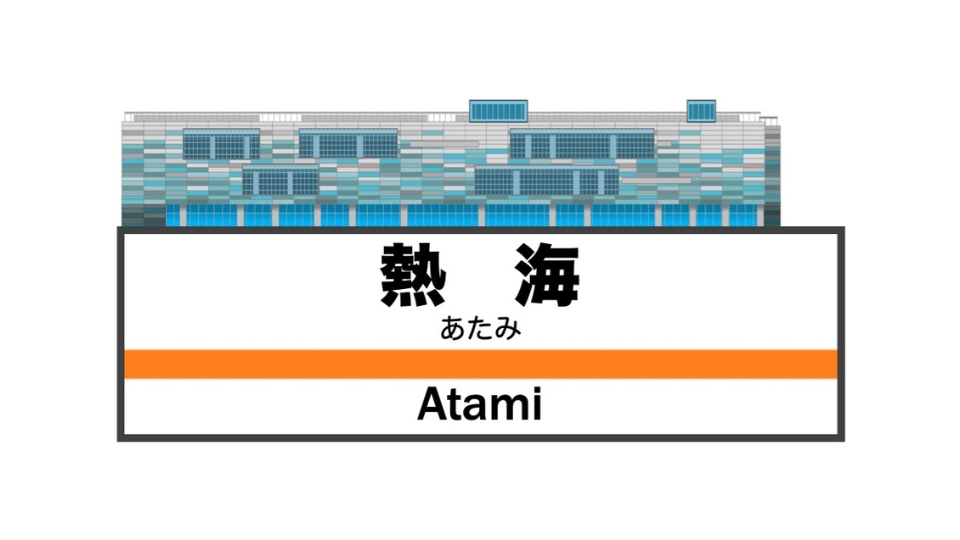
It was also a topographically challenging area with the long Tanna Tunnel and historically the boundary between former railway administration bureaus (Tokyo South Bureau and Shizuoka Bureau), making it a logical operational dividing point.
However, that wasn’t the only reason.
There was a sophisticated calculation for “management balance” involved.
What if JR East, with its massive metropolitan market, also controlled the lucrative Tokaido Main Line area including Shizuoka?
JR East would become overwhelmingly large, while JR Central’s profit base would become too weak to survive as an independent company.
“To ensure the three Honshu companies can each manage themselves soundly.”
This fairness (balance adjustment) was another major reason for drawing the line at Atami.
Why Did the Shinkansen Have to Be “One Continuous Line”?
On the other hand, a completely different logic applied to the Tokaido Shinkansen.
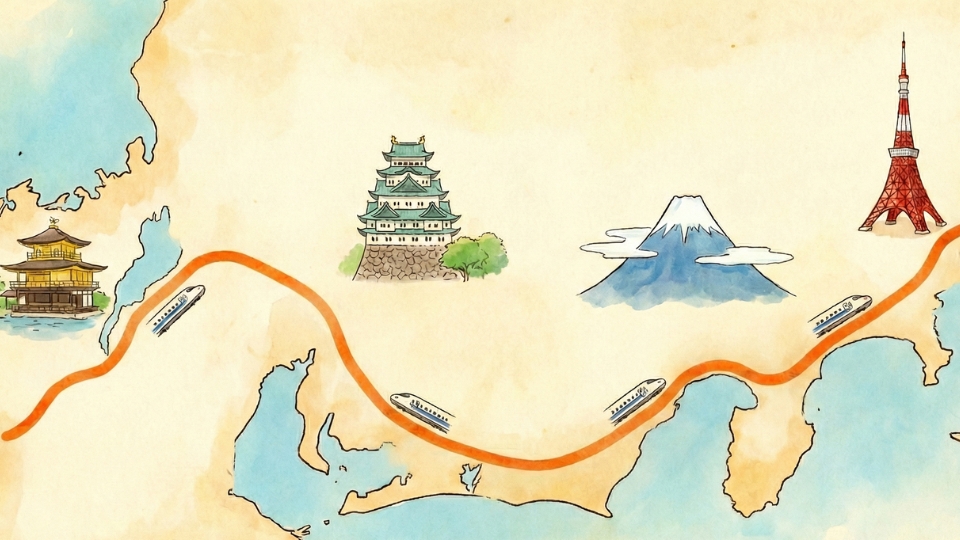
It was the technical requirement to “operate the Tokyo-Osaka section as a single, integrated system.”
The Shinkansen, running at speeds over 200 km/h, operates on a precise, second-by-second schedule.
Splitting the command system (COMTRAC) that manages this operation or the coordination of rolling stock at Atami Station, creating a handover between companies, would pose significant risks to both safety and efficiency.
“The Tokaido Shinkansen, as a major artery, should be managed as a single, integrated entity, like one living organism.”
This technical judgment rejected the split proposal.
And here too, “management balance” played a decisive role.
For JR Central, with its relatively small conventional line market, the Tokaido Shinkansen is its lifeline.</p