Every technological transformation triggers adjustments in industrial structure and stirs regional economic patterns.
The automotive industry is no exception.
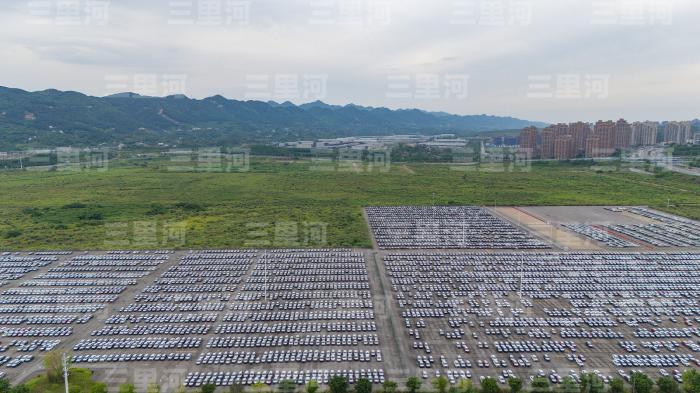
Recent information indicates that in 2025, Chongqing’s automotive industry reached a new high, with annual vehicle production hitting 2.788 million units, a growth of 9.7%, solidifying its position as the top city and third among provinces.
This means Chongqing will surpass Shenzhen, reclaiming the title of “China’s Top Automotive City” after nine years.
In urban competition, one either advances or falls behind. Against the backdrop of new energy vehicles surpassing 50% of domestic new car sales and China’s exports continuing to lead globally, can Chongqing hold onto first place? What stage will the competition among top cities enter?
Currently, although other major national automotive industry cities have not fully released their final 2025 data, the proactive announcement can be seen as an early reveal.
Local media stated outright that Chongqing’s return to the top was expected. Based on statistical information and industry trends from January to November 2025 released by various cities, Chongqing had already secured the annual crown.
In fact, the mountain city is no stranger to the top position.
Rewinding to 2014–2016, Chongqing held the top spot for Chinese city vehicle production for three consecutive years.
However, the main drivers then were roaring fuel-powered vehicles, with local brands like Changan and Lifan at their peak.
As the industry shifted towards electrification and intelligence, traditional manufacturing bases universally faced “track-changing” challenges. Chongqing also experienced transformation pains, with vehicle production declining year by year, dropping to only 1.383 million units in 2019.
With the recent years’ new energy vehicle layout beginning to show results, Chongqing gradually caught up. The strong return of Chongqing’s automotive industry reflects a comprehensive upgrade of its industrial cluster.
It was stated that Chongqing has now formed a vehicle system led by two major players, with over ten vehicle enterprises, and has built a new energy and intelligent connected vehicle parts industrial cluster covering 3 major systems, 12 major assemblies, and 56 components.
Inside a super factory, robotic arms rotate and move with millimeter precision. A new energy vehicle goes from a steel sheet to a finished vehicle rolling off the line in just 4 steps, taking merely 3 minutes.
In 2025, Chongqing’s new energy vehicle production reached 1.296 million units, accounting for 46.5% of the city’s total vehicle output—a proportion approaching half. It also maintained rapid growth momentum with a high increase of 36%, and the industrial cluster scale exceeded 800 billion yuan.
Where did the turning point occur?
Upon closer observation of the transformation path, Chongqing’s success in this round of adjustment was not accidental.
In recent years, a series of policy measures were formulated to support the transformation and upgrading of the automotive industry, encouraging enterprises to increase R&D investment and promoting the industry’s development towards higher-end, intelligent, and green directions.
It is worth noting that the adjustment in vehicle production statistical methodology was also an important factor influencing ranking changes.
Starting in 2025, the statistical method for vehicle production shifted from the long-used “enterprise legal entity location” to “production location.”
This change significantly impacted cities like Shenzhen, which host large automotive enterprises. For example, vehicles produced by BYD at other bases are no longer counted in the production data of its headquarters location.
While the statistical method adjustment was an important external force reshaping the competitive landscape among cities, the more crucial factor is the impact of the automotive industry’s entry into the new energy era on the industrial structure.
In the new energy vehicle field, Chongqing is competing with cities like Shanghai and Shenzhen. Shanghai has the strong support of the Tesla Gigafactory and SAIC Motor; Shenzhen is the headquarters of BYD with a complete new energy vehicle industry chain; Chongqing’s advantages lie in its solid industrial foundation, ample space resources, and strong policy support.
However, the competition for China’s top automotive city has never been a simple output race; it is a comprehensive contest of industrial systems, innovation capabilities, and cluster effects.
As night falls, automotive factories in Chongqing remain brightly lit.