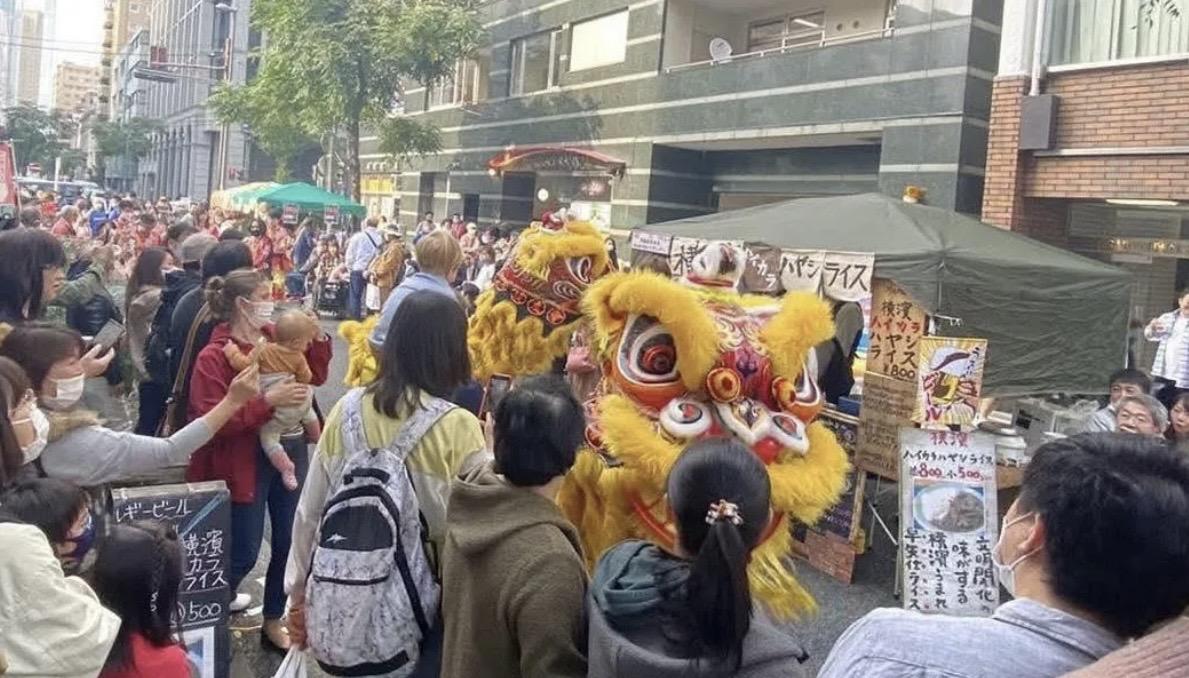
“Kannai Food & Haikara Festival” held in Kannai, featuring food stalls and Chinatown lion dance.
Part of Benten-dori (Naka Ward, Yokohama) and Kannai Sakura-dori will host the “Kannai Food & Haikara Festival” on April 12. The event is organized by the Kannai Town Development Promotion Association.
The event aims to create liveliness in the Kannai area, with over 30 local restaurants and other food vendors setting up stalls. Visitors can enjoy walking around and sampling food from various establishments in the area.
As a regional collaboration project, a “Yokohama Chinatown Lion Dance” will be performed. The lion dance, considered a symbol of warding off illness and inviting good fortune, will parade through the venue to welcome visitors. A booth offering local Kanagawa sake will also be set up. As part of initiatives related to sake rice cultivation, the Japanese sake “Yume Takao” will be available.
Additionally, on Kannai Sakura-dori, “Kannai Terrace” will be created by blocking the road to vehicles and setting up seating. There will be introductions to the movie “Rhapsody, Rhapsody” filmed in Yokohama and local initiatives such as disaster prevention maps. A hand-cranked organ performance will also add to the festive atmosphere.
Furthermore, a PR booth for “GREEN×EXPO 2027” will be present to raise awareness about the International Horticultural Exposition scheduled to be held in Yokohama in 2027.
The event hours are from 11:00 AM to 4:30 PM. It will be held rain or shine but canceled in case of severe weather.
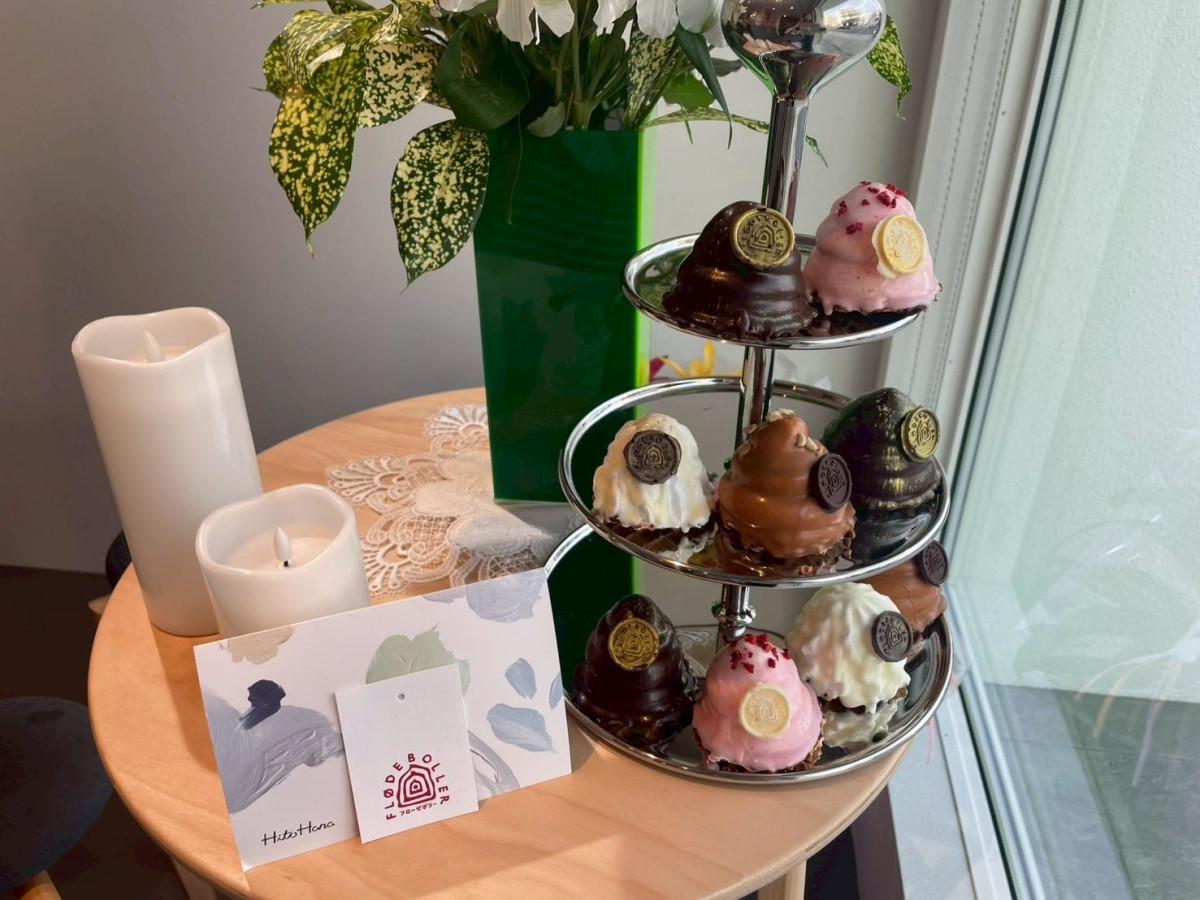
The Danish confectionery specialty shop “Flødeboller” opened on April 10.
The shop’s name comes from the Danish pastry “flødeboller,” which was introduced to the shop owner by a local friend during a study abroad period in Denmark around 40 years ago. “Deeply impressed by its deliciousness, the decision was made to open a specialty shop in Japan years later.”
As the local flødeboller is very sweet, various types were sampled in Denmark, and through trial and error, a product suited to Japanese tastes was developed. The shop’s flødeboller features a “light and airy” meringue cream coated in chocolate, with a decorative point resembling a sealing stamp.
Varieties include the standard semi-dark chocolate “Golden,” as well as white chocolate “Silver White,” “Caramel,” and “Strawberry,” for a total of four types (each 648 yen). The shelf life is about three days, and they can be frozen for storage in airtight plastic bags. For a while after opening, general sales at the shop are planned, but to combat food waste, sales will primarily be through LINE reservations for sets of four.
The interior, decorated with Danish posters and goods, has no eat-in space and is for pick-up only.
Having previously managed a logistics-related company in Germany, and considering the difficulty of air-freighting flødeboller due to pressure effects, the owner decided on domestic production and sales in Japan. “We focused on recreating it using ingredients available in Japan while minimizing costs.” “It’s likely a rare sweet you can only find in a place like this in Japan, so we hope you’ll come and try it.”
Business hours are Friday through Sunday, from 11:00 AM to 6:00 PM. Due to product management, there is a possibility of an extended closure during the summer.
Benten-dori
Benten-dōri is a historic shopping street in the Hakodate area of Hokkaido, Japan, named after the nearby Benten Shrine. It dates back to the late 19th century and is known for its preserved Meiji-era Western-style buildings, reflecting Hakodate’s early period of international trade. Today, it is a popular tourist destination lined with shops, cafes, and restaurants in a charming, retro atmosphere.
Kannai Sakura-dori
Kannai Sakura-dori is a historic street in Yokohama, Japan, known for its cherry trees and Western-style buildings from the late 19th century, when the area opened to foreign trade. Today, it is a popular promenade blending Meiji-era architecture with modern shops and cafes, especially beautiful during the spring cherry blossom season.
Yokohama Chinatown
Yokohama Chinatown is the largest Chinatown in Japan, established in the late 1850s following the opening of Yokohama Port to foreign trade. Today, it is a vibrant district famous for its hundreds of Chinese restaurants, shops, and colorful gates, serving as a major center of Chinese culture and cuisine in the country.
Kannai Terrace
Kannai Terrace is a modern commercial and dining complex located in Yokohama, Japan, which opened in 2020. It was developed as part of the ongoing revitalization of the historic Kannai district, an area known for its Western-style buildings from the late 19th century when Yokohama first opened to international trade. The site blends contemporary architecture with the area’s rich port-city heritage, offering shops and restaurants with views of the iconic Osanbashi Pier.
GREEN×EXPO 2027
“GREEN×EXPO 2027” is an upcoming international horticultural exposition (Expo 2027) to be held in Yokohama, Japan. It will focus on themes of sustainability, green innovation, and harmony between nature and urban life, following in the tradition of world horticultural expositions that promote environmental awareness. The event aims to showcase cutting-edge green technology and foster global dialogue on creating a sustainable future for cities.
International Horticultural Exposition
The International Horticultural Exposition is a large-scale, temporary global event sanctioned by the International Association of Horticultural Producers (AIPH) that showcases horticultural and garden design from around the world. Originating from 19th-century European flower shows, these expositions promote international cooperation in gardening, environmental sustainability, and urban development. Each edition is hosted by a different city, such as the notable Expo 2019 in Beijing, creating a legacy park and raising public awareness of green living.
Flødeboller
“Flødeboller” are not a physical place or cultural site, but a classic Danish confection consisting of a round biscuit or marzipan base topped with a fluffy marshmallow-like cream and coated in dark chocolate. They originated in Denmark in the 1800s and have become a beloved national treat, often associated with childhood and traditional bakeries.
LINE
“LINE” is a major Japanese messaging and social networking app, launched in 2011 by NHN Japan (now LY Corporation) in the aftermath of the Tōhoku earthquake and tsunami. It was originally created to provide a stable communication network during the disaster and quickly grew into a dominant “super app” in East and Southeast Asia, integrating messaging, payments, news, and other services into a single platform.