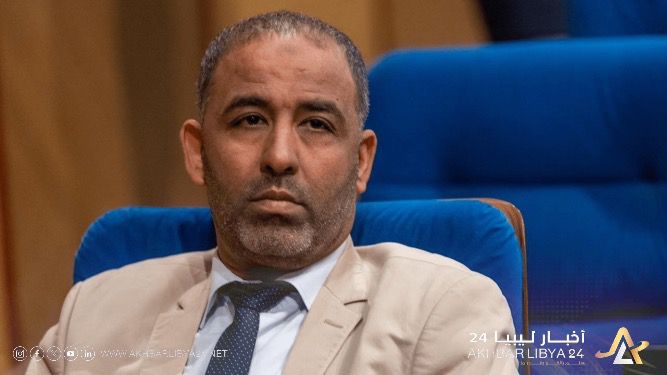
Al-Sirri Warns of Disrupting Elections Due to Adherence to a Commission Council “No Longer Subject to Consensus”
The political arena has witnessed a new escalation in rhetoric, with sharp accusations exchanged between the State Council and the House of Representatives institutions regarding the body authorized to oversee the electoral process and its laws, threatening to disrupt the timeline for the awaited national entitlement.
Accusations of Tampering with the Electoral Path
In televised statements, a member of the State Council launched sharp criticisms at the House of Representatives and the UN mission, questioning their insistence on what he described as “the current commission council, which lacks a full membership and is no longer subject to political consensus.” He confirmed that the State Council’s selection of an election commission chairman comes within the framework of completing the electoral entitlement, pointing out that forming the commission council is “an important part of this entitlement.”
He added that the State Council “has not deviated from the agreed legal and political framework to expedite the electoral process,” expressing surprise at linking the holding of elections to the current commission. He stressed that “work must be institutional, not personal,” emphasizing the importance of fortifying the commission’s work from any potential appeals.
House of Representatives’ Response: Constitutional Amendment and Replacement of the Executive Authority
In separate televised statements, a member of the House of Representatives countered by attacking the State Council and accusing it of obstructing the path. He announced a plan that includes “carrying out a constitutional amendment” to serve as the comprehensive legal framework for previous amendments, while abolishing the clause on forming an executive authority.
He revealed a proposal to replace the executive authority clause with “a committee formed from the President of the Supreme Judicial Council, the membership of the Governor of the Central Bank of Libya and his deputy, and the deputies of each of the two governments,” with this committee taking over “the reins to supervise the conduct of elections.”
Accusations of Preemption and Protecting Interests
He accused the State Council of “not wanting us to reach a single executive authority or even electoral laws that do not exclude anyone,” considering the step of changing the election commission a “preemptive step” taken after the House of Representatives ratified the completion of the commission members’ membership.
He concluded by accusing the State Council of operating according to the interests of those who have held power since 2012, saying: “The State Council transforms and changes color according to the interests of those in power.”
Uncertain Future for the Political Path
This sharp rhetorical escalation reflects the depth of the rift between the country’s two main legislative institutions and raises major questions about the possibility of reaching a consensus that paves the way for holding elections soon. It appears that the Libyan scene remains governed by contradictory positions and a struggle over powers, leaving the future of the entire political process hanging in the balance.