Al-Shuwaidi discusses with a number of publishers and Libyan writers the challenges of publishing Libyan books abroad.
Benghazi – The Media, Culture, and Civil Society Institutions Committee of the House of Representatives reviewed the most prominent problems and obstacles facing the movement of publishing and distributing the Libyan book abroad. It explored ways to find solutions to address them, ensuring an effective and honorable presence for Libyan culture in regional and international forums.
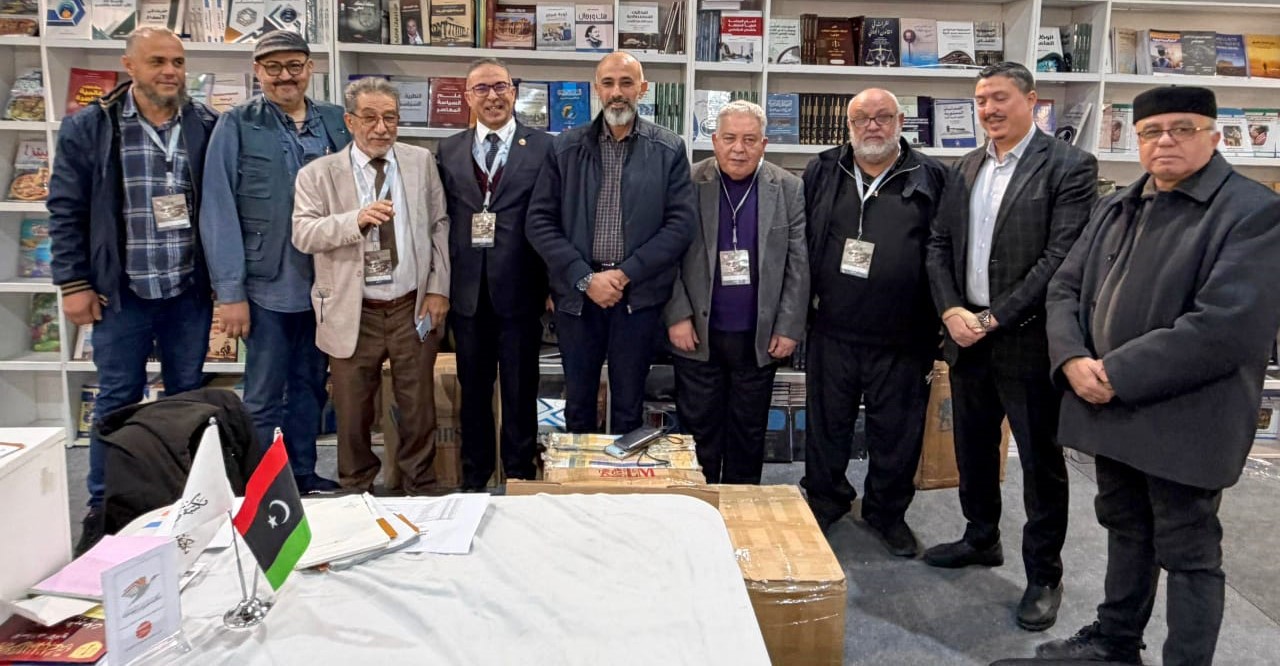
This came during a field visit to the pavilions of Libyan publishing houses participating in the Cairo International Book Fair, as part of the oversight and supportive role undertaken by the committee towards cultural institutions and creators.
During the tour, the head of the Media and Culture Committee met with a number of Libyan publishers and writers, listening to their interventions and observations regarding the challenges hindering the publishing and distribution process outside Libya. This particularly concerns administrative procedures, logistical difficulties, shipping costs, and mechanisms for participation in international exhibitions.
It was emphasized that supporting the Libyan publisher is at the forefront of the committee’s priorities, stressing the importance of joint work to overcome all difficulties that limit the spread of the Libyan book. This contributes to enhancing Libya’s cultural image and highlighting the contributions of its writers and creators in the Arab and international cultural scene.
It was clarified that the committee’s keenness to be present at this major Arab cultural forum falls within the vision of the House of Representatives aimed at promoting a culture of reading and localizing knowledge. It was noted that Libya has recently witnessed a noticeable development in organizing local and international book fairs, which requires concerted legislative and executive efforts to invest this cultural momentum and build upon it.
It was added that the Media and Culture Committee believes that the book represents Libya’s true soft power, affirming that listening to publishers’ problems and seriously engaging with their challenges is a national duty and a guarantee for the continuation of the positive cultural movement witnessed in the Libyan arena today.
Benghazi
Benghazi is a major port city in eastern Libya, historically known as a key economic and cultural center. It played a significant role in Libya’s modern history, notably as a hub for the 2011 revolution and as the country’s joint capital until 1963. Its ancient roots trace back to the Greek colony of Euesperides, founded in the 6th century BCE.
House of Representatives
The House of Representatives is the lower chamber of the United States Congress, established by the Constitution in 1789. It is composed of representatives elected from congressional districts based on state population, with its primary powers including initiating revenue bills and impeaching federal officials.
Cairo International Book Fair
The Cairo International Book Fair is the largest and oldest book fair in the Arab world, first held in 1969. Held annually at the Egypt International Exhibition Center, it serves as a major cultural event attracting publishers, authors, and millions of visitors from across the region. It is renowned for promoting literature, intellectual dialogue, and often features a guest of honor country to highlight international cultural exchange.
Media, Culture, and Civil Society Institutions Committee
The Media, Culture, and Civil Society Institutions Committee is a parliamentary body, typically within a national legislature like Ukraine’s Verkhovna Rada. Its history is tied to modern governance structures, where it oversees legislation and policy related to media freedom, cultural development, and the operations of non-governmental organizations that support democratic society. The committee plays a key role in shaping the legal environment for public discourse and cultural expression.
Libyan publishing houses
Libyan publishing houses have historically played a vital role in the country’s cultural and intellectual life, with a significant period of growth and state control during the Gaddafi era (1969-2011). Following the 2011 revolution, the sector experienced a brief surge in independent and diverse publications, though it now faces considerable challenges due to ongoing political instability, economic hardship, and security issues. Today, these publishers continue to operate in a difficult environment, striving to preserve Libyan literary and academic output despite limited resources.
Arab cultural forum
The Arab Cultural Forum is a modern cultural institution, often referring to centers or events established in the 21st century across the Arab world and diaspora to promote intellectual exchange. Its history is rooted in contemporary efforts to revive and discuss Arab heritage, literature, and arts, serving as a platform for dialogue on identity and social issues in the modern era. These forums are typically organized by civil society organizations to foster cultural understanding and critical thought.
international book fairs
International book fairs are large-scale public exhibitions where publishers, authors, and readers gather to promote and sell books, fostering literary exchange. Their modern history dates to the 15th-century Frankfurt Book Fair in Germany, which emerged alongside the invention of the printing press. Today, major fairs like those in Frankfurt, London, and Guadalajara serve as vital global marketplaces for publishing rights and cultural dialogue.
Libyan book
“Libyan book” is not a specific, widely recognized cultural site or monument. It likely refers to the rich tradition of libraries and manuscript preservation in Libya, historically centered in cities like Tripoli and the ancient desert trading hub of Ghadames. This tradition reflects Libya’s role in North African and trans-Saharan scholarship, though many collections have faced damage and loss due to the country’s recent conflicts.