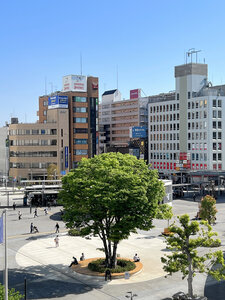
Approximately 14 years after the area around Chofu Station was placed underground, a commemorative event will be held on the 30th to celebrate the completion of the station plaza developed as part of the project. With the underground conversion, a plaza of about 17,000 square meters was built around the station, serving as a hub for transportation and activity.
Following the relocation of the railway tracks underground, large commercial facilities and a relaxation area themed around the railway were developed around Chofu Station. Initially, there were plans for an elevated continuous grade separation, but the plan was changed to an underground configuration. This connected the north and south sides, which had been divided by the tracks, and created conditions suitable for developing a plaza at ground level.
At a press conference on the 26th, Mayor Takaki Nagatomo mentioned the station plaza, stating, “This will be the starting point for a dream-filled town development.” He also reflected on the Keio Line construction, which involved switching the above-ground tracks to underground tracks overnight on August 19-20, 2012, describing it as “like a grand magic trick.”
The event, titled “Ekihiro Grand Opening DAY,” will feature exhibitions with the theme “Chofu, the Town,” as well as food and drink stalls. Planned activities include a train driving simulator experience and a character show of “GeGeGe no Kitaro,” created by an artist who once lived in the city.
According to the city, the plaza will be used in the future as a gathering place for citizens to create activity, with plans to hold regular food and goods markets.
Chofu Station
Chofu Station is a railway station in Tokyo, Japan, serving as a key stop on the Keio Line. Originally opened in 1913, it has developed into a bustling transportation hub for the city of Chofu, connecting commuters to central Tokyo. The area around the station blends modern convenience with local history, including nearby attractions like the Jindaiji Temple and the scenic Tama River.
Keio Line
The Keio Line is a major railway line in Tokyo, Japan, operated by Keio Corporation. It opened in 1913 as a private railway connecting Shinjuku to the western suburbs, originally built to serve the developing residential areas. Today, it extends to Hachiōji and is a key commuter route, known for its express services and connections to cultural sites like the Ghibli Museum.
Chofu Station
Chofu Station is a railway station located in Chofu, Tokyo, Japan, serving as a key stop on the Keio Line. Originally opened in 1913, the station has grown into a bustling transit hub that connects the suburban city to central Tokyo. Its surrounding area features a blend of modern commercial facilities and historical sites, such as the nearby Jindaiji Temple, one of Tokyo’s oldest Buddhist temples.
Keio Line
The Keio Line is a major private railway line in Tokyo, Japan, operated by Keio Corporation. It originally opened in 1913 as the Keio Electric Railway, connecting Shinjuku to the western suburbs and expanding over time to serve cities like Hachiōji and Tama. Today, it is a vital commuter route, known for its express services and integration with the Toei Shinjuku Line.
<h3 class
Chofu Station
Chofu Station is a railway station located in Chofu, Tokyo, Japan, serving as a major transportation hub on the Keio Line. Originally opened in 1913, it has since developed alongside the surrounding area into a bustling commercial and cultural center. The station is also a convenient gateway to popular local attractions, such as the historic Jindaiji Temple and the scenic Nogawa Park.
Keio Line
The Keio Line is a major railway line in Tokyo, Japan, operated by Keio Corporation, connecting Shinjuku to the city’s western suburbs and the Tama region. Originally opened in 1913 as the Keio Electric Railway, it was one of Japan’s first interurban railways, later expanding to include branches like the Sagamihara Line. Today, it serves as a vital commuter route, blending historic stations with modern express services.
Jindaiji Temple
Jindaiji Temple, located in Chofu, Tokyo, is one of the oldest Buddhist temples in the Tokyo area, founded in 733 AD. Its history predates the more famous Senso-ji temple, and it is known for its serene atmosphere, moss-covered statues, and a famous soba noodle district that developed nearby. The temple complex also houses a beautiful Japanese garden and a museum of local folk artifacts.
Tama River
The Tama River is a major waterway in Japan, flowing approximately 138 kilometers from Mount Kasatori in Yamanashi Prefecture through Tokyo and into Tokyo Bay. Historically, it has served as a vital source of water for agriculture and drinking, and its banks were once the site of ancient settlements and defensive fortifications during the feudal era. Today, the river is a popular recreational area, offering scenic spots like the Tama River Rapids and numerous parks that highlight its cultural and natural significance.
Ghibli Museum
The Ghibli Museum is a whimsical museum located in Mitaka, Tokyo, dedicated to the works of Studio Ghibli, the renowned Japanese animation studio founded by Hayao Miyazaki and Isao Takahata. Designed by Miyazaki himself and opened in 2001, the museum aims to immerse visitors in the magical world of Ghibli films, featuring original artwork, interactive exhibits, and a rooftop garden with a life-sized robot from *Castle in the Sky*. It emphasizes creativity and storytelling over technology, offering a unique experience that celebrates the art of animation.