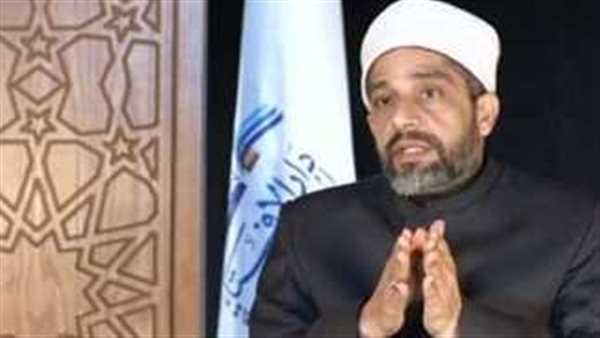
Sheikh Ahmed Wissam, the Secretary-General of Fatwa at the Egyptian Dar al-Ifta, answered a question from Nahy in Giza, who said: “My friends fast on the first day of the month of Rajab, and some people say that there is no narration from our Prophet Muhammad (peace be upon him) about fasting in the month of Rajab. Please advise us.”
Is fasting on the first day of Rajab an innovation? The Secretary-General of Fatwa answers
The Secretary-General of Fatwa at the Egyptian Dar al-Ifta explained during television statements that it is recommended in the month of Rajab to increase righteous deeds, whether through fasting, night prayers, charity, or other forms of good deeds. He pointed out that the question posed is: Did the Prophet Muhammad (peace be upon him) consistently fast specifically in the month of Rajab? He confirmed that there are no authentic, explicit hadiths indicating that the Prophet (peace be upon him) consistently fasted the month of Rajab in particular, or that he designated it for a specific act of worship.
Sheikh Ahmed Wissam clarified that this does not negate the virtue of performing righteous deeds in the month of Rajab, citing the noble hadith in which the Prophet (peace be upon him) was asked about his frequent fasting in the month of Sha’ban and said: “That is a month people neglect between Rajab and Ramadan.” He explained that this hadith clearly indicates that righteous deeds are present and legislated in the month of Rajab and in the month of Ramadan, and that negligence occurs among some people in the month of Sha’ban, so the Prophet (peace be upon him) revived the practice of consistent obedience during it.
He added that the noble hadith indicates the recommendation and virtue of performing righteous deeds in the month of Rajab and the month of Ramadan, with increased emphasis on righteous deeds in the month of Sha’ban. He noted that among the most noble and greatest deeds in the sight of God Almighty is the worship of fasting, citing the sacred hadith: “Every deed of the son of Adam is for him, except fasting; it is for Me and I shall reward for it.” He explained what has been narrated regarding the virtue of fasting: that the fasting person has two joys: a joy when breaking the fast and a joy when meeting his Lord.
The Secretary-General of Fatwa confirmed that abstaining from fasting is only for the days in which the Sharia has prohibited fasting, such as the two Eid days and the days of Tashreeq, as established by the jurisprudential schools based on authentic prophetic hadiths. As for fasting the first day of the month of Rajab or fasting in the month of Rajab in general, it is permissible according to Sharia and there is absolutely no sin in it. He advised not to pay attention to those who prohibit fasting in this month without a valid proof.
Egyptian Dar al-Ifta
The Egyptian Dar al-Ifta is the country’s official state institution responsible for issuing religious edicts (fatwas) on Islamic law. It was established in 1895 during the reign of Khedive Abbas Helmi II to provide authoritative religious guidance to the public and state. Today, it is a major global reference for Sunni Islamic legal opinions, addressing contemporary issues from a scholarly perspective.
Giza
The Giza pyramid complex in Egypt is one of the world’s most iconic ancient sites, dominated by the three Great Pyramids (including the Great Pyramid of Khufu) and the Great Sphinx. These monumental structures were built as royal tombs during Egypt’s Old Kingdom, primarily in the 26th century BCE, and represent the pinnacle of ancient Egyptian engineering and religious belief. Today, they stand as a powerful testament to the civilization of the pharaohs and are a UNESCO World Heritage Site.
Prophet Muhammad
Prophet Muhammad is not a place or cultural site, but the central human figure of Islam, believed by Muslims to be the final messenger of God. He was born in Mecca around 570 CE and his life, teachings, and migration (Hijra) to Medina in 622 CE form the foundational history of the Islamic faith and civilization. Key cultural sites associated with his life include the cities of Mecca and Medina in present-day Saudi Arabia, which are home to Islam’s holiest mosques.
Rajab
“Rajab” is not a specific place or widely recognized cultural site. It is likely a reference to the **Rajab Museum** in Kuwait City, a private museum renowned for its extensive collection of Islamic art, coins, manuscripts, and traditional Kuwaiti heritage items. Founded by the late collector **Sheikh Nasser Sabah al-Ahmad al-Sabah** and his wife **Sheikha Hussa al-Sabah**, it showcases the rich cultural history of Kuwait and the Islamic world.
Sha’ban
“Sha’ban” is not a specific place or cultural site, but rather the name of the eighth month in the Islamic lunar calendar. It is historically and culturally significant for Muslims as a month of spiritual preparation, marked by fasting and devotion, preceding the holy month of Ramadan. The 15th night of Sha’ban, known as Laylat al-Bara’ah, is observed by many with prayer and reflection, based on Islamic tradition.
Ramadan
“Ramadan” is not a specific place or cultural site, but rather the ninth month of the Islamic lunar calendar, observed by Muslims worldwide as a holy period of fasting, prayer, reflection, and community. Its history dates to 624 CE when, according to Islamic tradition, the first verses of the Quran were revealed to the Prophet Muhammad during this month. The observance commemorates this revelation and is one of the Five Pillars of Islam, central to the faith’s spiritual practice.
Eid
“Eid” refers not to a specific place, but to the two major Islamic festivals: Eid al-Fitr and Eid al-Adha. **Eid al-Fitr** (“Festival of Breaking the Fast”) marks the end of Ramadan, while **Eid al-Adha** (“Festival of Sacrifice”) commemorates the Prophet Ibrahim’s willingness to sacrifice his son. These celebrations, with roots in the 7th century following the Hijra, are observed globally by Muslims with prayers, charity, feasting, and community gatherings.
Tashreeq
“Tashreeq” refers to the three days (the 11th, 12th, and 13th of Dhul-Hijjah) following the Day of Sacrifice (Eid al-Adha) in the Islamic Hajj pilgrimage. Historically and ritually, these are the days when pilgrims stay in Mina to stone the three pillars (jamarat), symbolizing the rejection of temptation. The name itself is derived from the Arabic word for “drying meat,” linking to the traditional practice of pilgrims preserving their sacrificial meat during this time.