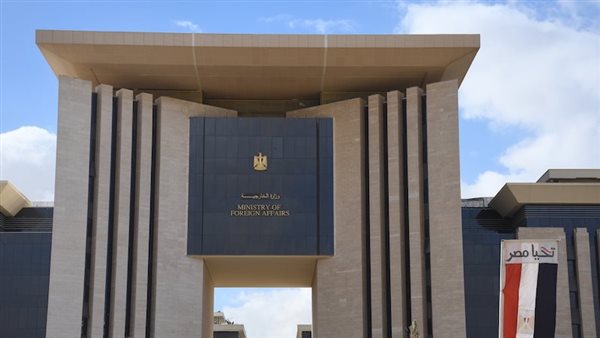
Egypt has been following the ongoing developments in Yemen with great interest, expressing its appreciation for the efforts being made to work towards de-escalation and to prevent the deterioration of the current situation, which would positively reflect on the security and stability of the region.
Egypt affirmed its firm position in support of legitimacy in the Republic of Yemen, its full commitment to Yemen’s unity, sovereignty, and territorial integrity, and stressed the necessity of preserving the national state institutions and safeguarding the resources of the brotherly Yemeni people. This paves the necessary ground for restoring stability in Yemen and the entire region and ensures freedom of navigation in the Red Sea.
In this context, Egypt emphasized the regional efforts being made to support paths of calm and de-escalation, which contribute to preserving Yemen’s unity and territorial integrity and advancing towards a comprehensive settlement that fulfills the aspirations of the Yemeni people for security, stability, development, and prosperity.
De-escalation and Achieving Security and Stability in Yemen
Furthermore, a telephone call took place between the Minister of Foreign Affairs and the Minister of Foreign Affairs of Yemen. The two ministers discussed the current situation in Yemen and the efforts led by the Kingdom of Saudi Arabia and the United Arab Emirates towards de-escalation and achieving security and stability in brotherly Yemen, which reflects on the security and stability of the region. The Foreign Minister renewed Egypt’s welcome of the agreement concerning the exchange of prisoners and detainees in Yemen, considering it a step that supports the ongoing efforts to create a conducive climate for resuming the settlement process.
Egyptian Foreign Ministry
The Egyptian Ministry of Foreign Affairs is the government body responsible for managing Egypt’s international relations and diplomatic missions. It was formally established in the 19th century under Muhammad Ali Pasha, with its modern structure taking shape after Egypt’s full independence. Today, it operates from its headquarters in the Lazoghly building in Cairo, a significant site in Egyptian diplomacy since the 20th century.
Republic of Yemen
The Republic of Yemen, located on the southern tip of the Arabian Peninsula, is a nation with a rich history as a crossroads of ancient trade routes and home to the famed Sabaean Kingdom (biblical Sheba). Its cultural landscape is marked by iconic sites like the mud-brick skyscrapers of Old Sana’a, a UNESCO World Heritage Site, and the historic port of Aden. Modern Yemen was formed in 1990 with the unification of the Yemen Arab Republic (North Yemen) and the People’s Democratic Republic of Yemen (South Yemen).
Red Sea
The Red Sea is a major seawater inlet of the Indian Ocean, lying between Africa and Asia. Historically, it has been a critical trade route since ancient times, famously used by Egyptian, Roman, and later Islamic empires, and its shores were part of the legendary Incense Route. Today, it is globally renowned for its vibrant coral reefs, unique marine biodiversity, and as a key channel for international shipping via the Suez Canal.
Yemen
Yemen is a country on the Arabian Peninsula with a rich history as a center of ancient civilizations and trade, most famously the Kingdom of Saba (Sheba). It is home to significant cultural sites like the Old City of Sana’a, with its distinctive multi-story tower houses, and the historic trading port of Zabid. In recent decades, the country has faced a devastating civil war and humanitarian crisis, which has threatened its cultural heritage and stability.
Kingdom of Saudi Arabia
The Kingdom of Saudi Arabia is a modern nation-state founded in 1932 by King Abdulaziz Al Saud, who unified the regions of Najd and Hejaz. It is the birthplace of Islam, home to the religion’s two holiest cities, Mecca and Medina, and its history is deeply intertwined with the Arabian Peninsula’s ancient trade routes and tribal cultures. Today, it is a major global economic power, known as the world’s leading oil exporter and for its ongoing socio-economic transformation under Vision 2030.
United Arab Emirates
The United Arab Emirates (UAE) is a federation of seven emirates on the Arabian Peninsula, established in 1971 following the end of British protection treaties. Historically a region of pearl diving, fishing, and Bedouin tribes, it transformed rapidly after the discovery of oil in the mid-20th century. Today, it is globally renowned for its modern cities like Dubai and Abu Dhabi, which showcase ambitious architecture and a blend of traditional Arab-Islamic heritage with cosmopolitan influences.