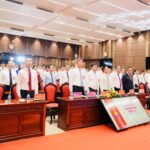
On the morning of February 22, the Prime Minister and a working delegation inspected the construction site of the city’s pilot urban railway project, the Nhon – Hanoi Station section. This is one of the key urban transport infrastructure projects, of strategic significance for the sustainable development of the capital Hanoi.
Joining the working delegation were the Chairman of the Hanoi People’s Committee; the Minister of Construction; the Deputy Minister of Finance; the Deputy Chief of the Government Office along with leaders of relevant departments, agencies, and units.
In the enthusiastic and urgent atmosphere of the first days of the 2026 Spring, at the construction sites of underground stations, teams of officials, engineers, and workers are intensely focused, working overtime and extra shifts, closely adhering to the project schedule. At the S9 – Kim Ma, S11 – Van Mieu, and S12 – Tran Hung Dao underground stations, the Prime Minister directly inspected the construction progress, listened to reports on the schedule, ongoing items, and implementation plans for the coming period. The working delegation also conducted on-site surveys inside the construction tunnels to assess working conditions, construction organization, and to ensure labor safety and project quality.
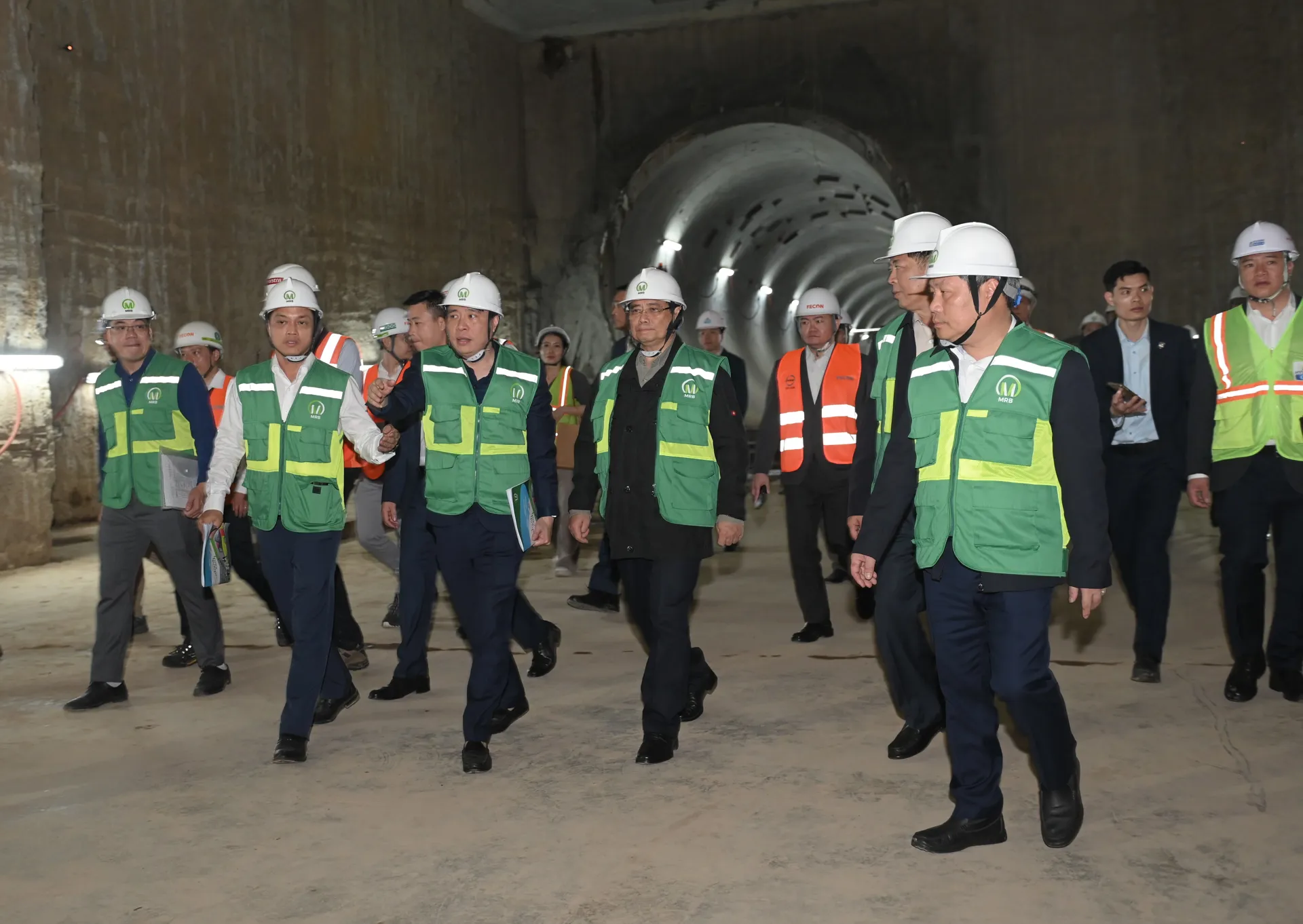
After surveying and inspecting the construction site and witnessing the project’s comprehensive progress, the Prime Minister praised the efforts and results achieved, particularly by the teams of officials, engineers, and workers directly on-site.
The Prime Minister emphasized that to develop the socio-economy, infrastructure must be developed first, in which the urban railway system plays a particularly important role in connecting urban spaces, linking functional areas, promoting commerce, investment, tourism, and enhancing the competitiveness of the capital. The Prime Minister affirmed that the earlier the project is completed, the sooner commercial, investment, and tourism activities will develop, thereby creating momentum for local and regional economic growth.
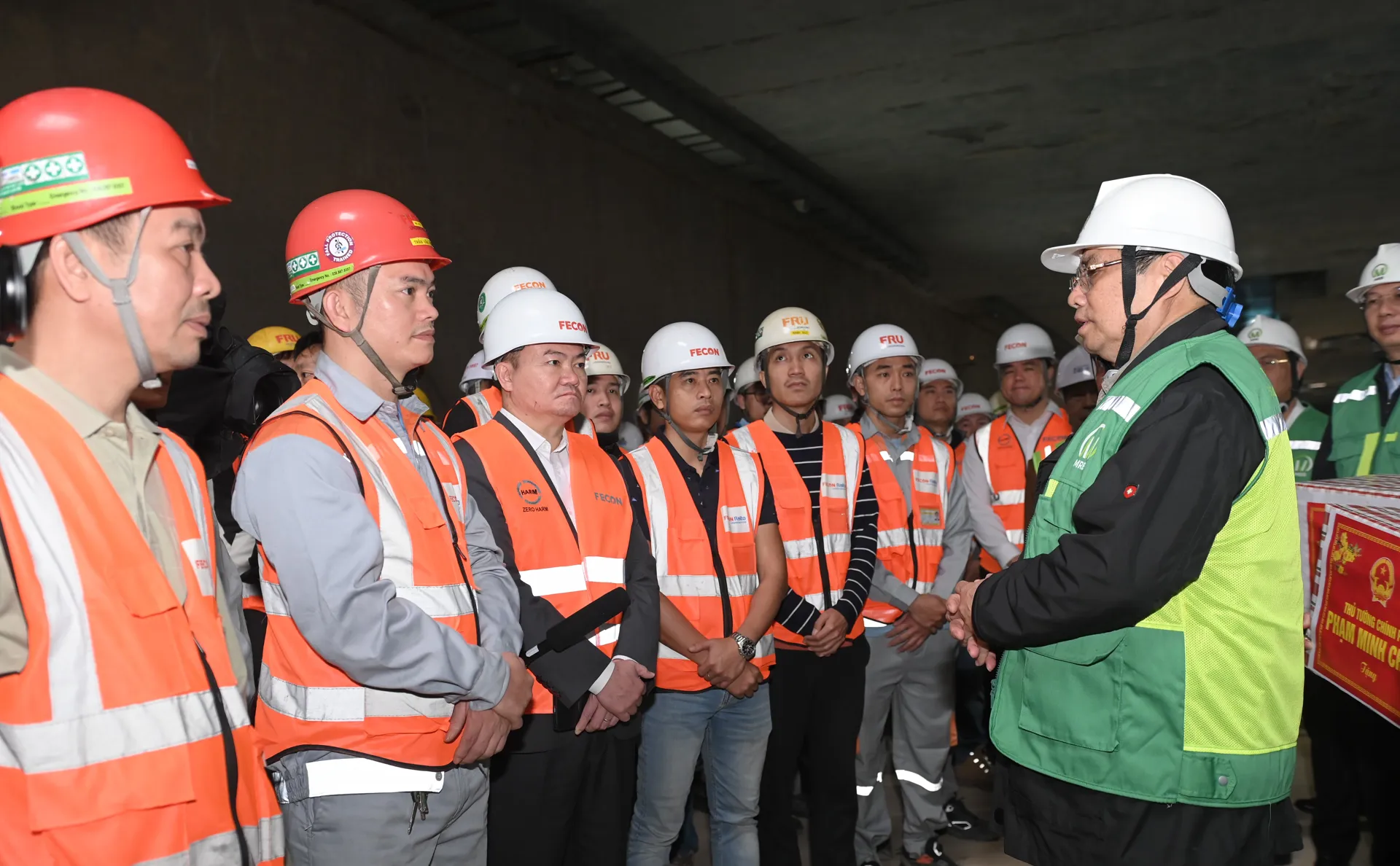
The Prime Minister expressed gratitude to the people of the capital for their companionship, sharing, and support of the project during its implementation; and hoped that the people would continue to support and facilitate the project’s smooth, on-schedule, and highest-quality implementation.
On the occasion of the new Spring, the Prime Minister and the working delegation visited, extended New Year greetings, and gave gifts to encourage the teams of officials, engineers, experts, and workers who were working through the Tet holiday on the construction site. The Prime Minister commended the Hanoi Urban Railway Management Board, the contractors involved in the project, and the teams of officials, engineers, and workers who sacrificed family reunion time, working through holidays and Tet to push the project’s construction progress.
The Prime Minister hoped that the investor, consultants, contractors, and teams of officials, engineers, and workers would continue to promote the spirit of “eating in haste, sleeping urgently,” “overcoming sun, defeating rain, not yielding to storms,” organizing construction with “three shifts, four crews,” “only discussing action, not discussing retreat,” making the utmost effort and accelerating further to complete the project’s key objectives at the earliest time, ensuring absolute safety, quality, and investment efficiency.
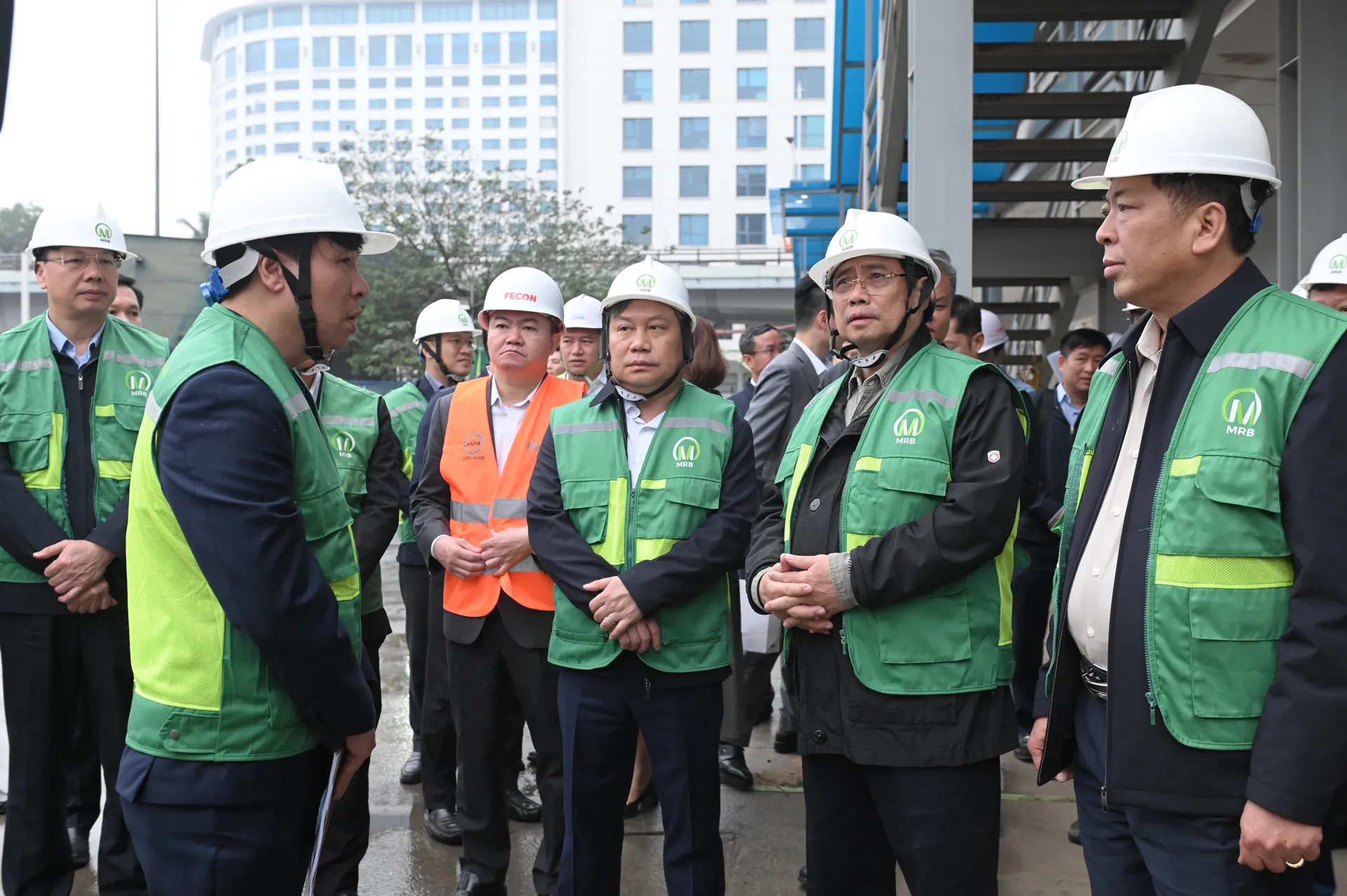
Reporting to the working delegation, the Head of the Hanoi Urban Railway Management Board stated that to date, the progress of package CP03 – Tunnels and Underground Stations has reached 76.30%, with construction activities proceeding synchronously across all sites. Tunnel boring work: TBM1 completed boring on December 1, 2025, and is being dismantled at station S12 – Tran Hung Dao; TBM2 is constructing the S11 – S12 section and is expected to arrive at station S12 by the end of March 2026. Construction of underground stations: the top slab and transfer slab structures have been completed; construction of the