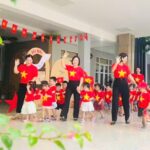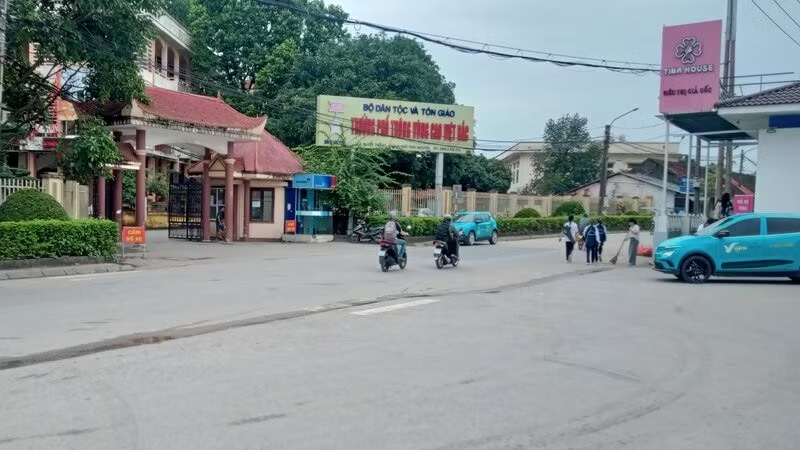
The Viet Bac Highland School, located in Quyet Thang ward (Thai Nguyen), is a specialized school under the system that enrolls high school students and nurtures and teaches children of ethnic minority people from Quang Tri province northward.
This is a “red address” creating high-quality human resources for ethnic minorities, because for many years, 100% of the school’s 12th-grade students have passed the high school graduation exam, of which 90% go on to university, and 100% of university preparatory students pass the exam and attend top-tier universities.
In recent years, the school has nurtured and taught 250 students in the university preparatory system each year. Over one year, the students review the high school curriculum to consolidate a solid knowledge foundation, pass exams to enter many top-tier schools, including many who pass exams for police and military schools, while the rest are admitted to medical and pedagogical universities. On that journey, there is the dedication, love, responsibility, and companionship of the school’s leadership and teachers.
Implementing Resolution 71-NQ/TW dated August 22, 2025, of the Politburo on breakthroughs in education and training development, starting from the 2026-2027 school year, the Viet Bac Highland School will increase its enrollment quota for university preparatory training to strengthen the creation of high-quality ethnic minority human resources.
The school principal stated: With the attention of the Party and the State, the school is currently being invested with about 500 billion VND to build new facilities, repair existing ones, beautify the campus, and provide teaching and learning equipment, expected to be completed by the end of August 2026. At that time, the quality of comprehensive education will continue to be improved, and enrollment quotas will increase, including for the university preparatory system.
Implementing Resolution 71-NQ/TW dated August 22, 2025, of the Politburo on breakthroughs in education and training development, with approval from competent authorities, in the coming years, the school will implement a roadmap to increase the quota for the university preparatory system for children of ethnic minority people.
Specifically, in the 2026-2027 school year, the school will enroll, nurture, and teach 300 ethnic minority students in the university preparatory system; in the 2027-2028 school year, the quota will increase to 400; and in the following year, to 500 university preparatory students. This will strengthen the creation of high-quality ethnic minority human resources for the country.