Finally, the Misleading Route to Rice Fields Removed from Google Maps, Alternative Route to Purwomartani Toll Gate.
If someone ends up in the middle of rice fields in Sleman, Yogyakarta, it’s not because they’re looking for a “slow living” rural atmosphere. Nor is it to find a “hidden gem.”
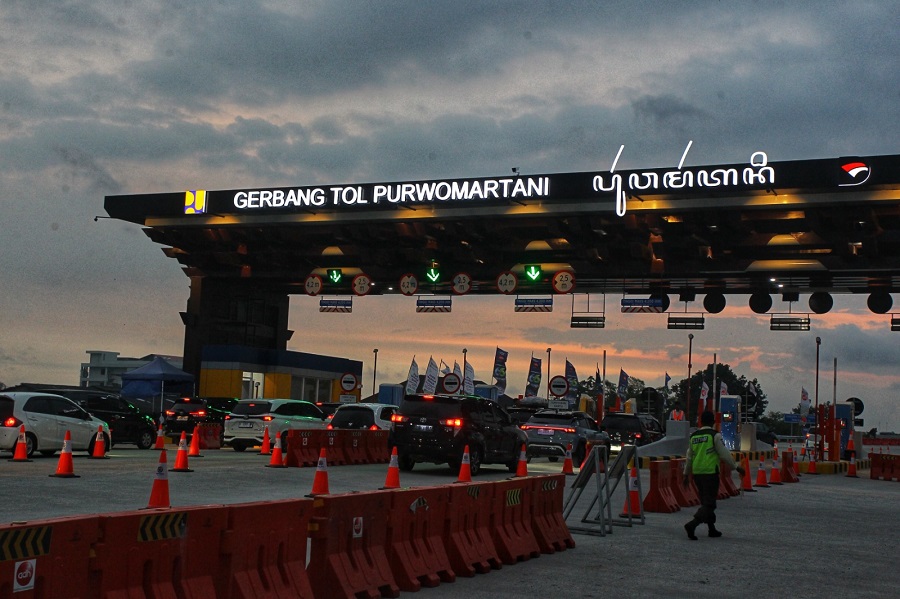
It’s simply because they got lost following directions while searching for the route to the Purwomartani Toll Gate. The Prambanan–Purwomartani segment, part of the Yogyakarta–Solo Toll Road, was only functionally opened recently.
So, it’s understandable that many are not yet familiar with its location. Meanwhile, the main Yogyakarta–Solo artery is experiencing congestion.
They rely on Google Maps, but end up being directed to an alternative route through rice fields, leading to a collective misadventure.
However, observations at the location show that there are no longer any vehicles passing through Karang Kalasan Hamlet RT II, Purwomartani, Sleman. The entrance and exit from the path that cuts through the rice fields have also been closed. Several officers are stationed at the end of that alternative road junction.
A traffic police official explained that following numerous reports, they coordinated with the toll road operator to correct the directions on Google Maps. Informational signs and written directions have been increased.
“Officers are also conducting direct verbal socialization to drivers,” the official said at the Purwomartani Toll Monitoring Post.
Peak Return Flow
The official stated that the first peak of the return flow occurred, so the number of vehicles entering the toll road, which opened at 06:00, was quite high. Therefore, operational hours were extended from 18:00 to 20:00 starting Sunday, and extended again to 22:00 on Tuesday. This four-hour extension will apply until the toll road closes on Sunday. “There are two peak return flow sessions. The second is on Saturday,” the official added.
Similarly, a spokesperson for the toll road company explained that the misleading Google Maps route has been corrected. Several officers have been deployed in the field to provide directions to drivers, including adding signs directing to the Purwomartani Toll Gate.
“So, the only access road is from the Yogyakarta–Solo Road. Hopefully, no one else gets lost,” the spokesperson said.
Two Bengal Tiger cubs at Bandung Zoo were reported dead on Thursday morning after testing positive for the panleukopenia virus. The deaths occurred during a shift change of zoo staff, after both animals had previously shown signs of improvement.
The incident was confirmed by a spokesperson for the West Java Natural Resources Conservation Agency, who stated the condition of both tiger cubs was already critical due to the viral infection. Despite various rescue efforts, their lives could not be saved.
The spokesperson explained that the handling involved many parties, from the zoo’s internal veterinary team, Cikole Hospital, the local livestock service, to the conservation agency. The entire team worked to the maximum in efforts to heal the rare Bengal Tigers.
The death of the two tigers is a heavy blow, not only for the management but also for the people of Bandung. The two cubs were considered part of the public’s emotional bond with the zoo’s animals.
The spokesperson emphasized that they never wanted this incident to happen. Various medical steps and intensive care had been carried out since the initial symptoms appeared, but the development of the animals’ condition did not proceed as hoped.
For a more detailed medical explanation, the conservation agency deferred to the veterinary team, which was directly involved in handling the case.
“Before being declared dead, the two tiger cubs had shown a chance of survival. Based on the doctor’s information, if the animals could survive past 48 to 72 hours, the chance of recovery was quite high,” the spokesperson said at Bandung Zoo on Thursday.
According to the spokesperson, one of the cubs experienced an improvement in condition that gave the medical team optimism. However, the
Purwomartani Toll Gate
The Purwomartani Toll Gate is a major interchange on the Yogyakarta-Solo Toll Road in Sleman, Yogyakarta, Indonesia. It serves as a primary access point to the city of Yogyakarta and nearby key locations like the Adisutjipto International Airport and the Prambanan Temple complex. While the toll gate itself is a modern infrastructure development from the late 20th/early 21st century, its name is derived from the local village of Purwomartani, reflecting the area’s historical identity.
Sleman
Sleman is a regency located in the Special Region of Yogyakarta, Indonesia, renowned as the gateway to the majestic Mount Merapi volcano. Historically, it was part of the ancient Mataram Kingdom, with significant archaeological sites like the Sambisari temple, which was buried by volcanic ash from Merapi centuries ago. Today, it is a vital agricultural and cultural area, famous for its fertile soil and as a key access point for tourists visiting Yogyakarta and the surrounding temples.
Yogyakarta
Yogyakarta is a historic city and special region on the Indonesian island of Java, serving as a major center for classical Javanese arts, culture, and education. It was the seat of the powerful Mataram Sultanate in the 16th century and remains a royal capital today, with the Sultan’s palace (Kraton) still functioning as its cultural heart. The city is also the gateway to the magnificent 9th-century Buddhist temple of Borobudur and the Hindu temple complex of Prambanan, both UNESCO World Heritage Sites.
Prambanan–Purwomartani segment
The Prambanan–Purwomartani segment is a section of the Prambanan Temple Compounds, a UNESCO World Heritage Site in Central Java, Indonesia. This area encompasses the main Prambanan complex, a 9th-century Hindu temple dedicated to the Trimurti gods, built by the ancient Mataram Kingdom. The segment’s name reflects its geographical location, linking the grand temple with the nearby village of Purwomartani.
Yogyakarta–Solo Toll Road
The Yogyakarta–Solo Toll Road is a major 93.7-kilometer expressway in Central Java, Indonesia, connecting the historic cultural cities of Yogyakarta and Surakarta (Solo). It was constructed to alleviate traffic congestion and boost regional economic integration, with its full opening to the public completed in 2018. The road significantly reduces travel time between the two royal Javanese cultural centers, facilitating tourism and trade across the region.
Karang Kalasan Hamlet RT II
Karang Kalasan Hamlet RT II is a small residential community located in the Special Region of Yogyakarta, Indonesia. While specific historical records for the hamlet itself are limited, it is situated in a culturally rich area near the famous 8th-century Buddhist temple, Candi Kalasan, from which it derives its name. The hamlet represents the continuity of local Javanese community life in the shadow of this ancient monument.
Bandung Zoo
Bandung Zoo, also known as Kebun Binatang Bandung, is one of Indonesia’s oldest zoos, established in 1930 during the Dutch colonial era. Located in the city of Bandung, it was originally named “Jubileum Park” and was later expanded and renamed. Today, it houses a variety of animal species and serves as a popular recreational and educational destination for families.
West Java Natural Resources Conservation Agency
The West Java Natural Resources Conservation Agency (BKSDA Jawa Barat) is a governmental body under Indonesia’s Ministry of Environment and Forestry responsible for protecting and managing the province’s wildlife, conservation areas, and ecosystems. Its history is tied to the development of Indonesia’s conservation system, evolving from earlier Dutch colonial forestry services and later national structures to enforce laws against poaching, habitat destruction, and illegal wildlife trade. Today, it manages key protected areas like Mount Gede Pangrango National Park and works to conserve endangered species such as the Javan leopard and gibbons.