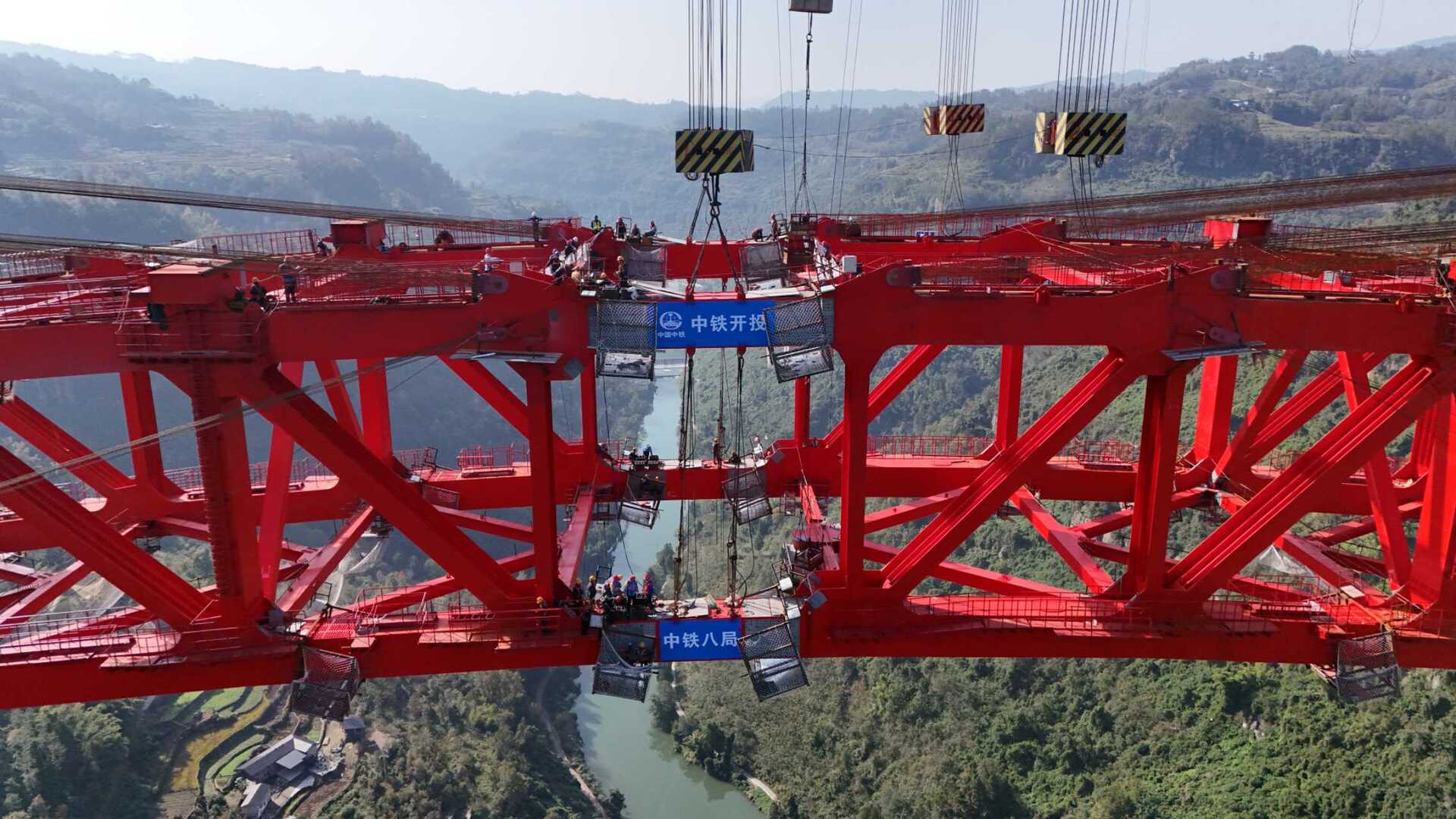
Video: Ten-Thousand-Ton Cantilever Arms “Join Hands in Mid-Air” as World’s Longest-Span Steel Arch Bridge Closes Its Final Gap
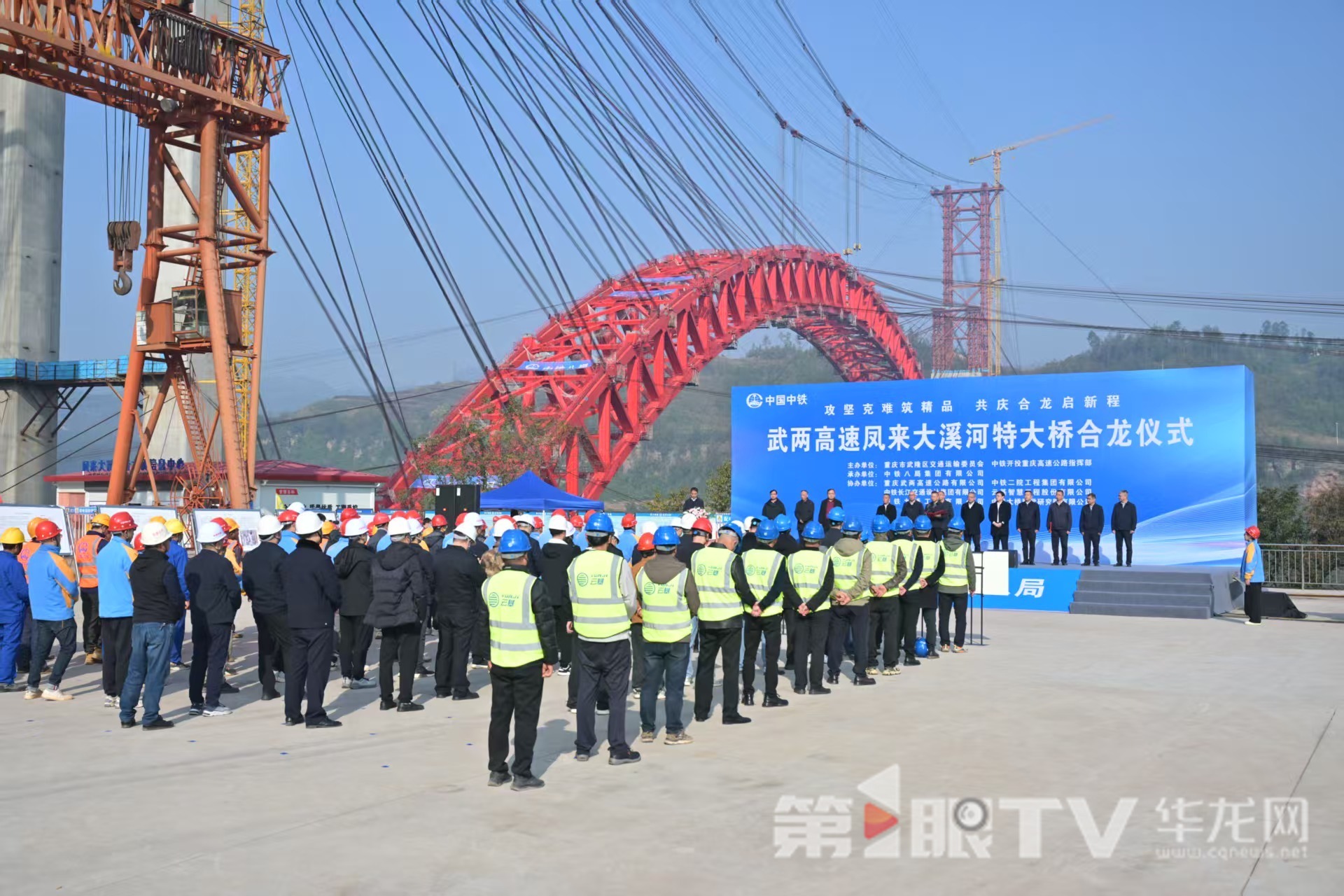
Today, the steel truss arch of the Fenglai Daxi River Bridge on the Chongqing Wulong to Liangjiang New Area Expressway (hereafter referred to as the Wuliang Expressway) was successfully closed, marking a major milestone in the bridge’s construction with the conversion of the 10,000-ton cantilever system.
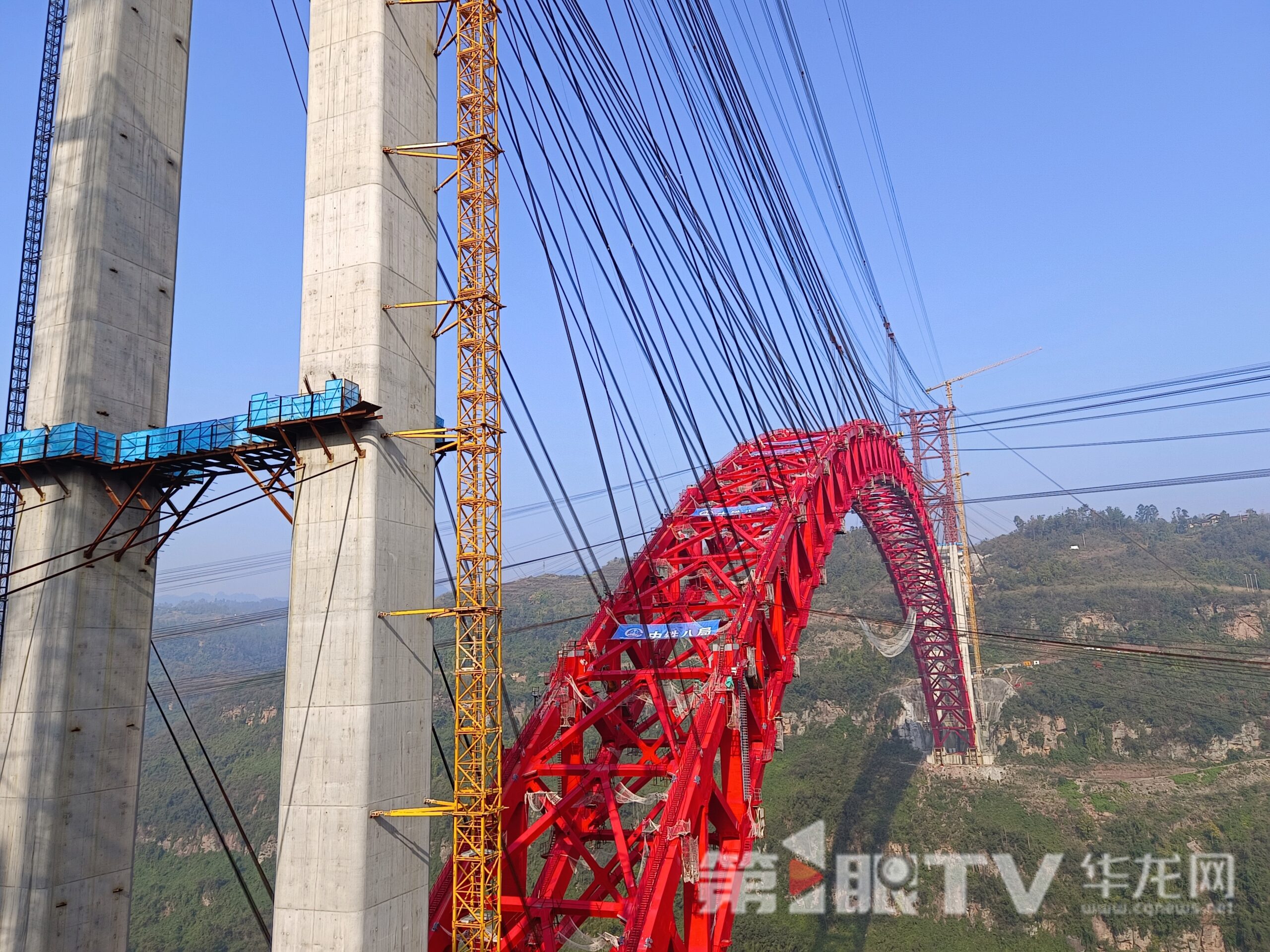
The Fenglai Daxi River Bridge on the Wuliang Expressway has a total length of 1,136.7 meters. The main bridge adopts a 580-meter deck-type steel box truss arch bridge, making it the world’s longest span steel arch bridge.
As a key and difficult control project along the entire route, the bridge features technical characteristics such as “super-large span, heavy-tonnage hoisting, and high-precision closure,” making it a typical representative of large-span steel truss arch bridge construction in mountainous areas of China.
The Fenglai Daxi River Bridge is located in the high, steep, and deeply incised canyon area of Wulong District. The bridge deck is over 310 meters above the river surface, equivalent to the height of a 100-story building. The entire bridge uses an all-steel structure with a total steel consumption of 25,000 tons. The largest single segment truss piece is 39.5 meters long, 18 meters high, and weighs 425 tons, equivalent to the height of a 6-story building and the weight of approximately 140 adult elephants.
Due to the high precision requirements for the alignment and stress of the super-large span arch bridge, the construction team broke through conventional arch bridge construction methods. For the first time, they adopted a construction philosophy of actively redistributing the stress in the upper and lower chords to form the arch, with dual control of stress and alignment. This overcame three core construction challenges: dual control of segment stress and alignment for the fully bolted steel truss arch bridge, adjustment of truss piece posture in limited space, and digital assembly of the arch rib with real-time alignment correction.
During the construction process, an innovative “prototype reset” assembly adjustment process was also adopted. This involved spatially matching the point cloud data models of the segment pre-assembly and the on-site bridge segments, significantly improving the construction accuracy and efficiency of the arch ribs.
Following the closure of the main arch, the 10,000-ton-level cantilever arch rib structure will complete the conversion of the force-bearing system, laying the foundation for subsequent superstructure construction and the full opening of the expressway.
The Wuliang Expressway starts from Pingqiao Town in Wulong in the west and connects to the Nanliang Expressway in the east, linking multiple areas including Wulong, Nanchuan, and Fuling. It has a total length of 36.7 kilometers. Upon completion, the Wuliang Expressway will directly shorten the travel time between Wulong and Liangjiang New Area by approximately 30 minutes, connect tourism resources such as Fairy Mountain and Baima Mountain, and promote development along the route.
Fenglai Daxi River Bridge
The Fenglai Daxi River Bridge is a modern bridge in Taiwan, constructed to improve transportation and connectivity in the region. While specific historical details are limited, it represents recent infrastructure development aimed at facilitating local travel and economic activity across the Daxi River.
Chongqing Wulong to Liangjiang New Area Expressway
The Chongqing Wulong to Liangjiang New Area Expressway is a modern transportation artery in Chongqing, China, constructed to enhance regional connectivity and economic development. It was built to reduce travel time between the Wulong Karst region, a UNESCO World Heritage site, and the urban economic hub of Liangjiang New Area. The expressway facilitates tourism and commerce while traversing the challenging mountainous terrain of Chongqing.
Wuliang Expressway
The Wuliang Expressway is a major highway in China’s Yunnan province, connecting Kunming to Mohan on the border with Laos. It was constructed as a critical section of the broader Asian Highway Network, with its development accelerating in the 21st century to facilitate trade and regional connectivity. The expressway is historically significant for turning the once-treacherous mountain routes of Yunnan into a modern transportation corridor, playing a vital role in the Belt and Road Initiative.
Wulong District
Wulong District is a scenic area in Chongqing, China, renowned for its unique karst landscapes, including natural stone bridges, gorges, and the Furong Cave. It gained global recognition after being designated a UNESCO World Heritage Site in 2007 for its exceptional geological features. The region has also served as a filming location for major movies, such as *Transformers: Age of Extinction*, further boosting its international profile.
Nanliang Expressway
The Nanliang Expressway is a modern highway in China’s Gansu Province, connecting Nanhuazhen to Lianhuacun. It was constructed to improve regional transportation and economic development in the arid Loess Plateau region. As a recently built infrastructure project, it does not have a long historical legacy but represents contemporary China’s focus on expanding its national expressway network.
Pingqiao Town
Pingqiao Town is a historic water town located in Suzhou, Jiangsu Province, China, known for its well-preserved ancient canals, bridges, and traditional architecture. Its history dates back over 1,000 years to the Song Dynasty, when it flourished as a commercial hub along the Grand Canal. Today, it serves as a popular tourist destination that showcases the charm of classical Jiangnan culture.
Liangjiang New Area
Liangjiang New Area is China’s first inland national-level development zone, established in 2010 in Chongqing. It serves as a key economic hub in western China, focusing on advanced manufacturing, logistics, and finance. The area was strategically created to drive regional development and attract foreign investment as part of China’s “Go West” strategy.
Fairy Mountain
Fairy Mountain, also known as Nanshan in Chinese, is a scenic and culturally significant mountain located in Hunan Province, China. It is renowned for its stunning natural landscapes of lush forests, unique rock formations, and sea of clouds, which have inspired local folklore and Daoist traditions. Historically, it has been a site for spiritual retreats and is home to ancient temples, with legends suggesting it is a dwelling place for immortals.