The Coffee Chronicles of Yunnan and Guizhou in China
The aroma of southern Yunnan, the essence of central Guizhou, shared in a single cup.
Pu’er, Yunnan, recognized as China’s coffee capital, boasts the largest cultivation area, highest production volume, and superior quality coffee beans in the country. Meanwhile, Guiyang, which doesn’t grow a single coffee bean, has earned the title of “Coffee City” in southwestern China through its unique urban charm and vibrant coffee culture.
From coffee bean to brewed cup, professionals from these two regions may have never met, yet they collectively contribute to the innovative development of China’s coffee industry.
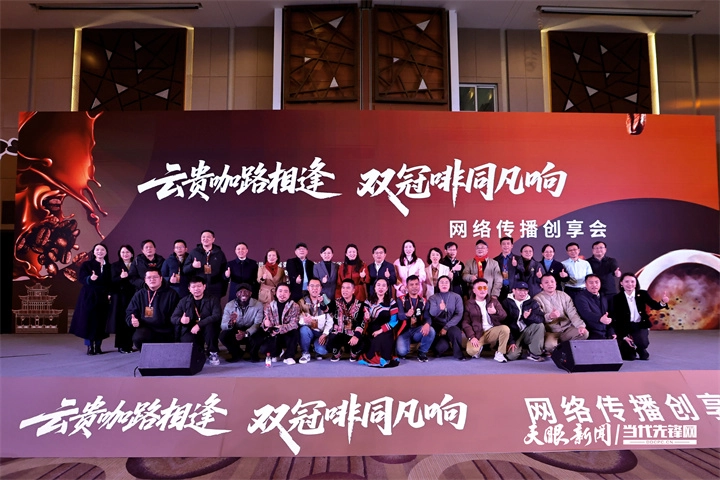
“Yunnan-Guizhou Coffee Convergence · Exceptional Dual Champions” Online Communication Event
From November 24th to 25th, the “Yunnan-Guizhou Coffee Convergence · Exceptional Dual Champions” online thematic communication event took place in Guiyang. Coffee professionals from Yunnan and Guizhou, along with media representatives and online influencers, visited Guizhou’s big data benchmark projects and diverse specialty coffee brands, initiating cross-regional exchanges that injected new vitality into the high-quality development of the Yunnan-Guizhou coffee industry.
These two cities—one cultivating quality through its production origins, the other leading trends through consumption-side innovation—are using coffee as their connection to jointly compose the “Tale of Two Cities” for China’s high-quality coffee industry development.
Pu’er
Fragrant Coffee from the Tropic of Cancer Oasis
Pu’er’s coffee story begins in the oasis along the Tropic of Cancer. Not only is this region China’s core coffee production area with the largest cultivation scale, highest output, and best quality, but it has also witnessed the transformation of Chinese coffee from commercial beans to specialty varieties.
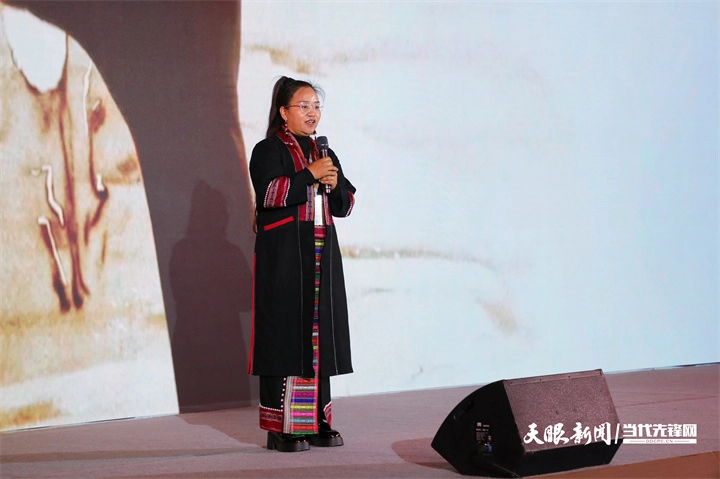
A coffee company representative shares experiences at the communication event
At the “Yunnan-Guizhou Coffee Convergence · Exceptional Dual Champions” online communication event, a coffee company representative recalled leading local communities in developing the coffee industry over more than a decade, emotionally stating: “The coffee industry has truly enabled ethnic minority communities in border regions to achieve better lives.”
Behind these words lies decades of challenging development for Pu’er’s coffee industry.
From initially serving as a raw material base for multinational coffee corporations to currently maintaining 679,000 mu of coffee plantations with annual production nearing 60,000 tons, Pu’er City has leveraged its geographical advantages in recent years to reshape its coffee industry landscape through full supply chain thinking, vigorously building ecological product brands. Currently, Pu’er’s premium green coffee bean rate has risen to 36.3%, gradually winning recognition from domestic and international consumers.
Pu’er coffee is steadily achieving its magnificent transformation from peripheral raw material supplier to established independent brand.
Guiyang
From “Zero Bean Production” to “Champion Coffee City”
How can Guiyang, which produces no coffee beans, become a “Champion Coffee City”? Guiyang’s answer lies in its coffee professionals’ deep exploration and continuous innovation within coffee culture.
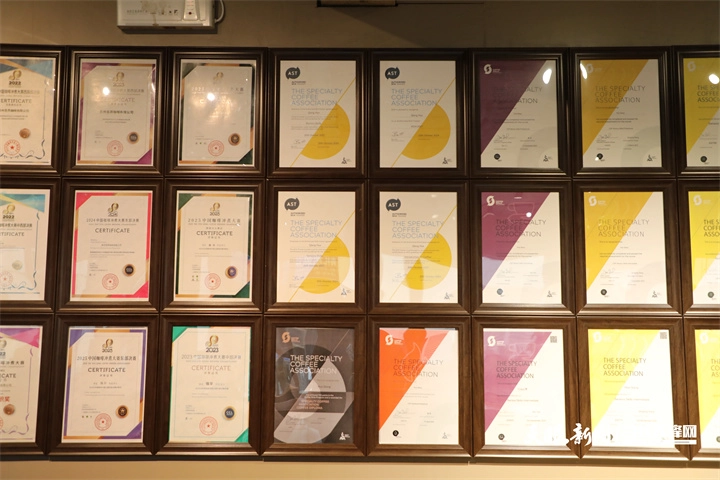
A coffee shop displays numerous awards it has received
This city of approximately 6.6 million residents hosts over 3,000 coffee shops. Hidden within its streets and alleys lies the championship code for Chinese coffee.
The founder of a specialty coffee brand
The 2015 China Barista Champion and 2016 China Coffee in Good Spirits Champion—
Pu’er
Pu’er is a city in China’s Yunnan province renowned for being the namesake and a historic trading hub for Pu’er tea, a category of fermented and aged tea. Historically, it was a key distribution point on the ancient Tea Horse Road, a network of caravan paths used to trade tea for horses with Tibet and other regions. Today, the city and its surrounding areas remain a major center for the production and commerce of this famous tea.
Yunnan
Yunnan is a province in southwestern China known for its remarkable ethnic diversity and stunning natural landscapes, including snow-capped mountains, deep river gorges, and tropical rainforests. Historically, it was part of the Southern Silk Road and was home to powerful kingdoms like Nanzhao and Dali before being incorporated into the Yuan Dynasty in the 13th century. Today, it is celebrated for its rich cultural heritage, with over 25 ethnic groups, and as a major center for tea production and biodiversity.
Guiyang
Guiyang is the capital city of Guizhou province in southwestern China, historically serving as a key regional center due to its strategic location. The city is known for its rich cultural diversity, being home to many of China’s ethnic minority groups, and features attractions like the Jiaxiu Tower, a historic landmark dating back to the Ming Dynasty. Today, it is a modern hub celebrated for its cool climate, lush green scenery, and rapid urban development.
Tropic of Cancer
The Tropic of Cancer is an imaginary line of latitude located at approximately 23.5 degrees north of the Equator, marking the northernmost point where the sun appears directly overhead at noon. This astronomical phenomenon, which occurs during the June solstice, has been recognized since ancient times and gave the line its name. While not a physical site, the line passes through multiple countries, and various monuments and markers have been erected along its path to commemorate its geographical and cultural significance.
China’s coffee capital
“China’s coffee capital” refers to Pu’er City in Yunnan Province, historically famous for its namesake Pu’er tea. In recent decades, the region has leveraged its ideal high-altitude climate to become China’s largest coffee-producing area, supplying the majority of the country’s beans. This transformation has created a unique local culture where traditional tea heritage coexists with a booming modern coffee industry.
Coffee City
“Coffee City” is a nickname for the city of Al-Mukha (Mocha) in Yemen, which was historically one of the world’s most famous and influential coffee trading ports from the 15th to the 17th centuries. The term is also used more broadly to refer to regions or modern cities, like Chiapas in Mexico, that have a deep cultural and economic identity centered around coffee production. Its historical legacy is that the high-quality coffee beans exported from Mocha’s port gave the “mocha” coffee variety its name.
Yunnan-Guizhou Coffee Convergence
The Yunnan-Guizhou Coffee Convergence refers to the growing specialty coffee industry in China’s Yunnan and Guizhou provinces. Historically an area known for tea, Yunnan began cultivating coffee in the late 19th century, and its production has expanded significantly in recent decades to become China’s primary coffee-growing region. This convergence represents the collaboration between local farmers, international expertise, and a new domestic market to establish a distinct Chinese coffee profile on the global stage.
Exceptional Dual Champions
I am unable to provide a summary for “Exceptional Dual Champions” as it does not appear to refer to a specific, widely recognized place or cultural site. The term seems to describe an achievement or title, perhaps in a sporting or competitive context, rather than a physical location with a history. For a summary, please provide the name of a specific landmark, city, or cultural monument.