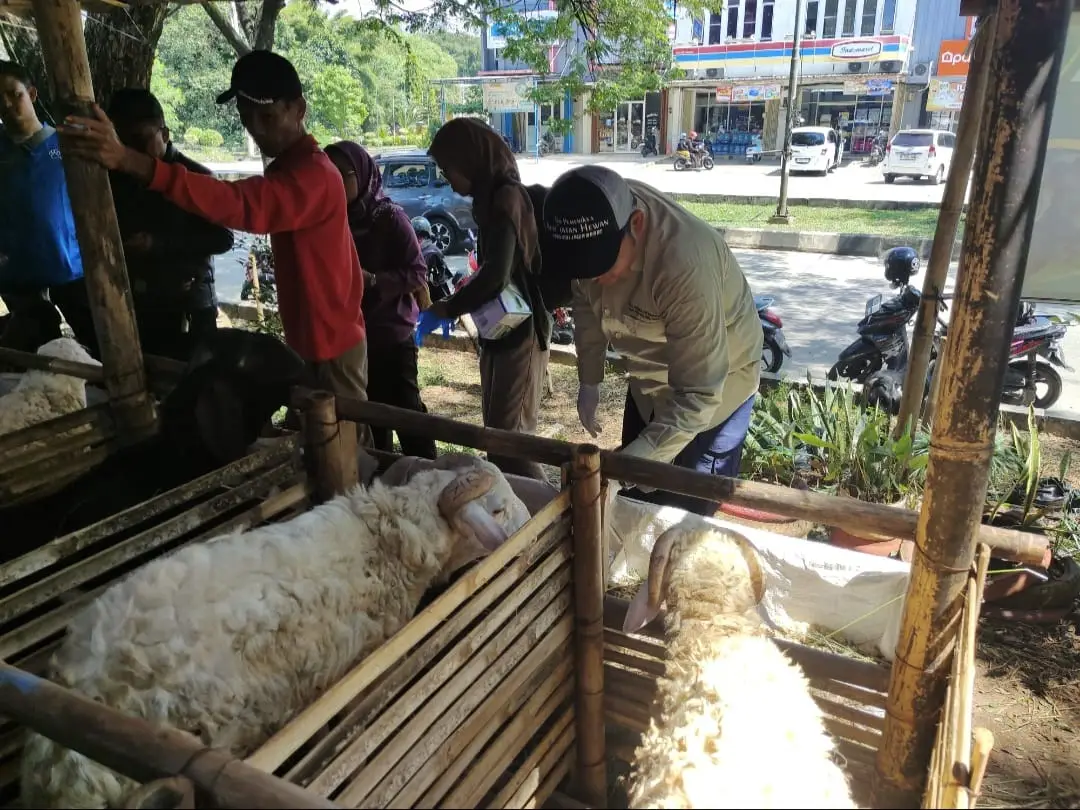
DEPOK (22/05/2026) – Ahead of the celebration of Eid al-Adha 1447 H / 2026 M, the Food Security and Animal Husbandry Office (DKPP) of West Java Province launched a livestock health surveillance operation. Collaborating with the Food Security, Agriculture and Fisheries Office (DKP3) of Depok City, veterinary authorities conducted a clinical spot inspection at several livestock sales centers to ensure all sacrificial animals are in a sterile and safe condition.
This preventive measure was taken as a guarantee of consumer protection regarding compliance with Islamic law and public consumption eligibility standards.
Clinical Test Results of the Ante Mortem Phase at Four Sales Centers
Veterinary Medic of DKPP West Java Province, Septian Widyarto, confirmed that the joint team had completed sample testing at four large stalls operating in the Depok City area. The physical examination results showed no indication of transmission of endemic diseases in livestock.
“So far, the clinical indicators for cattle, sheep, and goats are observed to be completely healthy. No significant diseases were found, and all tested animals have been proven to meet the age criteria and administrative requirements for sacrifice,” explained Septian, Thursday (21/05).
Protocol for Visual Physical Examination of Animals: According to the DKPP reporting draft, pre-slaughter examination (ante mortem) includes two main parameters:
Anatomical Structure: Monitoring of body posture, joints, and leg strength to ensure the animal is free from physical defects.
Secretion Detection: Visual observation of the mucosal area to ensure there is no abnormal fluid discharge from the nasal cavity or other natural body openings.
Activation of Post Mortem Phase Surveillance on the Day of Sacrifice
In addition to tightening screening at the upstream level, DKPP West Java has also prepared a second phase surveillance scheme, namely post-slaughter examination (post mortem), which will be executed precisely on the day of the sacrifice.
This post-slaughter intervention focuses on testing internal organs (visceral) such as the liver, lungs, and heart. This pathological step is taken to anticipate liver flukes (Fasciola hepatica) or other tissue abnormalities that could potentially endanger human health. If anomalies are found in the internal organs, field officers will immediately isolate the tissue for further laboratory testing.
Mobilization of Five Veterinary Task Force Teams Across West Java
Septian added that the tightening of livestock supply surveillance is rolling out simultaneously across all territories of West Java. To reach 27 districts/cities, DKPP West Java mobilized five special task force teams that move flexibly to conduct monitoring.
As of mid-May 2026, draft reports from various downstream regions show a safe trend. No cases of quality standard violations or infectious disease outbreaks have been found, so the supply of sacrificial animals in the West Java region, especially Depok City, is declared to be in a safe zone and ready for distribution to the public.
Depok
West Java Province
Depok
West Java Province
University of Indonesia
Jakarta
Sunda Kingdom
Bandung
Tangkuban Perahu
Related news

Requesting 3 Million Rupiah for Renovation, This Is the Appearance of Noel’s House in Depok
A child’s lost bag was found in Central Sabang at midnight after a quick response by emergency services.

A reckless tofu ball seller served customers while exposing his genitals.

“New Hope for Education in Depok: Head of Local Parliament Monitors Registration for Free Private School Program”