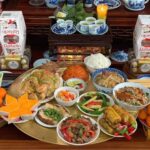
An art form created by the ancient community of Tong Goi
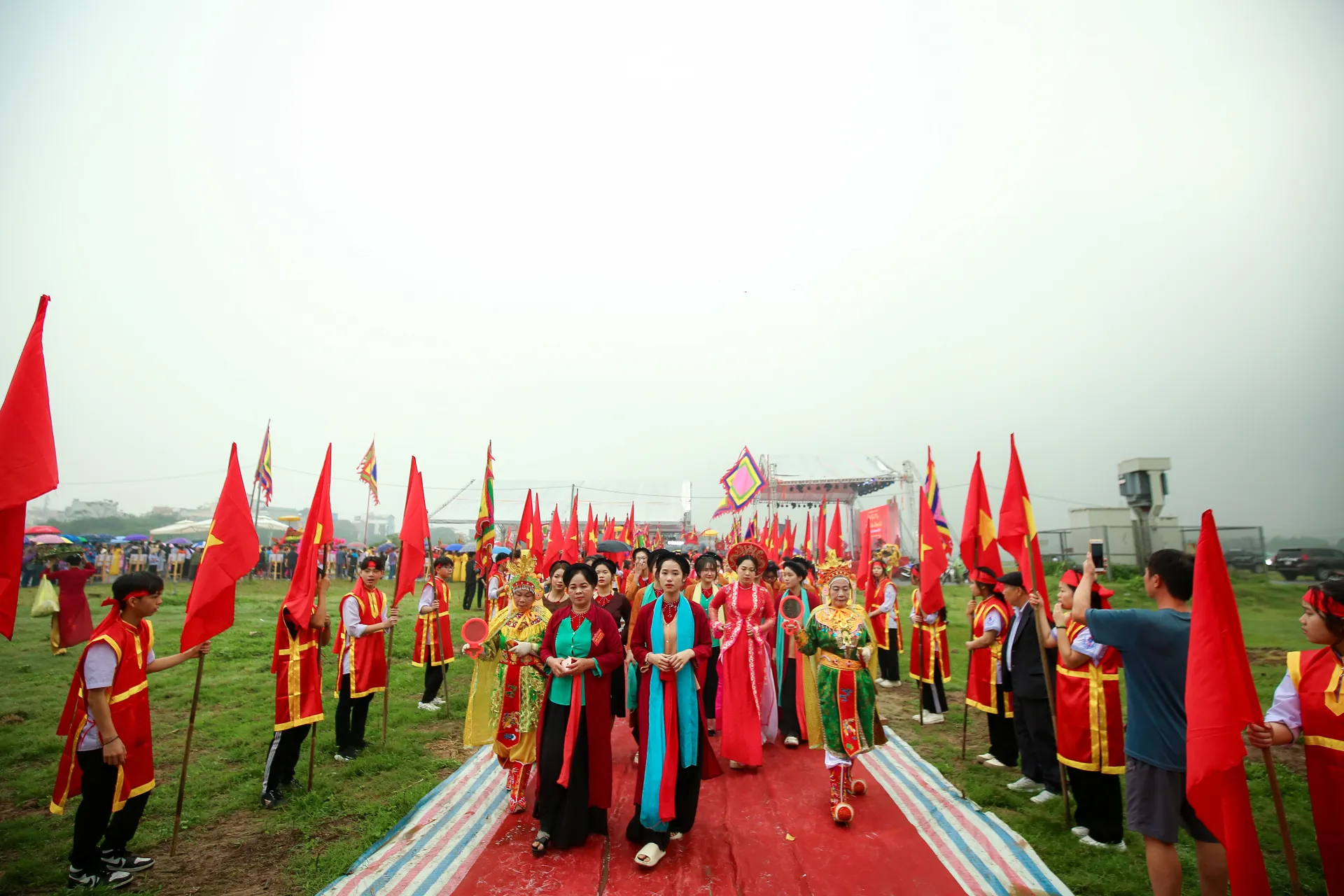
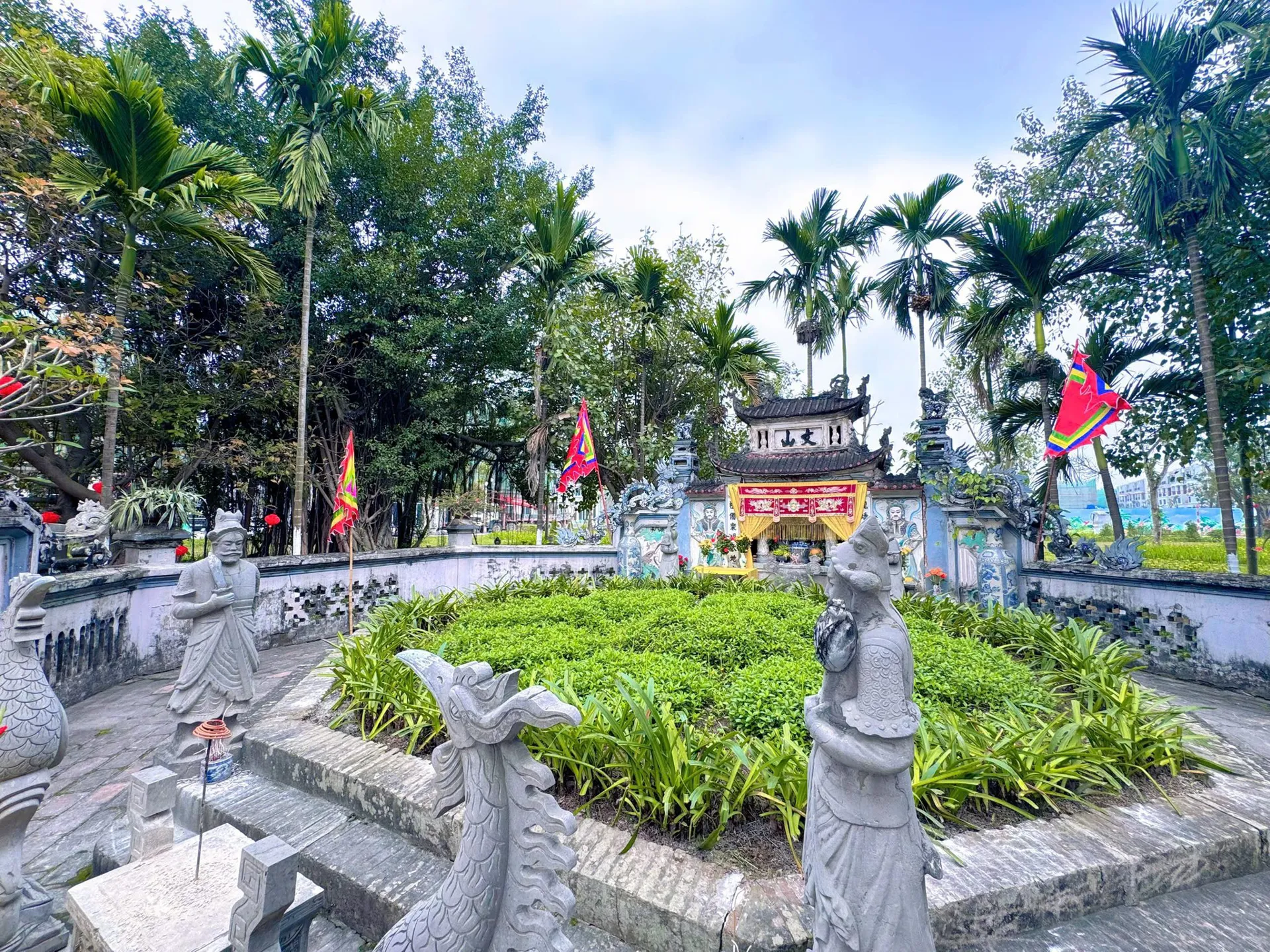
In recent days, the space of the Voi Phuc Temple relic, the place of worship for Van Di Thanh and Lang Van Son, his resting place, which is also the site for practicing the heritage of the Tong Goi Boat Cheo Singing Festival from the 17th century to the present, has been splendidly decorated with flags and flowers, creating a joyful and exciting atmosphere. Local officials and people are bustling in anticipation of the Ceremony announcing the decision to inscribe the Tong Goi Boat Cheo Singing Festival into the national list of intangible cultural heritage, taking place on March 1, 2026.
In the consciousness of the ancient Tong Goi people, Van Di Thanh was a talented general who contributed to fighting invaders. Van Di Thanh established a military post in the field southeast of Thuong Hoi village. From here, he launched attacks; relying on the terrain flanked by two rivers—the Nhue River and the Red River—the righteous army inflicted many major defeats on the enemy forces.
During a battle with the enemy, he sacrificed his life on March 12, 1416. At the place of his sacrifice, the people built a tomb and constructed a mausoleum for worship, honoring him as the Tutelary God, and erected the Voi Phuc Temple in Thuong Hoi village as the main place of worship. The villages: Thuy Hoi, Phan Long, and Vinh Ky all have communal houses for distant worship. Dynasties from the Later Le (1620) to the Nguyen (1924) bestowed upon him many edicts of recognition; although many have been lost, 40 such edicts are still preserved to this day.
After Van Di Thanh’s death, the People combined the existing singing traditions of this region—boat cheo singing (also called elephant boat singing)—and established the practice of rituals, forming a special festival to commemorate him and as an occasion for the community to participate together and enjoy cultural values.
Regarding the time of origin and the source of boat cheo singing, there are still many different viewpoints today. However, it must be affirmed that this is a folk performing art form created by the ancient community of Tong Goi People. The emergence and development of boat cheo singing, based on the cultural life of the local community, were formed during the labor and production processes of the people and have been continuously enriched and perfected over time.
The Tong Goi Boat Cheo Festival was first organized in 1683 from the 15th to the 21st day of the first lunar month at Lang Van Son. Approximately every 20 to 25 years, the villagers would choose a year of favorable rain and wind, where the people of the four hamlets had a good harvest and prosperity, to organize the festival; the last time it was organized during the feudal dynasty was in 1922 (the Year of the Dog).
During the war period, the Boat Cheo Singing Festival was interrupted. In 1998, the Tong Goi Boat Cheo Festival was restored by the community and local authorities. The next festival organizations were in 2015 and 2024. The local people unanimously decided to organize the festival every 5 years, on even-numbered years coinciding with Van Di Thanh’s birthday. The main cultural space of the festival is the Voi Phuc Temple relic site and Lang Van Son, belonging to Thuong Hoi village, formerly of Tan Hoi commune, Dan Phuong district, now part of O Dien commune, Hanoi City.
Promoting the Development of Cultural Industries
Boat Cheo Singing, also called boat singing, is a form of folk performance with songs praising the Saint in the following order: ceremonial presentation – presentation singing; wine offering song, boat-elephant song; ‘bo bo’ singing; various lyrical songs; various repartee songs. The space, props, and performing subjects evoke images of boats carrying troops to fight the