
From December 11th to 12th, the 2026 Asia-Pacific Economic Cooperation (APEC) Informal Senior Officials’ Meeting was held in Shenzhen, marking the beginning of the APEC “China Year.”
Shenzhen is a crucial window for China’s steadfast commitment to a mutually beneficial and win-win opening-up strategy. Hosting the APEC meeting is a significant task entrusted to Shenzhen by the central government and a major opportunity for the city to accelerate its development into a more globally influential economic center and a modern international metropolis.
In February of this year, Shenzhen implemented the “Work Plan for Accelerating the Construction of a Modern International Metropolis (2025-2027)” as its No. 1 municipal policy document, outlining a comprehensive blueprint for building a modern international metropolis.
As the lead department for this initiative, the Municipal Foreign Affairs Office has collaborated with various city units, taking proactive steps and ensuring implementation. This has led to tangible progress in enhancing the city’s international economic competitiveness, building high-level windows for opening up, creating a first-class international environment for living, working, and tourism, and shaping the city’s international brand image.
Advancing the Dual Enhancement of International Language Soft and Hard Environments
Building an international language environment is a key component of developing a modern international metropolis. A language environment conducive to opening up and international exchange reflects the city’s global image and is a source of its competitiveness.
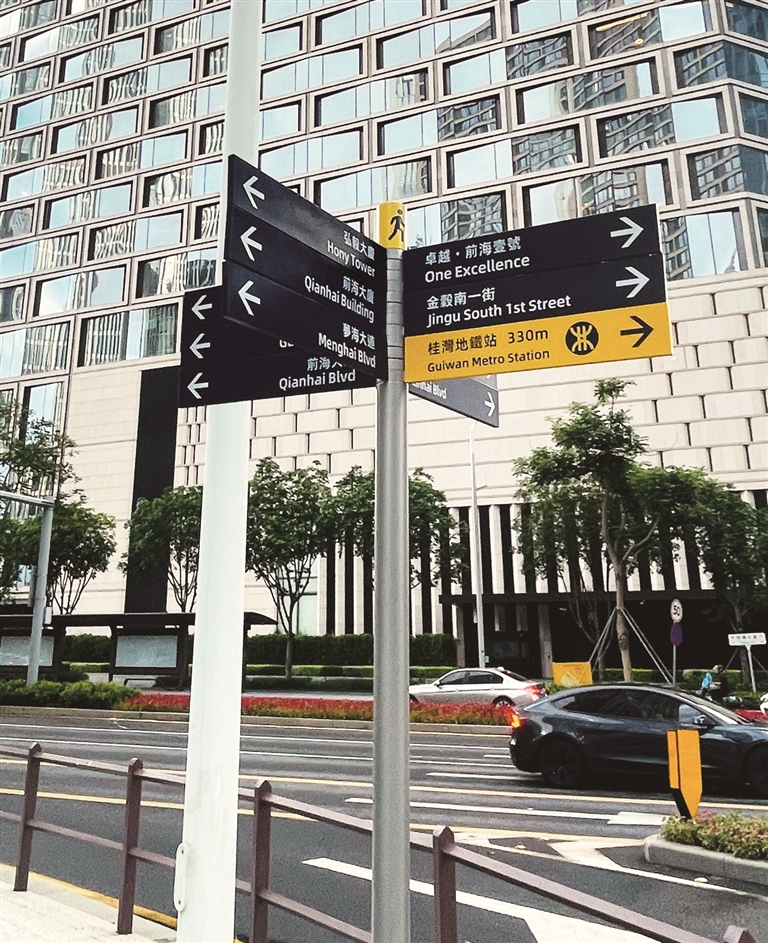
This year, Shenzhen issued the “Action Plan for Further Strengthening International Language Environment Construction (2025-2027),” aiming to optimize the international language environment by improving translation standards, establishing collaborative mechanisms, and building a translation and writing query platform. The Municipal Foreign Affairs Office, together with district and departmental authorities, has steadily advanced 21 key tasks across 7 areas, including compiling foreign language public signage manuals for key sectors, improving collaborative mechanisms for international language environment construction, and expanding the coverage of foreign language public signage.
Among these, enhancing the guidance and service level of foreign language public signage in public spaces is a crucial measure.
Standardized bilingual Chinese-English signage has been upgraded on 16 municipal expressways and main roads; over 1,000 foreign language signs in urban public spaces have been standardized; professional teams conduct regular inspections and supervision of foreign language public signage; city-wide training on foreign language public signage has been organized… The Municipal Foreign Affairs Office maintains consistent efforts and proactive service, further increasing inspection and service intensity for foreign language signage, continuously improving its guidance level, and ensuring signage is installed where needed and meets standards.
The Municipal Foreign Affairs Office developed and officially launched the Public Signage Chinese-English Translation Query System (Shenzhen) in October 2023. The system includes sections for querying standardized translations, public signage information, and a “citizen snapshot” feature, containing over 17,000 entries of foreign language public signage. Citizens actively participate in identifying gaps and errors through the system’s “snapshot” function, submitting over a thousand translation suggestions, which are then studied, feedback provided, and corrections made by expert panels.
Leveraging its strengths in technological innovation, Shenzhen is integrating artificial intelligence into international language environment construction, building a city-wide smart language service system covering key areas.
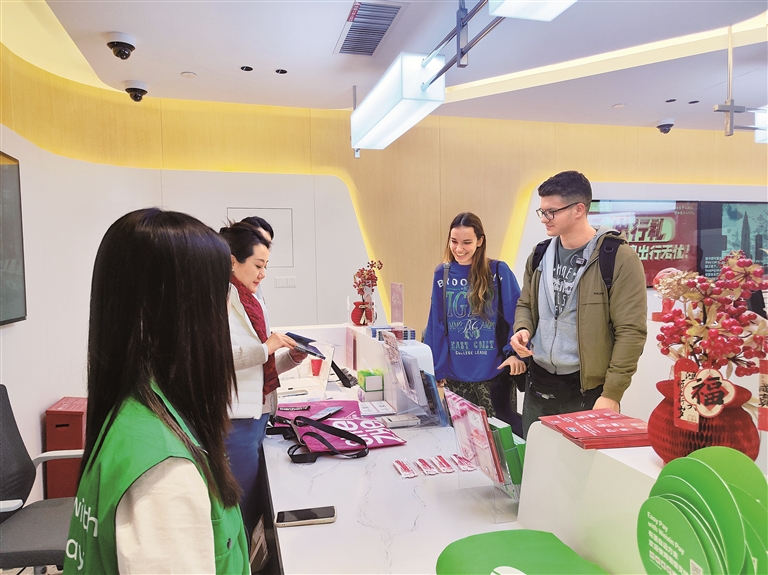
Currently, Shenzhen has deployed over 6,700 sets of AI translation devices, covering subways, buses, taxis, the airport, Shekou Cruise Home Port, and 7 land ports. They are also available in 147 government service venues, key cultural venues, and 5A-level scenic spots, with deployments being promoted in major commercial districts like Shenye Shangcheng, Qianhai Yifang City, and Bao’an Daqianli.
“The AI translator quickly and accurately translates my English into Chinese, and the driver can communicate smoothly with me through it. The experience is fantastic.” The “Little Yellow Hat” taxis operated by Shenzhen Bus Group have fully implemented the MossTalk AI smart translation device, supporting real-time translation for over 140 languages, enabling “zero-bar