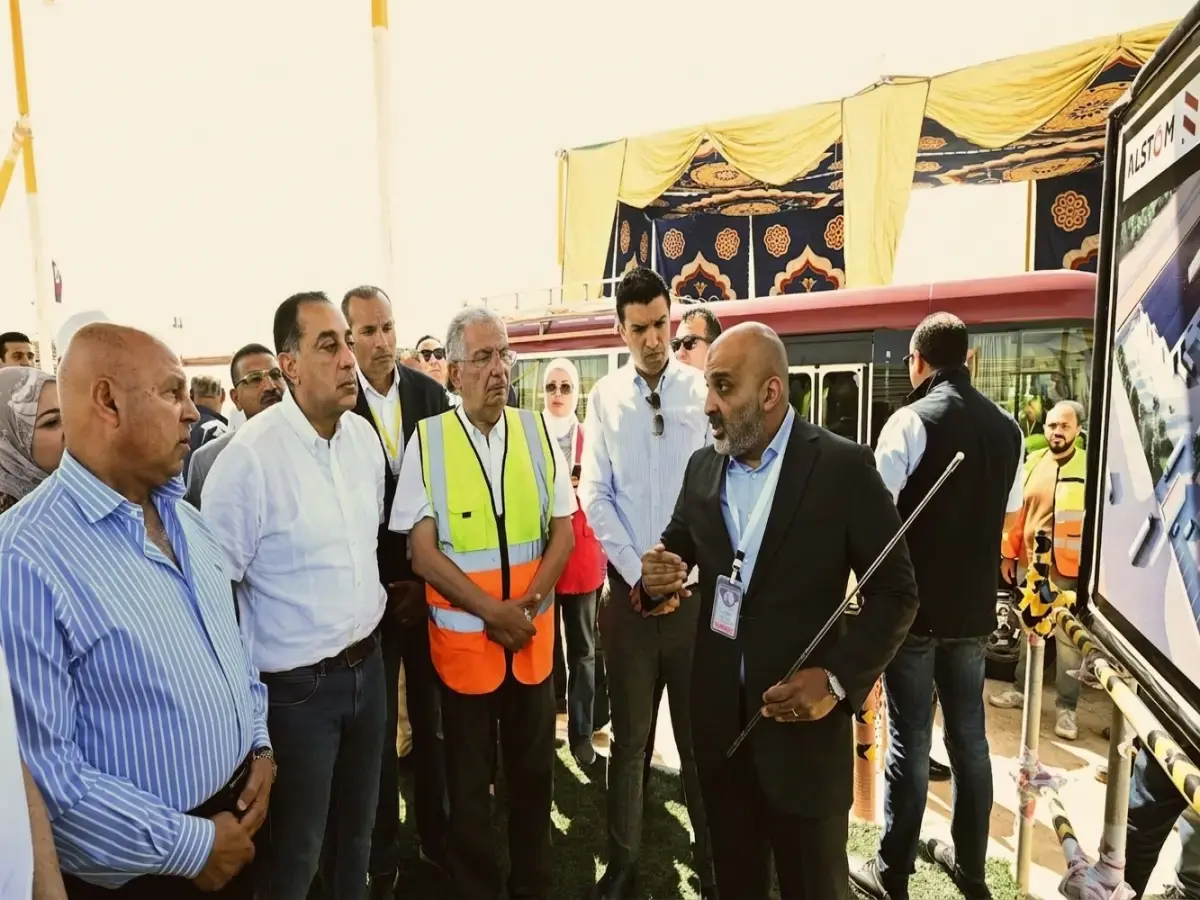
Egypt has officially begun constructing a massive industrial base to localize the transportation industry, as an executive revealed that the Alstom complex project in New Borg El Arab will provide approximately 700 direct job opportunities in its first factory, built on a total area of 50 acres.
This announcement came during an inspection of the Alstom industrial complex, as part of national efforts to enhance and localize the railway industry.
During the visit, it was emphasized that the industrial sector is a fundamental pillar for sustainable economic growth and the competitiveness of the national economy, noting the state’s continued support for national industry through increased production, deepening local manufacturing, and expanding market access for exports.
The importance of this massive project was highlighted, which will serve the local market and expand to export to Middle Eastern and African countries. It was added that the project is being implemented as part of a plan to localize heavy industries in Egypt, including railway and metro manufacturing, in line with directives to save foreign currency, support the national economy, and transfer expertise to Egyptian workers.
It was explained that the localization plan includes producing switch points at the Voestalpine Egypt factory in Abbassia, manufacturing interior components for railway trains at the Coloway Egypt factory in Kom Abu Radi workshops, producing rails at the Suez Steel factory, localizing concrete sleeper production through six factories by national Egyptian companies, manufacturing carriages at the Semaf factory, establishing the industrial complex for Alstom in Borg El Arab, producing brake pads for railway trains at the Transbrick factory in Alexandria, and manufacturing rolling stock and its components through the National Egyptian Railway Industries Company (NERIC).
A detailed explanation of ongoing work and the timeline was provided. It was revealed that the project includes two main factories: the first specializes in producing electrical systems on an area of 13 acres, providing about 700 direct job opportunities, with a completion rate of 52% and a target finish date of the end of October 2026. The second factory specializes in manufacturing all types of rolling stock on an area of 37 acres, and will include the production of metro, tram, Light Rail Transit (LRT), monorail, high-speed trains, and others, providing 250 direct job opportunities.
At the conclusion of the visit, an aspiration was expressed to accelerate implementation rates to start operating the project as soon as possible and increase production pace to meet local needs and enhance export opportunities.
New Borg El Arab
New Borg El Arab is a planned city located near Alexandria, Egypt, established in the late 1970s to alleviate overcrowding in Alexandria and stimulate industrial growth. It was built around the historic Borg El Arab district, which has ancient roots dating back to the Greco-Roman period. Today, it serves as a major industrial and residential hub, featuring modern infrastructure and the Borg El Arab Airport.
Alstom industrial complex
The Alstom industrial complex is a major manufacturing hub for the French multinational company Alstom, which specializes in rail transport equipment and power generation. Historically, the company was founded in 1928 and grew through mergers and acquisitions, becoming a global leader in high-speed trains and energy infrastructure. The complex itself represents a key site in the company’s operations, particularly for the production of trains and signaling systems.
Abbassia
Abbassia is a district in Cairo, Egypt, known for its historical and cultural significance. Its name derives from the Abbasid Caliphate, and it became a prominent neighborhood in the 19th century under Khedive Ismail’s modernization efforts. Today, it houses important institutions like the Al-Azhar University’s main campus and the Cairo
New Borg El Arab
New Borg El Arab is a planned city in Egypt, located about 45 kilometers southwest of Alexandria, established in 1979 to alleviate overcrowding in the greater Alexandria area. It was built on a desert plateau and named after the nearby Borg El Arab Airport, which itself is named after a historic Arab fortress. The city serves as an industrial and residential hub, blending modern urban planning with Egypt’s ongoing efforts to expand into its desert regions.
Alstom industrial complex
The Alstom industrial complex is a major manufacturing site associated with the French multinational company Alstom, which specializes in rail transport, power generation, and transmission equipment. Historically, Alstom has been a key player in the development of high-speed trains and railway infrastructure, with facilities like this complex often involved in assembling and maintaining trains such as the TGV. The complex reflects the company’s long-standing industrial heritage and its role in advancing transportation technology.
Abbassia
Abbassia is a district in Cairo, Egypt, named after the Abbasid caliphs and developed in the 19th century. It is historically significant for housing the Cairo International Stadium, the Al-Azhar University’s medical school, and the historic Abbassia Cemetery. Today, it serves as a major transportation hub and a residential area, blending modern urban life with its rich historical roots.
Kom Abu Radi workshops
The Kom Abu Radi workshops are archaeological sites in Egypt linked to ancient glassmaking and metalworking, particularly active during the Roman and Byzantine periods. Excavations have revealed furnaces, slag, and raw materials, indicating a specialized industrial zone for producing glass vessels and metal items. These workshops provide valuable insight into the technology and trade networks of the ancient Mediterranean world.
Suez Steel factory
The Suez Steel factory, located in the Suez Canal region of Egypt, was a major industrial facility established in the mid-20th century to support the country’s steel production and economic development. It played a key role in Egypt’s industrialization efforts, but its operations were heavily impacted by regional conflicts, particularly the 1967 Six-Day War and subsequent wars, which led to damage and disruption. After years of decline, the factory was eventually closed, leaving a legacy as a symbol of post-colonial industrial ambition and the challenges of sustaining heavy industry in a volatile region.
Semaf factory
The Semaf factory was a major industrial complex in Cairo, Egypt, originally established in the early 20th century to manufacture and repair railway equipment, including locomotives and rolling stock. It played a crucial role in Egypt’s transportation infrastructure and industrial development, particularly under British influence. Today, parts of the historic site have been repurposed for cultural and commercial use, reflecting the city’s evolving urban landscape.
Borg El Arab
Borg El Arab is a city in Egypt located near Alexandria, known for its industrial zone and the Borg El Arab International Airport. Historically, the area was developed in the late 20th century to alleviate population pressure on Alexandria and has since grown as a major manufacturing and logistics hub. It is also home to the Borg El Arab Stadium, a key sports venue for the region.
Alexandria
Alexandria is a historic port city in Egypt founded by Alexander the Great in 331 BCE. It became a major center of Hellenistic civilization, renowned for the Great Library and the Lighthouse of Alexandria, one of the Seven Wonders of the Ancient World. Today, it remains a vibrant cultural hub, blending its ancient heritage with modern Egyptian life.