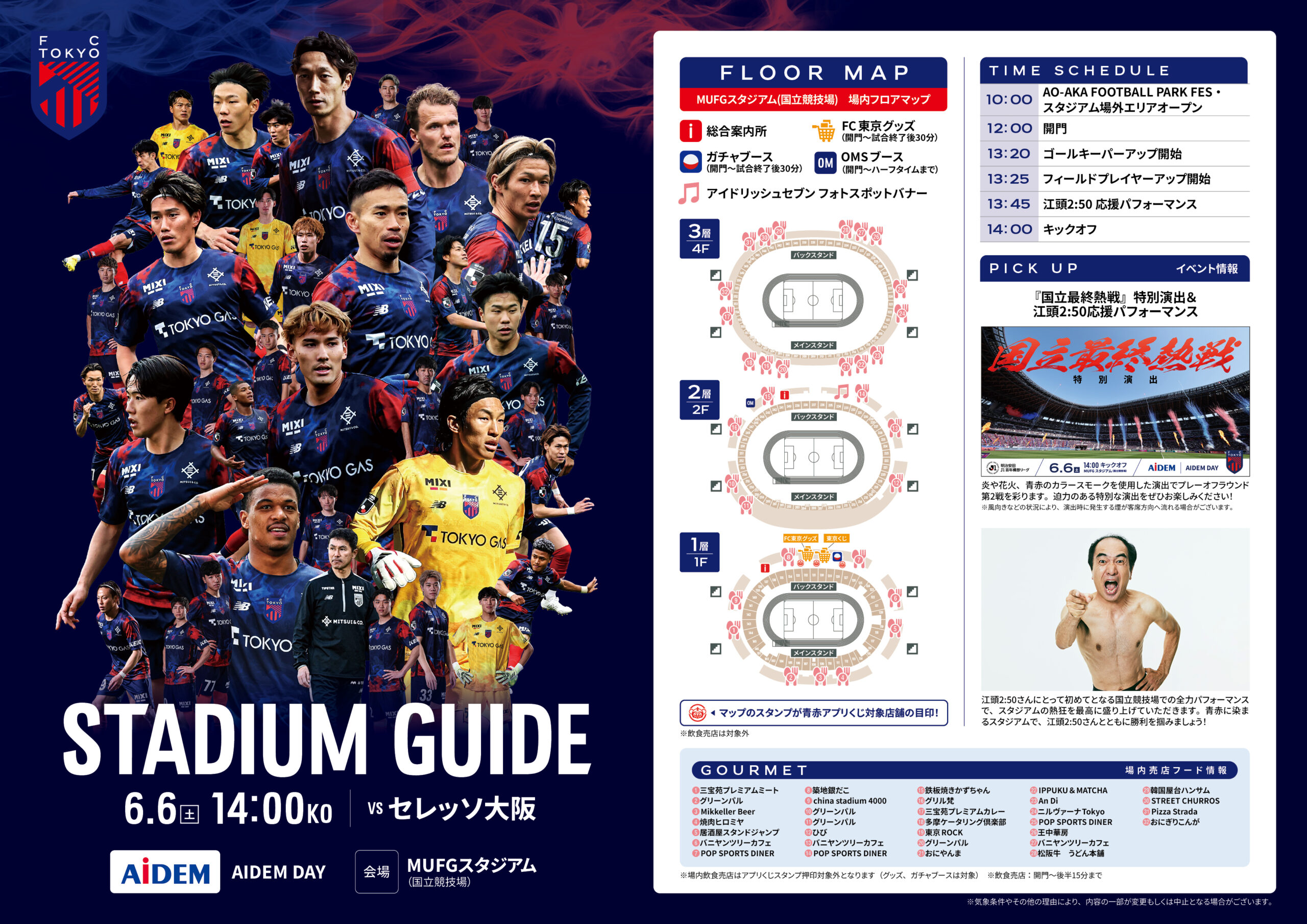
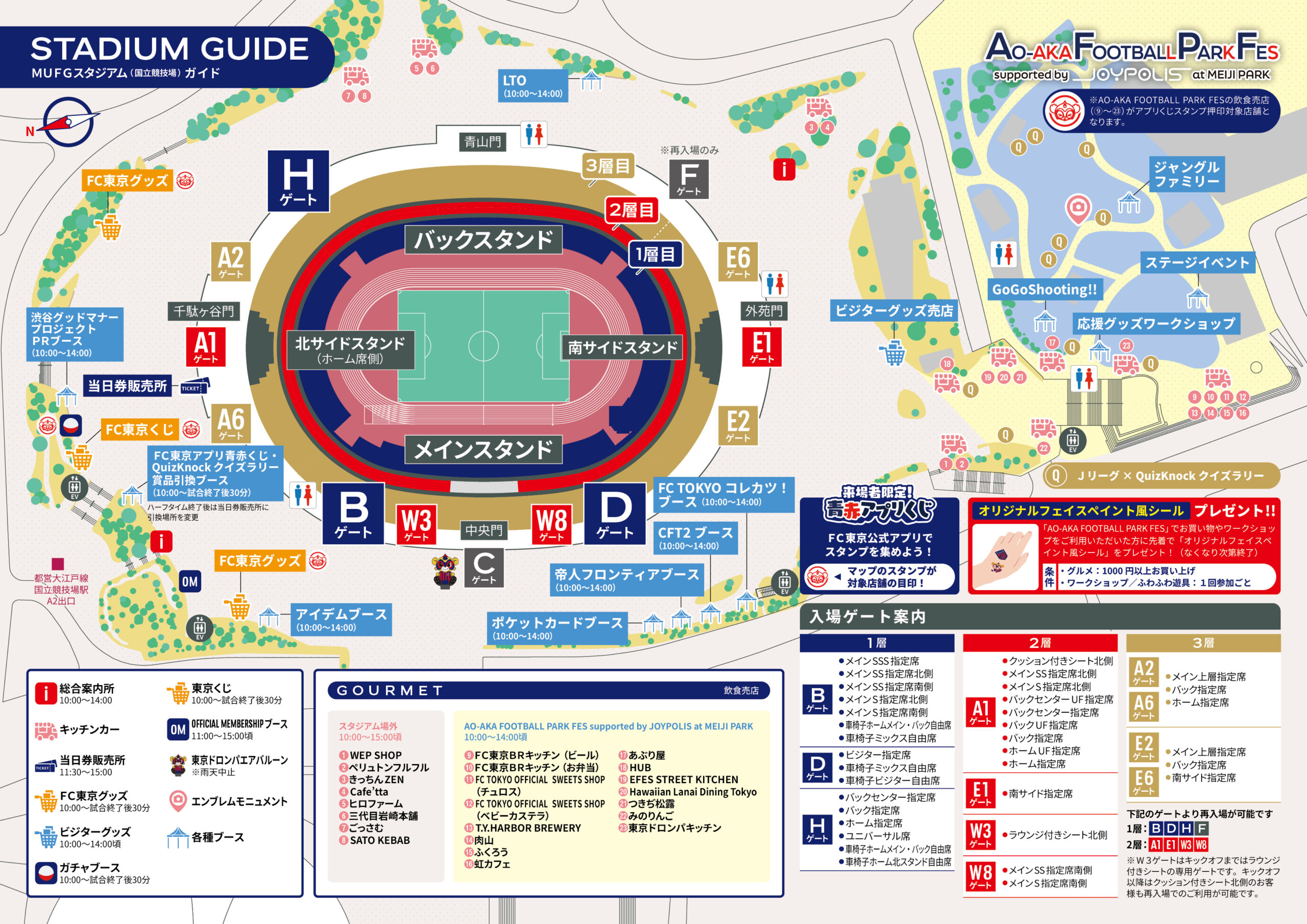
On Saturday, June 6, the stadium guide for the second match of the Meiji Yasuda J1 Centenary Concept League playoff round against Cerezo Osaka (kickoff at 14:00 / MUFG Stadium (National Stadium)) is provided.
◇Ticket purchase
◇Match information details
◇PDF version
On match day, the stadium guide can also be checked from the official FC Tokyo app.
◇App download
※Tap “Stadium” at the bottom of the official FC Tokyo app screen and select “Stadium Map” to check.
MUFG Stadium (National Stadium)
MUFG Stadium, also known as the National Stadium in Tokyo, Japan, is a multi-purpose venue originally built for the 1964 Summer Olympics and later rebuilt for the 2020 Summer Olympics. Designed by architect Kenzō Tange, the original stadium hosted the opening and closing ceremonies of the 1964 Games, while the current structure, completed in 2019, features a modern design with wooden elements. It remains a key site for major sporting events, including football and rugby matches, as well as cultural and athletic competitions.
MUFG Stadium (National Stadium)
MUFG Stadium, formerly known as the National Stadium in Tokyo, Japan, was originally built for the 1964 Summer Olympics and has been a landmark of Japanese sports history. It underwent a major reconstruction to host the 2020 Summer Olympics, featuring a modern design with wooden latticework that blends tradition and innovation. Today, it serves as a multi-purpose venue for sporting events, concerts, and cultural activities.
1964 Summer Olympics
The 1964 Summer Olympics, officially known as the Games of the XVIII Olympiad, were held in Tokyo, Japan, from October 10 to 24. These Games were historically significant as they marked the first time the Olympics were hosted in Asia, symbolizing Japan’s post-World War II recovery and re-emergence as a modern, peaceful nation. The event introduced many technological innovations, such as satellite broadcasting and the use of computers for scoring, and left a lasting legacy of urban development and global goodwill.
2020 Summer Olympics
The 2020 Summer Olympics, officially known as the Games of the XXXII Olympiad, were held in Tokyo, Japan, from July 23 to August 8, 2021, after being postponed for a year due to the global COVID-19 pandemic. This marked the first time in Olympic history that the Games were rescheduled in peacetime, and they were largely held without spectators to prevent the virus’s spread. Despite the challenges, the event featured new sports like skateboarding, sport climbing, and surfing, and highlighted themes of resilience and unity.
Kenzō Tange
Kenzō Tange was a pioneering Japanese architect and a key figure in 20th-century modernism, known for blending traditional Japanese aesthetics with contemporary design. He gained international recognition for his iconic works, such as the
</div
MUFG Stadium (National Stadium)
MUFG Stadium, originally built as the National Stadium for the 1964 Summer Olympics in Tokyo, Japan, was a historic venue for international athletics and football, including the 1991 FIFA World Youth Championship. It was demolished in 2014 to make way for the new Japan National Stadium, which hosted the 2020 Summer Olympics. The name “MUFG” refers to the MUFG Bank’s naming rights for the current stadium.
1964 Summer Olympics
The 1964 Summer Olympics, officially known as the Games of the XVIII Olympiad, were held in Tokyo, Japan, from October 10 to 24, 1964. These Games were historically significant as they marked the first Olympics ever hosted in Asia, symbolizing Japan’s post-World War II recovery and re-emergence as a peaceful, modern nation. The event introduced innovations like slow-motion replays and computer-generated timing, and it showcased Japan’s technological advancements, including the famous Shinkansen “bullet train” that began service just days before the opening ceremony.
2020 Summer Olympics
The 2020 Summer Olympics, officially known as the Games of the XXXII Olympiad, were held in Tokyo, Japan, from July 23 to August 8, 2021, after being postponed for a year due to the COVID-19 pandemic. This marked the second time Tokyo hosted the Summer Olympics, the first being in 1964, and the Games were conducted largely without spectators to prevent the spread of the virus. Despite the challenges, the event showcased athletic excellence and resilience, featuring new sports like skateboarding, sport climbing, and surfing.
Kenzō Tange
Kenzō Tange was a renowned Japanese architect and a key figure in 20th-century modernist architecture. He is best known for designing iconic structures such as the Hiroshima Peace Memorial Museum and the Yoyogi National Gymnasium in Tokyo, blending traditional Japanese aesthetics with modern forms. Tange’s work and teachings profoundly influenced post-war architecture, earning him the Pritzker Architecture Prize in 1987.