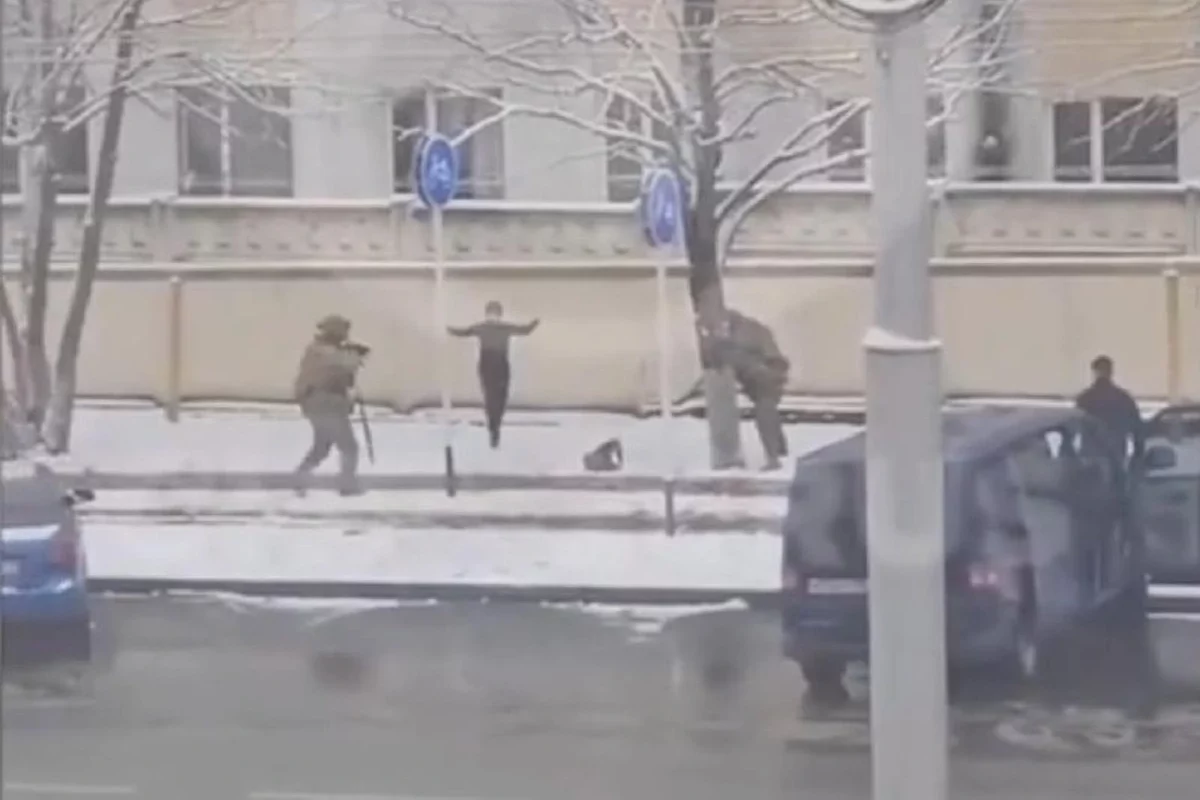
A suspect in the preparation of a terrorist attack against a Russian Defense Ministry officer was detained by FSB officers while installing a homemade explosive device.
According to the FSB Public Relations Center, an 18-year-old resident of the Krasnodar region fell under the influence of telephone scammers in December of this year. The fraudsters, using the false threat of criminal prosecution, persuaded her to commit a terrorist act. She received the explosives from Ukrainian special services.
The young woman planned to attach a homemade explosive device with a power equivalent to 400 grams of TNT to one of the cars parked near a military unit in Stavropol.
The name of the Russian Defense Ministry officer whose car the woman attempted to mine has not been disclosed.
A criminal case has been initiated against the woman under articles on attempted terrorist act, illegal possession of explosives and explosive devices, and illegal manufacture of explosives.
CONTINUATION OF THE TOPIC:
A resident of Kuban for installing an IED.
Also: a terrorist attack in the Rostov region against an official. A minor girl with a heavy backpack was stopped for an ID check. A student from one of the regional colleges was heading towards the city administration building. During an initial inspection of the backpack, an object resembling a homemade explosive device was found inside.
Kuban
Kuban is a historical and geographical region in southern Russia, centered around the Kuban River and primarily encompassing the Krasnodar Krai territory. Historically, it was a contested frontier, inhabited by Circassian peoples before coming under the control of the Russian Empire in the late 18th and 19th centuries, later becoming a major Cossack settlement area. Today, it is known as Russia’s fertile agricultural heartland, often called its “breadbasket,” with a distinct local culture blending Cossack, Ukrainian, and Caucasian influences.
Stavropol
Stavropol is a city in southwestern Russia, founded in 1777 as a fortress to secure the southern borders of the Russian Empire during the expansion into the North Caucasus. Its name, derived from Greek, means “city of the cross,” and it later became an important administrative and cultural center in the region. Today, it serves as the capital of Stavropol Krai and is known for its green spaces and historical architecture.
Rostov region
The Rostov region, located in southwestern Russia along the Don River, is a historically significant area that was the heart of the Don Cossack Host from the 16th century onward. Its capital, Rostov-on-Don, founded in 1749, became a major commercial and cultural hub of the Russian South, playing a crucial role in the Russian Civil War and World War II. Today, the region is known for its rich agricultural lands, vibrant Cossack traditions, and historical sites like the ancient city of Tanais and the Starocherkasskaya Stanitsa, the former Cossack capital.