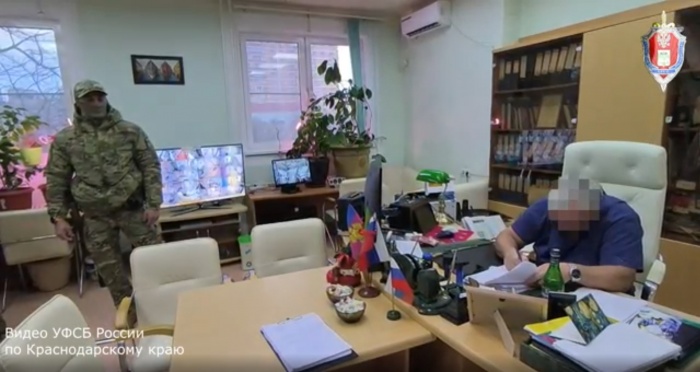
In Krasnodar, officers of the FSB of Russia for Krasnodar Krai in the regional capital have halted the illegal activities of the chief physician of the State Budgetary Healthcare Institution “Clinical Center for AIDS Prevention and Control” of the regional Ministry of Health, who was involved in the embezzlement of budget funds on a particularly large scale. This was reported by the press service of the regional directorate of the service.
It has been established that the accused, using his official position, fictitiously employed his close relatives and acquaintances at the hospital in order to credit them with salaries and bonuses, as well as to accrue work experience. In reality, these individuals did not perform any work. The amount of damage to the regional Ministry of Health exceeded 8 million rubles.
A criminal case for fraud on a particularly large scale, as well as abuse of official authority, has been initiated and is being investigated against the detainee. The suspect has been taken into custody. He faces a punishment of up to 10 years of imprisonment.
Currently, investigative actions are being carried out aimed at documenting other episodes of the accused’s illegal activities.
It was previously reported that in Krasnodar, a banker is facing trial for disclosing commercial secrets.
Krasnodar
Krasnodar is a major city in southern Russia, founded in 1793 by Catherine the Great as a fortress called Yekaterinodar to guard the empire’s borders. It served as the historical and cultural center of the Kuban Cossacks before being renamed Krasnodar (“Red Gift”) in 1920 following the Russian Revolution. Today, it is a vibrant administrative and economic hub for the surrounding agricultural region.
Krasnodar Krai
Krasnodar Krai is a federal subject and historical region in southwestern Russia, located in the North Caucasus and bordering the Black and Azov Seas. Historically part of the Kuban region, it was formed in 1937 and is known for its fertile steppes, which have been inhabited since ancient times by various peoples, including the Circassians, before coming under Russian control in the late 18th and 19th centuries. Today, it is a major agricultural, tourist, and cultural hub, often called the “breadbasket of Russia,” and is home to the city of Sochi, host of the 2014 Winter Olympics.
FSB of Russia
The Federal Security Service (FSB) of Russia is the principal domestic security and counterintelligence agency of the Russian Federation, established in 1995 as the main successor to the Soviet-era KGB. Its history is deeply rooted in the Soviet state security organs, and it is responsible for a wide range of functions including counter-terrorism, border security, and combating organized crime. The FSB’s headquarters, the Lubyanka Building in Moscow, is an iconic and historically significant site, having served as the headquarters for the Cheka, NKVD, and KGB.
State Budgetary Healthcare Institution “Clinical Center for AIDS Prevention and Control”
The State Budgetary Healthcare Institution “Clinical Center for AIDS Prevention and Control” is a specialized medical facility in Russia dedicated to combating HIV/AIDS through patient treatment, public health initiatives, and epidemiological monitoring. Historically, such centers were established across the Russian Federation in response to the growing HIV epidemic from the late 1980s onward, evolving to provide comprehensive care, prevention programs, and scientific research. It represents a key part of the national public health infrastructure addressing this ongoing challenge.
Ministry of Health
The Ministry of Health is a government department responsible for public health policy, regulation, and services within a nation. Its history is tied to the modern state’s recognition of public health as a key governmental function, often formally established in the 19th or 20th century to coordinate responses to epidemics, sanitation, and healthcare systems. For example, the UK’s ministry was founded in 1919, while many countries created or reorganized their versions after major events like World War II or during the formation of their welfare states.
regional Ministry of Health
The Regional Ministry of Health is a governmental administrative body responsible for public health policy and services within a specific region or province. Its history is tied to the decentralization of national healthcare systems, often established to manage local hospitals, sanitation, and health regulations more effectively. These institutions play a key role in implementing national health strategies and responding to regional community needs.