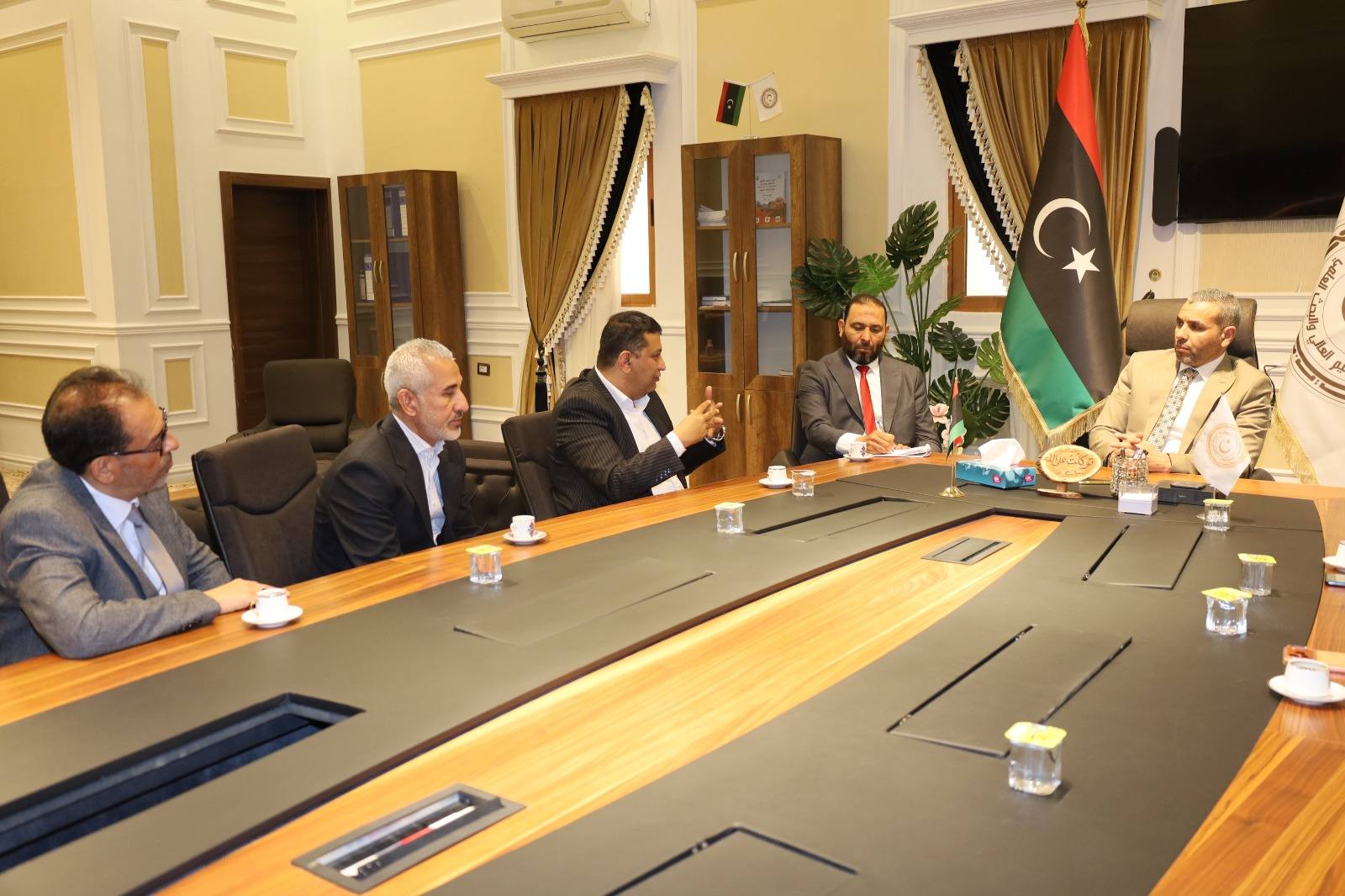
Minister of Higher Education meets with the General Syndicate of Faculty Members to discuss university development.
Tripoli, March 26, 2026 – The Minister of Higher Education and Scientific Research met with members of the General Syndicate of Faculty Members on Thursday evening to discuss academic and professional issues within higher education institutions.
The meeting addressed the conditions of faculty members and proposals for improving the work environment within universities, aiming to enhance the performance of academic institutions and the quality of education and its outcomes.
The Minister emphasized the importance of dialogue and consultation with all components of the higher education sector, stressing the need to follow up on issues that contribute to the stability and development of educational institutions.
For their part, syndicate members praised the meeting, affirming their commitment to continued coordination with the ministry to support reform and development within Libyan universities.
This meeting is part of a series of meetings held by the ministry with relevant sector stakeholders, based on an approach of direct communication, listening, and constructive cooperation.
Tripoli
Tripoli is the capital and largest city of Libya, a major port on the Mediterranean coast with a history dating back to the 7th century BCE when it was founded by the Phoenicians. Historically known as Oea, it later became part of the Roman Empire and was ruled successively by the Vandals, Byzantines, Arabs, Ottomans, and Italians, which is reflected in its diverse architecture, such as the ancient Medina and the Red Castle (Assaraya al-Hamra). Today, it serves as Libya’s primary political, economic, and cultural center.
Minister of Higher Education and Scientific Research
The “Minister of Higher Education and Scientific Research” is not a specific place or cultural site, but a government official or cabinet position found in many countries. This ministerial role is responsible for overseeing national universities, research institutions, and policies related to academic and scientific development. The creation of such dedicated ministries is a modern development, often emerging in the 20th century as nations recognized the strategic importance of higher education and systematic research for economic and social progress.
General Syndicate of Faculty Members
The General Syndicate of Faculty Members is a professional association in Egypt, founded in the 1950s, that represents university professors and academic staff. Historically, it has played a significant role in advocating for academic freedom, the rights of educators, and has often been a voice in the country’s political and social debates. It serves as a key institution within Egypt’s higher education and intellectual landscape.
Libyan universities
Libyan universities, such as the University of Tripoli and Benghazi University, were established in the mid-20th century as key institutions for national development following independence. Their history has been significantly shaped by periods of political change and conflict, impacting academic freedom and international collaboration. Today, they remain central to Libya’s higher education system, striving to rebuild and contribute to the country’s future.