The success of any political path in Libya depends on national consensus and its feasibility for implementation.
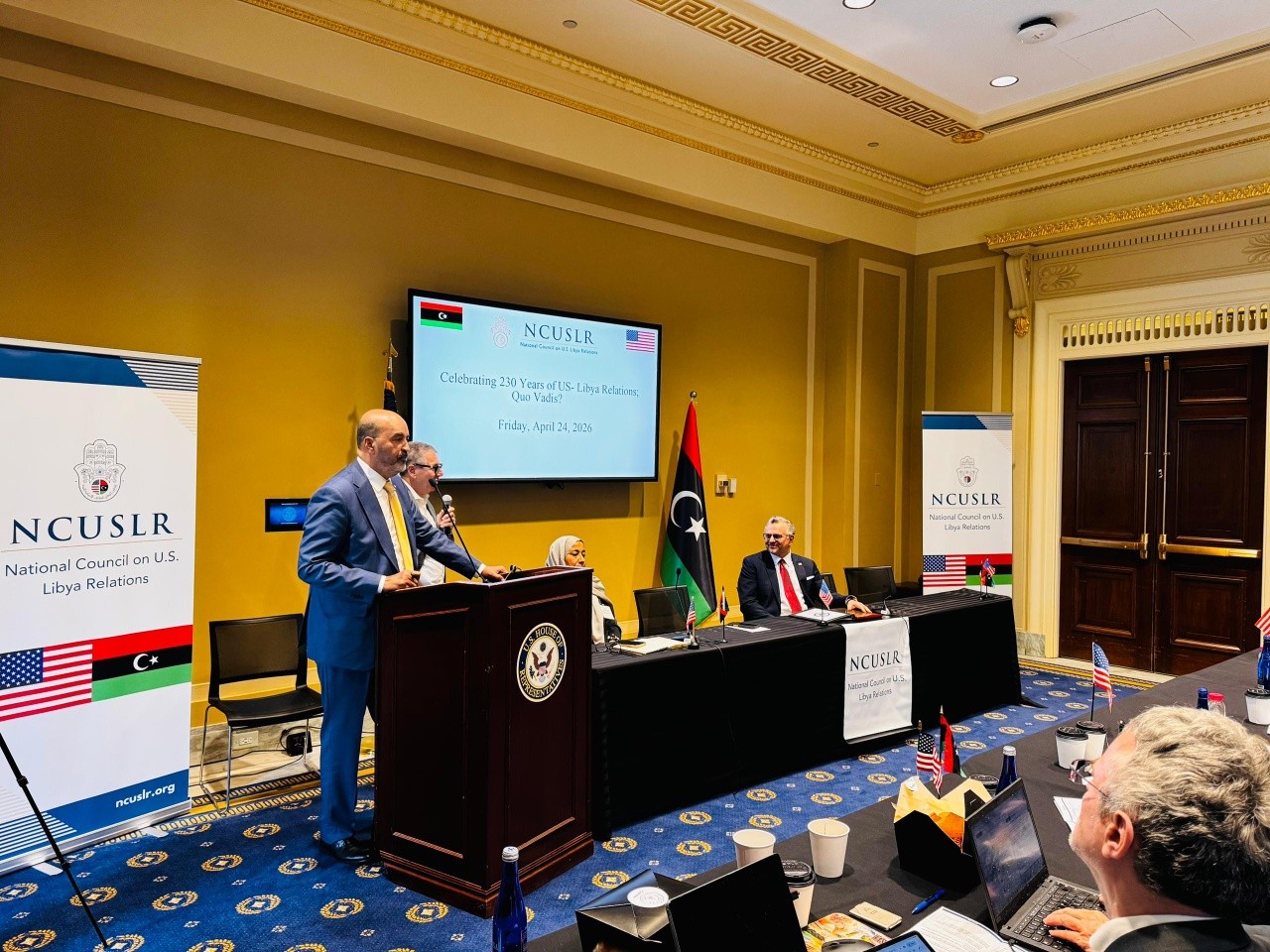
Washington, April 24, 2026 – A member of the Presidential Council, Moussa al-Koni, stated during his speech at the eighth annual conference of the National Council for U.S.-Libya Relations that the current phase in Libya requires moving from multiple initiatives to focusing on proposals that enjoy popular acceptance and are feasible. He emphasized that the success of any political path depends on its realism and ability to be implemented on the ground, according to the media office of the Presidential Council.
He explained that the legitimacy of any path is not based solely on its theoretical framework, but on broad national consensus, its capacity to address the complexities of the Libyan reality, and ensuring the participation of various active parties, leading to sustainable stability.
Al-Koni also stressed the importance of representing the three founding regions of the Libyan state in any future arrangements, with an emphasis on the effective inclusion of the Fezzan region to enhance national balance.
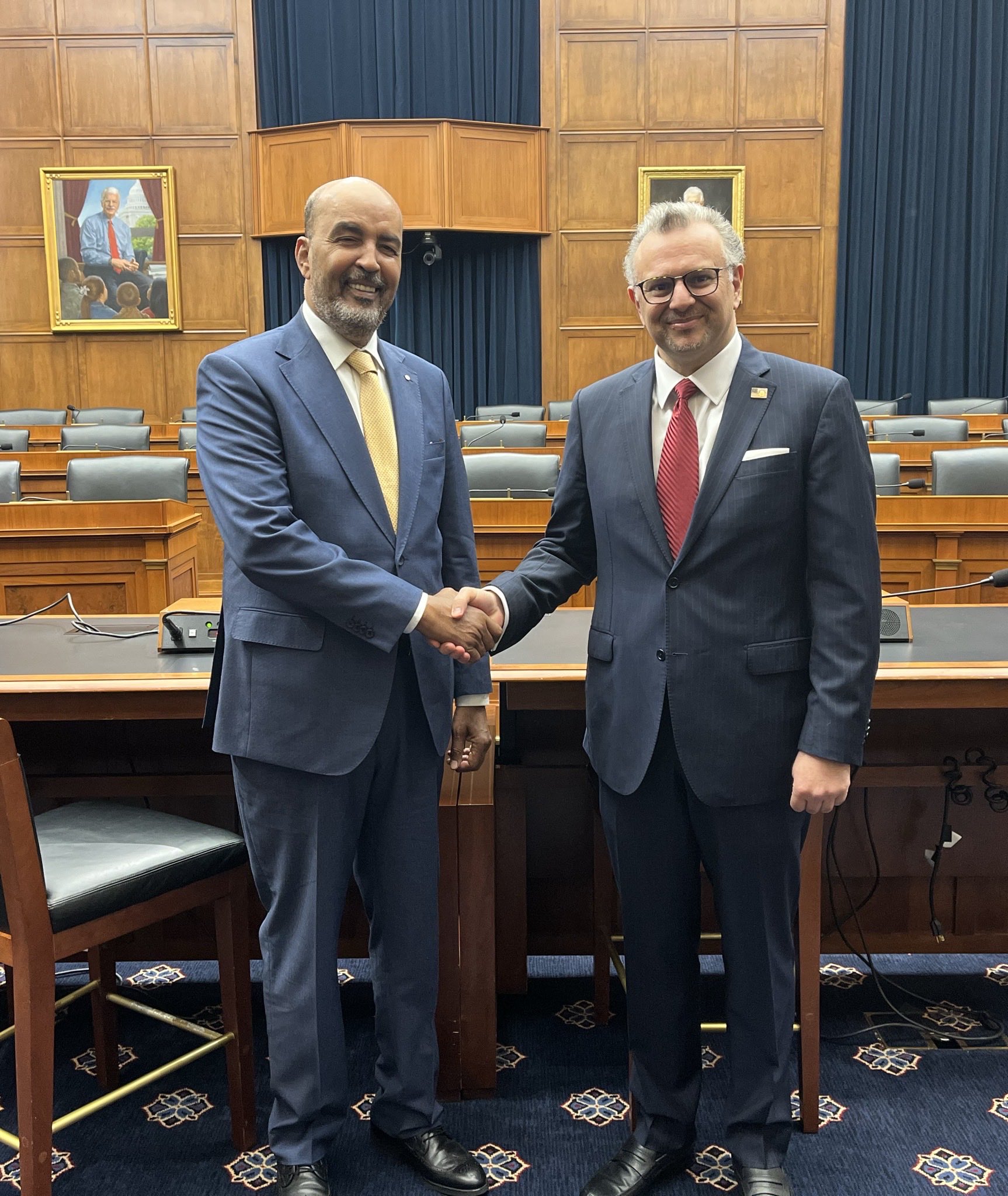
On the sidelines of the conference, al-Koni met with the U.S. President’s advisor for Arab and African affairs, Massad Boulos, where he praised American efforts and congratulated Boulos on his appointment, affirming the importance of advancing realistic paths to address the political and economic situations in Libya.
During the meeting, al-Koni called for the necessity of listening to various political bodies, including the House of Representatives, the High Council of State, and the Presidential Council, along with other active parties, to ensure the construction of a comprehensive and balanced path.
He noted that the Fezzan region was not sufficiently included in some previous arrangements, especially regarding the unified budget, affirming that the region represents a strategic and security depth for the state, and that its stability directly reflects on Libya’s stability, particularly as it bears the repercussions of the conflict despite remaining outside its direct scope.
Fezzan region
The Fezzan region is a historically significant area in southwestern Libya, known for its vast Sahara Desert landscapes and ancient trade routes. It was once a key hub for trans-Saharan caravans, connecting sub-Saharan Africa to the Mediterranean, and was home to the Garamantian civilization from around 1000 BCE to 500 CE. Today, Fezzan features notable archaeological sites like the rock art of Tadrart Acacus, a UNESCO World Heritage site, and remains culturally rich with Berber and Tuareg influences.
Libya
Libya is a North African country with a rich history shaped by ancient civilizations, including the Phoenicians, Greeks, Romans, and Ottomans, as well as its indigenous Berber populations. It is home to UNESCO World Heritage sites such as the ancient Greek city of Cyrene and the Roman ruins of Leptis Magna. In modern times, Libya was ruled by Muammar Gaddafi for over four decades until the 2011 revolution, after which it experienced ongoing political instability and conflict.
House of Representatives
The House of Representatives is the lower chamber of the United States Congress, established by the Constitution in 1789. Its membership is based on each state’s population, with representatives elected every two years to draft and pass federal laws. Historically, it has been a key arena for major legislative battles, including debates over civil rights, taxation, and government spending.
High Council of State
Fezzan region
The Fezzan region, located in southwestern Libya, is a historically significant desert area known for its ancient trade routes and oases. It was once part of the Garamantian kingdom, a powerful civilization that thrived from around 500 BCE to 500 CE, controlling trans-Saharan commerce. Today, Fezzan is sparsely populated but remains culturally important for its archaeological sites and traditional Berber and Tuareg heritage.
Libya
Libya is a North African country with a rich history shaped by ancient civilizations, including the Phoenicians, Greeks, Romans, and Ottomans. It is home to five UNESCO World Heritage sites, such as the Roman ruins of Leptis Magna and the desert rock art of Tadrart Acacus. After decades under Muammar Gaddafi’s rule, Libya has faced political instability and conflict since the 2011 uprising.
House of Representatives
The House of Representatives is the lower chamber of the United States Congress, established by the Constitution in 1789. Its membership is based on each state’s population, with representatives elected every two years to propose and vote on federal legislation. As a key part of the legislative branch, it has played a central role in shaping American law and policy, including debates over civil rights, taxation, and war powers.
High Council of State
The High Council of State is a political institution in Libya, established under the 2015 Libyan Political Agreement as an advisory and legislative body. It was created to represent regions and political factions, aiming to unify the country after years of civil war and division. The council has played a key role in mediating between rival governments and supporting efforts toward a stable, democratic transition.