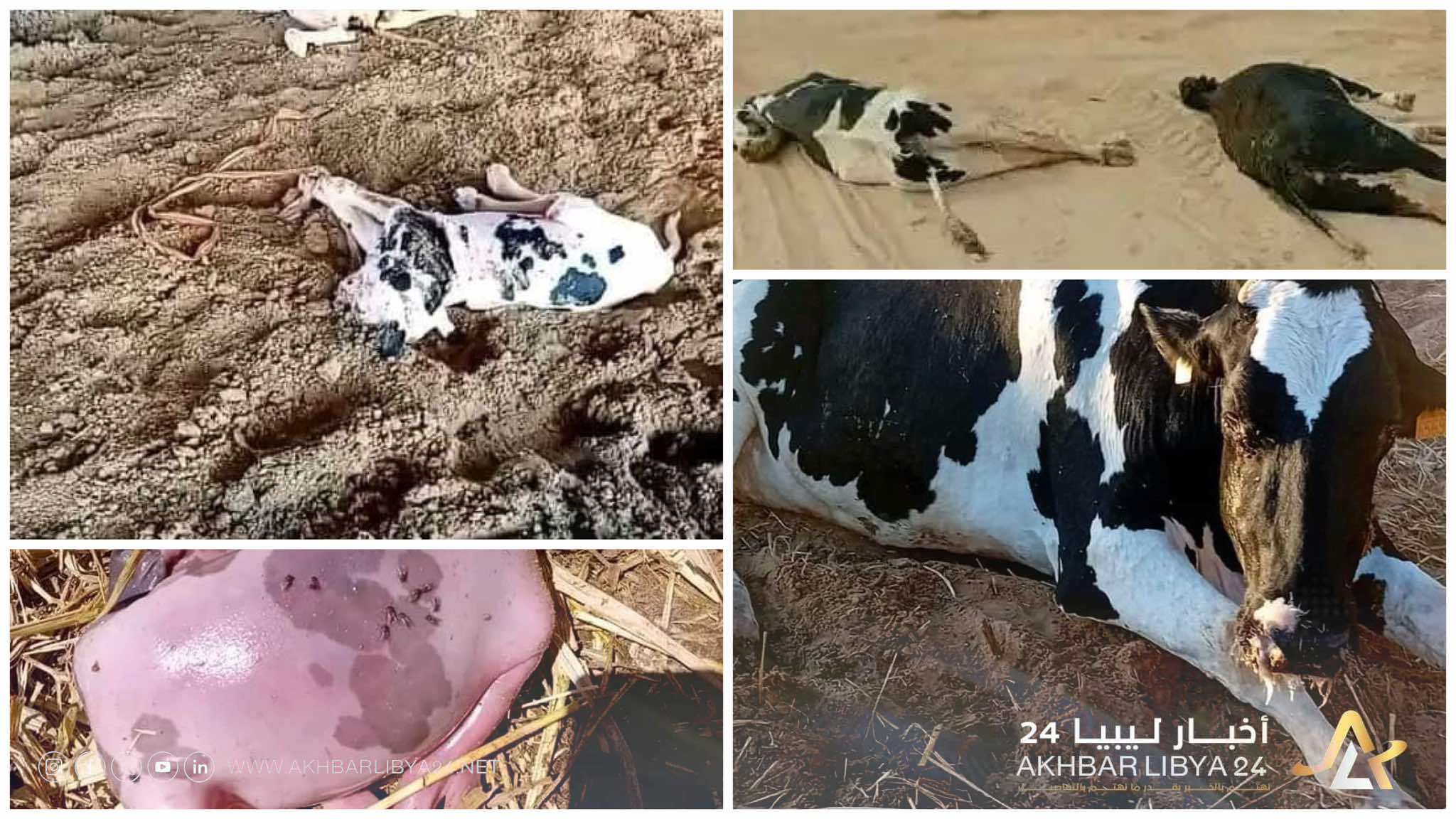
The head of the National Center for Animal Health in the Libyan government, Mohamed Al-Aqab, announced the registration of cases of lumpy skin disease in several cattle farms in the city of Benghazi, noting that the number of infections reached 37 heads distributed across three foci in the Al-Talihiya area, with three deaths recorded so far.
Al-Aqab explained that the competent authorities have taken urgent measures to limit the spread of the disease, including imposing a quarantine on about 1,400 heads of cattle, preventing movement in and out of the affected areas except for authorized personnel, in addition to carrying out extensive disinfection operations and providing necessary treatments for infected cases.
-
Al-Aqab: A quarantine was imposed on about 1,400 heads of cattle
He pointed out that the number of cattle in contact with the infected cases reached 196 heads, stressing that the situation remains under control thanks to the rapid intervention and precautionary measures taken since the first foci were discovered.
-
Al-Aqab: More than 71,000 vaccine doses have been provided and distributed to various areas
He added that the center launched a national campaign to vaccinate cattle, providing more than 71,000 vaccine doses distributed to various areas, with 1,133 heads vaccinated so far in the Al-Talihiya area alone.
-
Al-Aqab: Some infections are from African breed cattle smuggled across the southern borders
He noted that some infections are from African breed cattle smuggled across the southern borders, despite the ban on their import due to the spread of diseases in those countries, reflecting the danger of smuggling to livestock.
Al-Aqab confirmed that lumpy skin disease is a viral infectious disease that spreads rapidly among cattle, but it does not transmit to humans, despite its negative impact on the national economy if its spread worsens.
-
Al-Aqab: The need to support the National Center for Animal Health
He called on relevant authorities to support the National Center for Animal Health by providing the necessary resources and financial allocations, noting that employees have not received their salaries for about ten months, which may affect the continuity of disease control efforts.