Boulos initiative reignites Libya’s settlement path toward unifying institutions
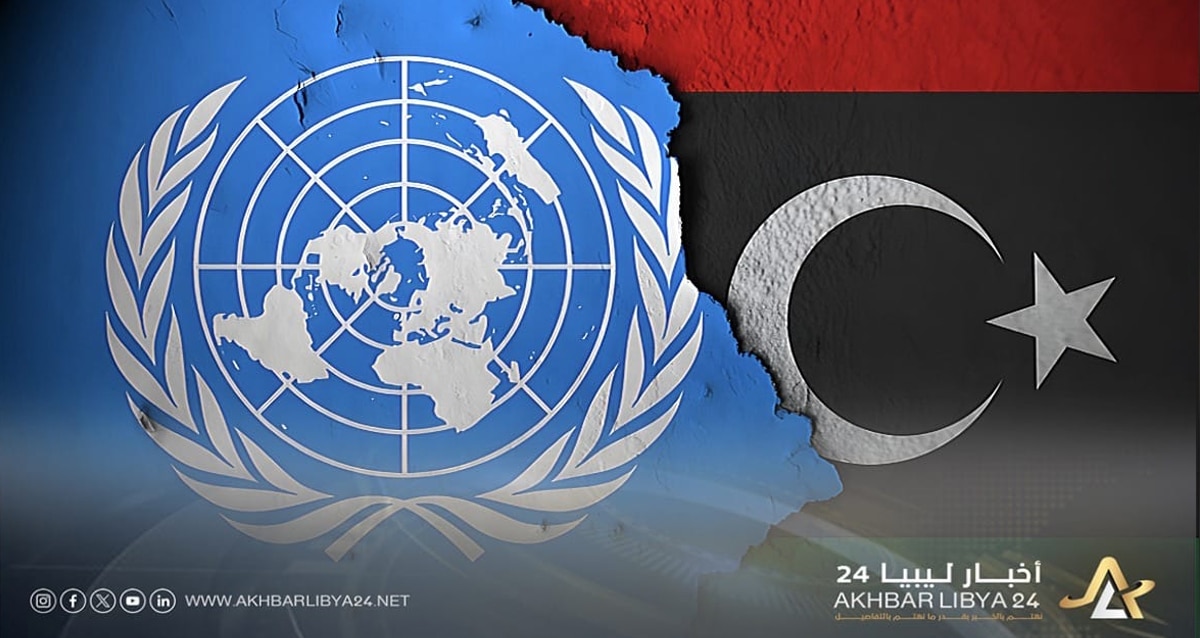
The Libyan scene has recently witnessed renewed political movement, reflecting a growing awareness among local and international parties that the continuation of stagnation is no longer a viable option. After years of stalled initiatives and parallel political tracks, signs of diplomatic and political activity are emerging on the horizon, driven by new international initiatives, most notably the initiative being discussed in political circles, which is seen as an attempt to restructure the Libyan political landscape on more realistic foundations.
This movement is inseparable from the transformations witnessed in the domestic scene over the past years, where new field equations have emerged and political and military realities have become entrenched, making it difficult to bypass some key actors in the stability equation. In this context, the role of the General Command of the Armed Forces stands out as one of the fundamental pillars of the balance equation, a fact that many international parties are now recognizing as they seek to link the political track with the field reality.
A political initiative attempting to overcome the failures of previous tracks
A number of members of the House of Representatives believe that the initiative being circulated in political circles represents a realistic attempt to address the failures of previous tracks that did not succeed in achieving a comprehensive settlement of the Libyan crisis.
According to consistent statements from several representatives, this initiative seeks to bring together influential parties within a new political framework aimed at forming a unified government capable of managing the transitional period and preparing the country for general elections.
This approach reflects a growing awareness that the Libyan crisis is no longer just a political dispute between competing parties but has become a matter of rebuilding state institutions that have suffered from division and fragmentation over the past years.
In this context, some assessments indicate that the new initiative attempts to address the weaknesses that accompanied previous initiatives, most notably the absence of clear implementation mechanisms and the lack of sufficient consensus among the active forces on the ground.
International role between pushing for a solution and seeking balance
Any political movement in Libya cannot be read in isolation from the international role that has been present throughout various stages of the crisis. External influence has remained one of the key factors shaping the course of the political process for years.
Observers believe that the recent U.S. movement reflects a desire to revitalize the political settlement track, especially given the growing awareness that the continuation of division could further complicate the scene and open the door to new security and economic crises.
However, the success of any international initiative remains tied to its ability to interact with Libya’s complex reality, a reality whose internal balances cannot be ignored nor its influential forces bypassed.
Hence, any new approach to a solution is now required to start from a deeper understanding of the Libyan reality, not merely recycling political tracks that have already proven their limited effectiveness.
The General Command in the stability equation
Amid this political movement, the role played by the General Command of the Armed Forces in the Libyan scene stands out, not only as an influential military force but also as a stability factor that has contributed over the past years to rebuilding an important part of the military institution.
Field developments have shown that rebuilding security and military institutions was among the most important factors contributing to restoring a degree of stability in many Libyan areas.
Political analysts believe that this role was not limited to the security aspect but extended to supporting reconstruction efforts and improving the security environment, allowing for the return of normal life to cities and areas that long suffered from chaos and lawlessness.
This reality has made it difficult to bypass the role of the military institution in any future political equation, especially given the growing conviction that security is the foundation upon which any state-building process rests.
International meetings and attempts to link politics with the field
In this context, the meeting that brought together the General Commander of the Armed Forces with a high-ranking UN official reflected a growing trend among the international community toward direct engagement with influential parties in the Libyan scene.
This meeting was not merely a protocol gathering but carried important political implications related to attempts to link the political track with the field reality and find points of convergence between international efforts and the transformations witnessed in Libya’s interior in recent years.
The meeting also addressed a number of vital files, including unifying institutions, supporting the political dialogue track, and working to create suitable conditions for holding general elections.
Indications suggest