Washington Pursues Benghazi Shura Council Elements with Bakoush’s Handover from Turkey
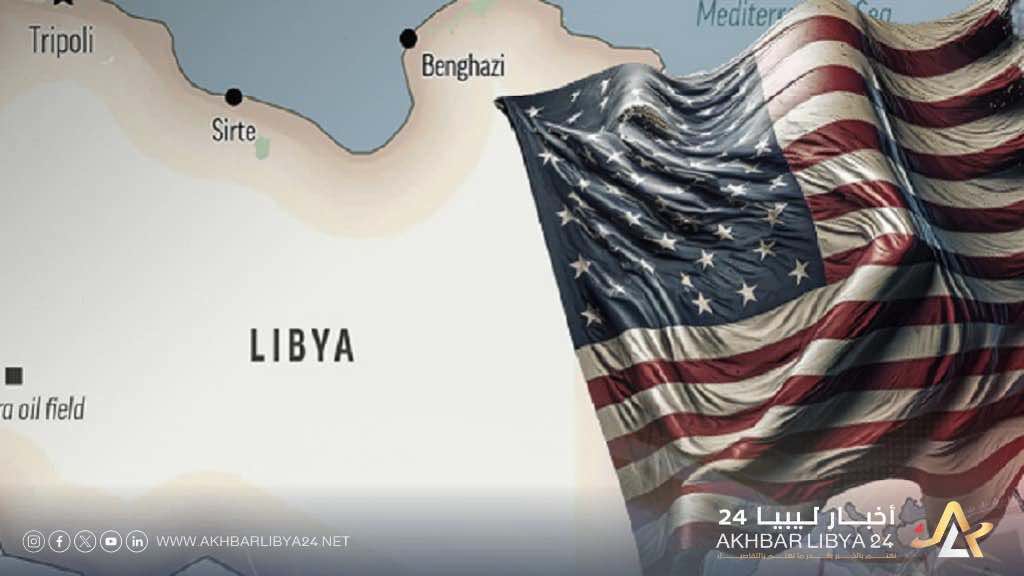
In a surprising development, Turkish authorities handed over Libyan citizen Zubair Hassan Omar Al-Bakoush, wanted by American justice, to the United States, where he arrived in the state of Virginia. This step comes within the framework of the longstanding case related to the attack on the US consulate in Benghazi in 2012.
According to circulating information, Al-Bakoush, born in Benghazi in 1970, is one of the names linked to the period of security turmoil following 2011. He progressed through a number of armed formations, starting with what was known as the “Free Libya Militia,” and later joining the “Ansar al-Sharia” organization in Benghazi during 2012, where he was present at the organization’s first public conference.
US authorities accuse him of involvement in the terrorist attack that targeted the US consulate in Benghazi in September 2012, which led to the death of the US ambassador at the time and three of his companions. Al-Bakoush is also accused of participating in armed violence against the Libyan armed forces in the past.
The Fate of Former “Shura Council” Leaders: Fugitives but Under Surveillance
The handover of Al-Bakoush raises significant questions about the fate of dozens of other elements from the leaders and members of what was known as the “Shura Councils” in Benghazi and Derna, who fled to the west of the country after Benghazi and Derna were liberated from the control of extremist organizations.
Informed sources indicate that many of these names have reconstituted themselves and integrated into population clusters in western cities, taking advantage of the chaos of the situation and the multiplicity of allegiances. Some of them enjoy protection from influential local forces, according to those sources.
A Clear Message: International Justice Pursues the Involved
Observers believe that the handover of Al-Bakoush, a member of the Benghazi Shura Council, represents a strong message that the file of the attack on the US consulate is not closed, and that those wanted will not be safe with the passage of time, wherever they are. This opens the door to the possibility of future handovers or legal pursuits of other names.
This move is expected to lead to a state of anxiety and anticipation among those involved in that period, especially with the Benghazi Shura Council, given the possibility that Al-Bakoush may reveal sensitive information in order to receive a reduced sentence.
End of the Road or Beginning of New Pursuits?
This development deals a strong psychological blow to the fugitive elements and puts the protection some of them enjoy to the test. It seems clear that fleeing to western Libya is no longer a guaranteed “lifeline” in light of international pressures and accountability that may reach everyone sooner or later.
The question raised
US consulate in Benghazi
The U.S. Consulate in Benghazi was a diplomatic mission in Libya, established after the 2011 revolution to support the new government and foster bilateral relations. It became tragically known for the attack on September 11, 2012, when armed militants stormed the compound, resulting in the deaths of the U.S. Ambassador and three other Americans. The site was subsequently closed, and the event remains a significant point of discussion in U.S. foreign policy and diplomatic security.
Benghazi
Benghazi is a major port city in eastern Libya, historically known as a key economic and cultural hub. It gained prominence under Greek rule as **Euesperides** and later flourished during the Italian colonial era in the 20th century. In recent history, it was a focal point of the 2011 Libyan Revolution and subsequent civil conflicts.
Derna
Derna is a historic port city located in eastern Libya, known for its lush greenery and valley setting which contrasts with the surrounding desert. It has a long history dating back to ancient Greek times (when it was known as Darnis) and later served as an important Ottoman and Italian colonial center. In recent years, the city has faced significant challenges, most notably catastrophic flooding in 2023 that caused widespread destruction.
Benghazi Shura Council
The Benghazi Shura Council was an alliance of Islamist and jihadist militias, including Ansar al-Sharia, formed in 2014 during the Second Libyan Civil War. It controlled the city of Benghazi for a period, fighting against the Libyan National Army led by Khalifa Haftar, until it was defeated and dissolved after a prolonged battle in 2017.
Free Libya Militia
The “Free Libya Militia” is not a specific cultural site or place, but a general term for the many armed opposition groups that formed during the 2011 Libyan Civil War to overthrow Muammar Gaddafi’s government. These militias, which lacked a unified command, played a decisive role in the conflict but their legacy is one of continued factional power and instability in post-Gaddafi Libya.
Ansar al-Sharia
“Ansar al-Sharia” is not a cultural or historical site, but the name used by several militant Islamist extremist groups, most notably one that was active in Libya and Tunisia following the 2011 Arab Spring. These groups advocated for implementing a strict interpretation of Sharia law and were involved in armed conflict and terrorist activities. They have been designated as terrorist organizations by several governments and international bodies.
Shura Councils
“Shura Councils” refer to traditional consultative assemblies in Islamic governance and culture, historically used by rulers to seek advice from community elders and scholars on important matters. The concept, rooted in the Quran and early Islamic practice, emphasizes collective deliberation and consensus. In modern times, many Muslim-majority countries have adopted the name for legislative or advisory bodies, such as Saudi Arabia’s Consultative Assembly (Majlis ash-Shura).
Virginia
Virginia is a U.S. state, not a single cultural site, but it is historically significant as one of the original Thirteen Colonies and the site of the first permanent English settlement in North America at Jamestown (1607). Known as the “Birthplace of a Nation,” it was home to key American Revolution and Civil War events and eight U.S. presidents, including George Washington. Its rich history is preserved in landmarks like Colonial Williamsburg, Mount Vernon, and numerous Civil War battlefields.