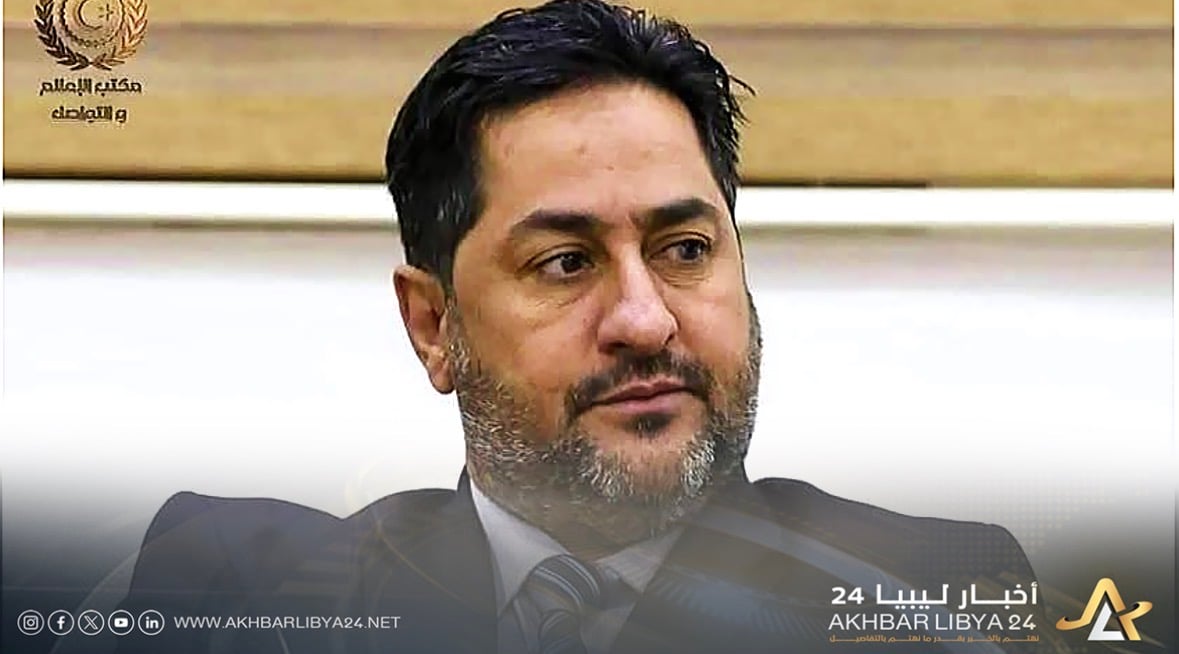
Amghib: The Electoral Milestone is Absent Amid Accusations of Obstruction and Conflicts of Interest
In critical remarks on the current political situation, the recent developments in the Libyan scene were described as an “illusory acceleration,” with the view that what is being circulated is nothing more than discourse aimed at the local public opinion, while the real obstacles remain, the most prominent of which, in his view, is the government whose term has expired headed by Abdul Hamid Dbeibah.
It was emphasized during a televised dialogue that the current endeavors, whether those led by the UN mission or those proposed by internal parties, lack sufficient seriousness to push the country towards a genuine electoral milestone. Accusations were directly leveled at those referred to as “partners of the nation” in the capital, Tripoli, who are linked to a political alliance with the Government of National Unity, indicating that they stand as an obstacle to any progress.
It was stated: “The obstacles lie in Dbeibah’s government,” with the view that the corruption everyone talks about finds refuge in this government, which insists, according to his account, on obstructing any path that might lead to a popular vote.
The Western Street.. Between Satisfaction and Calculated Anger
In his reading of the popular reality in the west of the country, the existence of a genuine and sweeping popular anger that might threaten the survival of the current government was denied. It was pointed out that the demands of citizens in the capital revolve around improving living conditions, stabilizing the national currency’s price, and preserving the unity of Libyan territory. However, he went on to link the impossibility of achieving those demands with the existence of an executive authority he described as “corrupt.”
It was clarified that the demonstrations witnessed in some areas recently, although they expressed genuine discontent, did not reach the level of demanding the government’s overthrow. There is a belief that external forces may have tried to employ those protests to achieve limited gains, but they did not succeed in their endeavor.
Proposed Solutions.. and the Trust Dilemma
The discussion touched on what is known as the “Political Committee” initiative, indicating that it came from the head of the Council himself and that it includes a series of concessions acceptable to Council members in an effort to accomplish elections and unify institutions. However, rejection of this initiative in its current form was announced, anticipating its failure to overcome practical obstacles, especially with its rejection by the international mission and the controlling parties in the west from his point of view.
It was added that the failure to guarantee the integrity of the electoral process under the dominance of Dbeibah’s expired-term government over the state’s structures is a major factor in thwarting any endeavor.
The International Role.. and the Equation of Impossible Unity
Pessimism regarding the possibility of achieving genuine national unity in the near future was not concealed. It was suggested that the country, for over a decade, has become “compartmentalized” according to the vision of the influential international powers, which will not allow – in his opinion – the establishment of a single central authority or the organization of decisive elections. It was commented: “Libya since 2011 will not be one under this intervention.”
The Problem of Conflicting Bodies and Councils
The spotlight was also placed on the existing dispute regarding the High National Elections Commission, explaining that the House of Representatives proposed the idea of re-forming it while retaining its current head, but this proposal was rejected by the State Council. It is believed