Bandung –
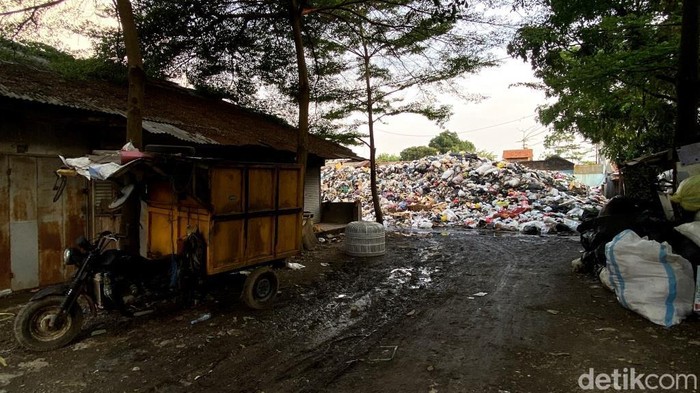
The city of Bandung failed to propose a garbage emergency status. In fact, if that status were established, the city government could take all necessary measures to handle the problem that has always relied on the Sarimukti landfill.
The head of the Bandung City Environmental Agency explained the chronology of why the Bandung city government proposed a garbage emergency status. It turns out that this proposal was closely tied to a meeting between the West Java Regional Secretary and all regional secretaries from the Greater Bandung area.
“So after the recent holiday, the Provincial Secretary invited all regional secretaries from Greater Bandung to Gedung Sate. He explained that with the development of four regencies/cities, the amount of waste generated is quite significant. Yes, it might be triggered by many activities held, then urban development, and many other things,” said the official when confirmed, Thursday (4/6/2026).
The meeting was attended by the regional secretaries of Bandung City, Cimahi City, Bandung Regency, and West Bandung Regency. The secretary then revealed the condition of the Sarimukti landfill, which is estimated to be unable to accommodate waste shipments for several months ahead.
This is because the initial estimate was that the Sarimukti landfill would last until July 2027. However, along with the high volume of waste in Greater Bandung, the lifespan of the Sarimukti landfill is predicted to only last until October 22, 2026.
“That means only a few months left, and then Sarimukti’s story is over. Therefore, all cities/regencies in Greater Bandung are expected to take emergency measures,” the official revealed.
The official stated that on that day, the regional secretary asked all regional secretaries in Greater Bandung to draft a letter requesting a garbage emergency status. However, this proposal later faced rejection.
“Well, one of the emergency steps was that all regional secretaries in Greater Bandung were asked to write a request letter for emergency status. Then on that day, we waited. And yes, we sent that letter,” he said.
“(Now it is rejected?) Yes, I cannot provide an explanation regarding that,” he concluded.
Previously reported, the request for a garbage emergency status for Bandung City did not immediately receive approval from the West Java Provincial Government. The provincial government chose to study it further before making a decision regarding the garbage emergency status.
The West Java Regional Secretary emphasized that the proposal is still being discussed in depth. The provincial government will also report the situation to the Governor of West Java before determining an official stance.
“It is being carefully reviewed, and we want to first report to the Governor,” he said, Tuesday (2/6/2026).
According to him, the issue at hand is not only about waste in Bandung City but also concerns the sustainability of the regional waste management system that has so far relied on the Sarimukti landfill.
Therefore, every step, including the possibility of increasing the disposal quota to Sarimukti or other forms of intervention, must be thoroughly discussed with the governor and relevant regional agencies.
Although not yet giving the green light for the emergency status, he assured that the West Java Provincial Government will not let Bandung’s waste problem go unsolved.
“We will coordinate first; what is certain is that the handling will be done synergistically (between the Provincial Government and the Bandung City Government),” he said.
After the proposal reached the provincial level, the Governor of West Java finally gave a firmer response. Instead of immediately approving the garbage emergency status, he asked all parties to focus on handling the problem first.
According to the governor, what is more urgent now is to find concrete solutions rather than debating the emergency status. Moreover, the condition of the Sarimukti landfill itself is facing a serious threat. The capacity of this regional final disposal site is estimated to only last for a few more months.
“Sarimukti will be closed in six months, it’s already full. I have prepared mitigation by pushing for equipment that can manage waste at each urban village level with a capacity of 5 tons,” the governor said.
As a solution, the West Java Provincial Government is preparing a village-based waste processing system. This technology has been tested at Gedung Sate and can turn waste into an alternative fuel to replace coal.</