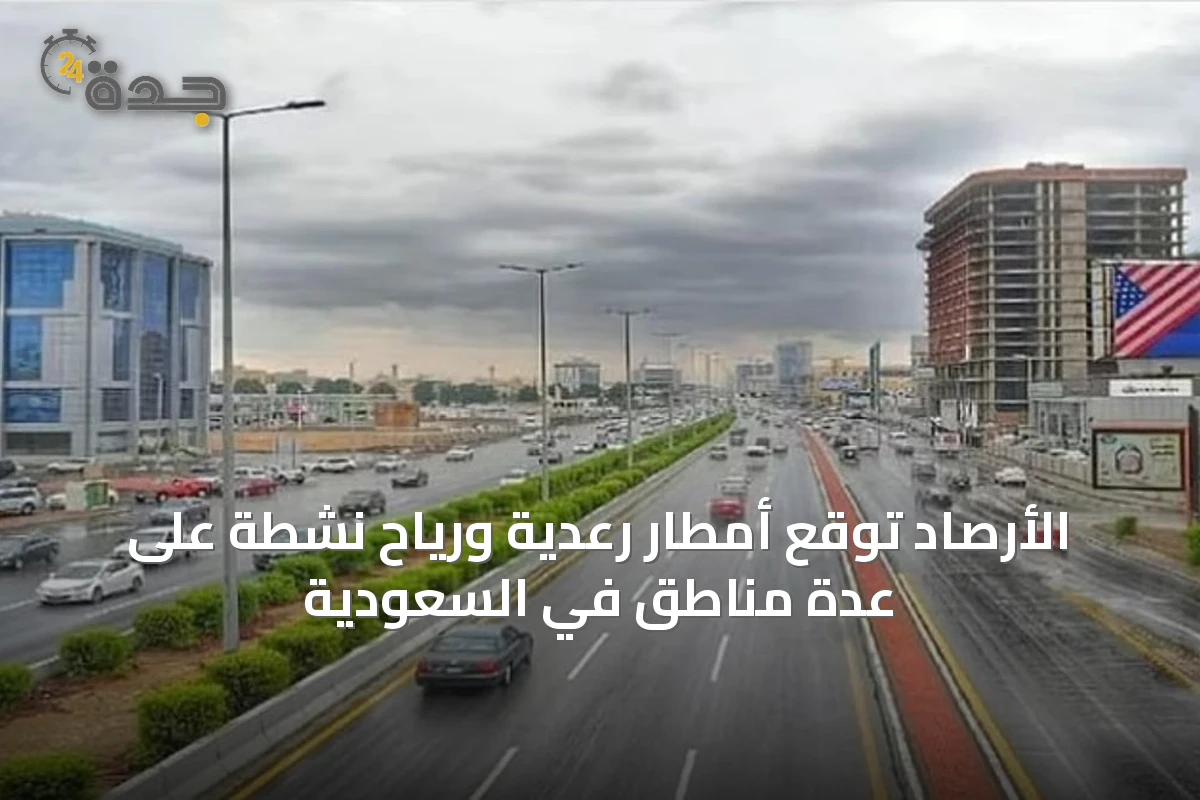
The National Center for Meteorology reported in its weather forecast for today that the weather will bring thunderstorm showers ranging from moderate to heavy, which may lead to flash floods in some areas, accompanied by active winds and slight cooling.
Regions affected by rain and winds
The highlands of Jazan, Asir, Al-Baha, and Mecca will be affected by these conditions, as these areas are expected to experience heavy rain with strong winds.
Impact of active winds on visibility
Meanwhile, active winds that raise dust and sand continue to cause a significant reduction in horizontal visibility, especially in parts of the southern Eastern Region, as well as in parts of Tabuk and Medina.
Wind and sea conditions on the Red Sea coast
On the Red Sea waters, surface winds are northwesterly to northerly at speeds between 15 and 34 kilometers per hour in the northern and central sectors, while being northwesterly to northwesterly at speeds of 10 to 23 kilometers per hour in the southern part. Wave heights range from half a meter to one and a half meters in the north and center, and up to one meter in the south, with sea conditions ranging from light to moderate in the north and center, and light in the south.
Sea conditions in the Arabian Gulf
In the Arabian Gulf waters, northwesterly to northerly winds prevail at speeds of 15 to 32 kilometers per hour in the northern sector, reaching 20 to 40 kilometers per hour in the center and south. Wave heights range from half a meter to one and a half meters in the north, and one to two meters in the center and south, with light to moderate sea conditions.
Jazan
Jazan is a coastal city in southwestern Saudi Arabia, known for its rich agricultural heritage and strategic location along the Red Sea. Historically, it served as an important trading port and was part of the ancient frankincense route, later becoming a key site during the Ottoman and Saudi expansions. Today, it is famous for its lush farmlands, traditional architecture, and the nearby Farasan Islands, which offer unique cultural and natural attractions.
Asir
Asir is a mountainous region in southwestern Saudi Arabia known for its lush green landscapes, terraced agriculture, and unique architecture. Its history includes ancient trade routes and a distinct cultural identity, with the region once being part of the Ottoman Empire before joining Saudi Arabia in the early 20th century. Today, Asir is celebrated for its traditional crafts, such as the art of building stone houses and vibrant folk festivals.
Al-Baha
Al-Baha is a mountainous region in southwestern Saudi Arabia known for its stunning natural scenery, including forests, valleys, and traditional stone villages. Historically, it has been a crossroads for trade and pilgrimage routes, with its Asiri-style architecture and ancient forts reflecting a rich cultural heritage. The area is also home to the Al-Muftaha Art Village, which preserves local arts and crafts.
Mecca
Mecca, located in Saudi Arabia, is the holiest city in Islam and the birthplace of the Prophet Muhammad. It has been a center of pilgrimage for centuries, hosting the Kaaba, which Muslims believe was built by Abraham and his son Ishmael. Today, millions of Muslims visit Mecca annually for the Hajj pilgrimage, a key religious duty.
Eastern Region
The Eastern Region is a diverse area often referring to countries or provinces in East Asia or the eastern parts of a nation, such as the Eastern Region of Nepal or the Eastern Province of Saudi Arabia. Its history varies by location, but many Eastern Regions have been shaped by ancient trade routes, colonial influences, and cultural exchanges. Today, these areas are known for their unique traditions, economic importance, and natural or historical landmarks.
Tabuk
Tabuk is a historic city in northwestern Saudi Arabia, known for its role as a key stop on the ancient trade and pilgrimage routes. It is famously associated with the Islamic prophet Muhammad’s Tabuk expedition in 630 CE, which strengthened Muslim influence in the region. Today, the city blends its rich history with modern development, featuring landmarks like the Tabuk Castle and the Hejaz Railway station.
Medina
Medina, located in western Saudi Arabia, is the second holiest city in Islam after Mecca, originally known as Yathrib before being renamed “Medinat al-Nabi” (City of the Prophet). It became a pivotal center of the Islamic world after the Prophet Muhammad migrated there in 622 CE (the Hijra), where he established the first Muslim community and built the Masjid al-Nabawi (the Prophet’s Mosque), which houses his tomb. Today, Medina remains a major pilgrimage site, drawing millions of Muslims annually to visit its historic mosques and sacred sites.
Red Sea
The Red Sea is a seawater inlet of the Indian Ocean, lying between Africa and Asia, known for its rich marine biodiversity and vibrant coral reefs. Historically, it has been a vital trade route since ancient times, connecting the Mediterranean to the Indian Ocean via the Suez Canal, which opened in 1869. Its name may derive from seasonal blooms of red-hued algae or from ancient references to the surrounding reddish mountains.