Barcode Becomes the Decider: Bandung City Government Ensures Sacrificial Animals Are Healthy and Fit for Consumption Ahead of Eid al-Adha
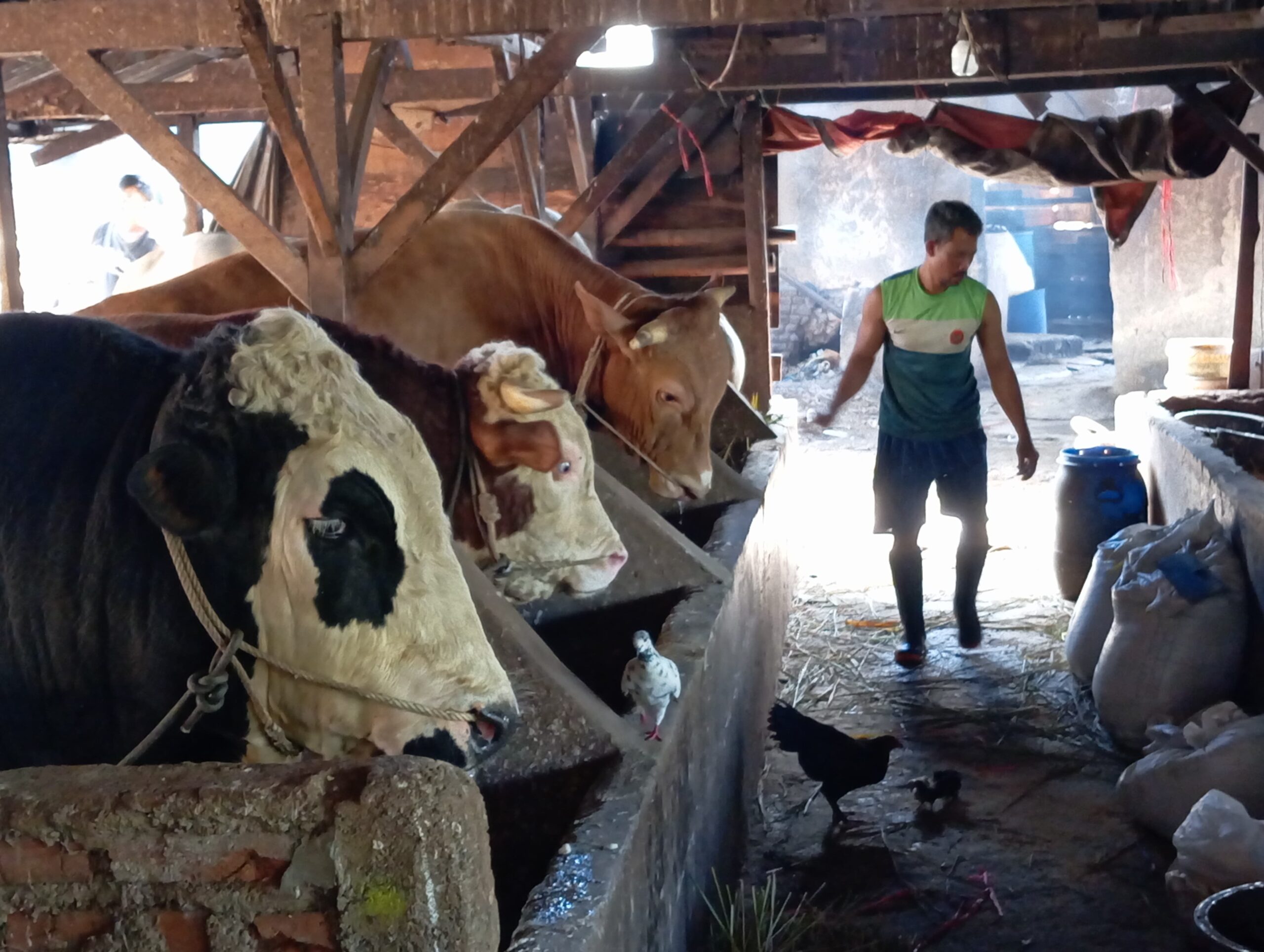
Ahead of Eid al-Adha 2026, the Food Security and Agriculture Office (DKPP) of Bandung City is tightening supervision with a digital and medical approach. Residents can now ensure animal health simply by scanning a barcode through the E-Selamat application, an innovation claimed to enhance safety when choosing sacrificial animals.
Head of DKPP Bandung City, Gin Gin Ginanjar, views the supervision of sacrificial animals not merely as an annual routine but as an important part of public health protection, addressing public concerns about potential zoonotic diseases, which according to Ministry of Health data reach 58 percent.
Gin Gin emphasized that animal health aspects are a top priority ahead of Eid al-Adha. He stated that animal-based food safety heavily depends on the quality of pre- and post-slaughter inspections.
“This innovation provides transparency to the public. All animal health data can be accessed directly via mobile phone, so there is no longer any doubt when buying sacrificial animals,” said Gin Gin on Monday (April 20, 2026).
Gin Gin explained that the E-Selamat application (Healthy, Fit, More Peaceful) is one of the main breakthroughs this year. Each animal that has passed inspection will be affixed with a barcode sticker that can be scanned to display complete information, from photos to health examination results.
According to him, through this system, residents do not only rely on visual assessment but also verified medical data, which is considered capable of suppressing the potential circulation of unfit animals that pose a risk to consumer health.
“Supervision is carried out in two strict stages. The first stage is ante-mortem examination, checking the physical condition of the animal while still alive. The examination ensures the animal is healthy, of sufficient age, and not defective according to religious law,” he said.
Gin Gin also explained the second stage, post-mortem examination, which is carried out after slaughter. At this stage, officers examine internal organs to detect diseases not visible during the initial examination.
Gin Gin revealed that to ensure the entire process runs optimally, DKPP deployed 184 officers consisting of civil servants and non-civil servants. They are spread across 30 sub-districts in Bandung City to reach all points of sale and slaughter of sacrificial animals.
Supervision also involves cross-institutional collaboration, such as the Indonesian Veterinary Association (PDHI) West Java I, the Faculty of Veterinary Medicine at Padjadjaran University, and Telkom University through the CAATIS Flagship Study Program.
Not only focusing on animals, DKPP is also strengthening human resource capacity. Halal slaughter training for sacrificial animals has been held from April 15 to May 21, 2026, in 17 batches.
“Training participants come from mosque prosperity council administrators to the general public. They are provided with material ranging from slaughter jurisprudence, halal cutting techniques, to principles of hygiene and animal welfare,” he explained.
This training presents speakers from the Indonesian Ulema Council (MUI) of Bandung City, UIN Sunan Gunung Djati Bandung, and the Salman ITB Halal Supervisory Agency, so the material provided covers both religious and technical aspects comprehensively.
Through this program, it is hoped that competent halal slaughterers will emerge. Although formally still requiring certification from the National Professional Certification Board (BNSP), this training is an initial step in improving human resource quality.
Gin Gin targets that the entire sacrificial process this year meets three main aspects: religious law, health, and food safety. This is important so that the meat consumed by the public is not only halal but also safe and of quality.
“With layered supervision and technological support, the community can carry out the sacrificial worship more calmly, the chosen sacrificial animals have gone through a strict inspection process, so health risks can be minimized from the start,” said Gin Gin.
Indonesian artist, Tara Basro.</figure
Bandung City
Bandung, the capital of West Java, Indonesia, is a city renowned for its colonial architecture and cool mountain climate, historically serving as a retreat for Dutch plantation owners. It gained global prominence in 1955 when it hosted the Asia-Africa Conference, a pivotal event in the Non-Aligned Movement that united newly independent nations. Today, Bandung is a vibrant cultural and creative hub, known for its art deco landmarks, fashion outlets, and culinary scene.
E-Selamat application
The E-Selamat application is a digital platform developed by the Indonesian government to streamline the process of applying for and managing foreign visa and stay permits. Launched to modernize immigration services, it replaced earlier paper-based systems, allowing users to submit documents and track applications online. This initiative reflects Indonesia’s broader efforts to enhance efficiency and transparency in its immigration system.
Faculty of Veterinary Medicine at Padjadjaran University
The Faculty of Veterinary Medicine at Padjadjaran University (Unpad) in Indonesia is a prominent institution dedicated to veterinary science education, research, and animal health services. Established as part of Unpad’s expansion into health sciences, it has grown to offer undergraduate and postgraduate programs, contributing to veterinary advancements in the region. The faculty is known for its modern facilities, including teaching hospitals and laboratories, and plays a key role in addressing animal disease control and food safety in Indonesia.
Telkom University
Telkom University is a prominent private university in Indonesia, established in 2013 through the merger of several institutes owned by the Telkom Foundation. Its roots trace back to the 1990s with the founding of the Telkom Institute of Technology and other specialized schools, aiming to provide high-quality education in information and communication technology. Today, it is recognized as one of the leading universities in Indonesia, known for its focus on innovation, entrepreneurship, and digital transformation.
CAATIS Flagship Study Program
The CAATIS Flagship Study Program is an intensive, interdisciplinary educational initiative designed to explore complex global issues through a collaborative and immersive learning experience. Its history stems from the need to bridge academic theory with real-world problem-solving, often focusing on topics like sustainability, technology, and cultural exchange. The program typically involves participants from diverse backgrounds, fostering a unique environment for critical thinking and innovation.
UIN Sunan Gunung Djati Bandung
UIN Sunan Gunung Djati Bandung is a prominent state Islamic university located in Bandung, Indonesia. Established in 1968, it was named after the revered Wali Songo figure Sunan Gunung Djati, who helped spread Islam in West Java. The institution serves as a major center for Islamic studies and higher education, blending traditional religious scholarship with modern academic disciplines.
Salman ITB Halal Supervisory Agency
The Salman ITB Halal Supervisory Agency is a body affiliated with the Salman Mosque at the Bandung Institute of Technology (ITB) in Indonesia, established to ensure products and services meet Islamic halal standards. It plays a key role in certifying halal compliance within the campus community and beyond, drawing on Indonesia’s strong tradition of Islamic practice and the mosque’s long history as a center for religious and academic activities since the 1960s. The agency reflects the integration of faith and modern education at ITB.
Indonesian Ulema Council (MUI) of Bandung City
The Indonesian Ulema Council (MUI) of Bandung City is the local branch of Indonesia’s top Islamic clerical body, established to guide Muslim communities and advise the government on religious matters. Its origins trace back to the national MUI’s founding in 1975, with the Bandung chapter playing a key role in issuing fatwas (religious edicts) and promoting moderate Islam in West Java. The council remains influential in addressing contemporary issues, such as interfaith relations and halal certification, within the city’s diverse population.