Tyson: The army’s brave K9 warrior pounced on terrorists and did not stop even after being shot; sent the terrorists to hell.
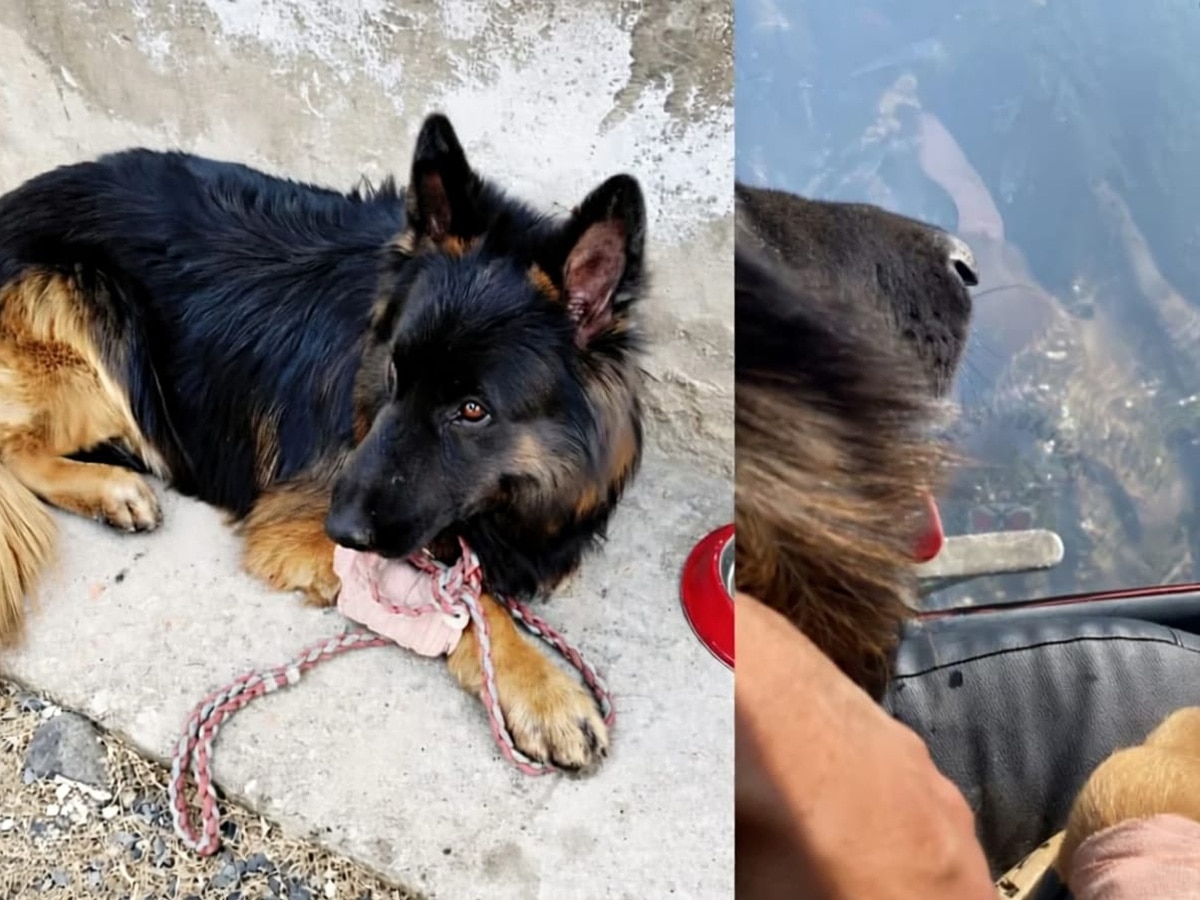
OpTrashi-I in Kishtwar third terrorist killed: A third terrorist has been eliminated in the ongoing counter-terror operation in the Chhatru area of Kishtwar district, Jammu and Kashmir. In the ongoing operations in Kishtwar, soldiers of the Indian Army’s WhiteKnightCorps, in coordination with Jammu and Kashmir Police and CRPF, killed the third terrorist. However, during this period, the Indian Army’s brave K9 trooper ‘Tyson’ was injured by a gunshot.
Salute to the Bravery
It should be noted that the army’s elite German Shepherd, Tyson, was the first to advance towards the terrorists’ hideout. He was shot during the encounter with the terrorists, but despite this, Tyson did not stop and kept moving forward. Despite being injured, Tyson demonstrated exceptional bravery, loyalty, and dedication. During this operation, the Indian Army succeeded in eliminating terrorist Saifullah, who had been active in the Kishtwar-Doda belt for a long time, and his associate terrorists.
Tyson Airlifted to Hospital
Immediately after being injured, Tyson was airlifted for treatment. Currently, Tyson is out of danger. The bravery of this brave K9 warrior of the army proves that the army’s trained dogs are playing a crucial role in the fight against terrorism. In this terrorist encounter, this K9 dog Tyson of the army showed extraordinary courage.
He helped the army personnel from sniffing out and tracing the terrorists’ location to pouncing on them, breaking them, and sending them to hell. After being shot, Tyson was immediately admitted to the Udhampur Army Hospital, where his treatment is ongoing. A team of doctors and the army unit are monitoring his condition. It is noteworthy that as a trained military dog, he has been part of many important operations. His bravery has once again highlighted the significant valor and contribution of the army’s mute warriors.
Animal Contingent Made a Splash in the Parade
It is noteworthy that this year, for the first time, the army’s animal contingent participated in the January 26th parade. In the Republic Day parade, the Indian Army participated for the first time with its contingent of mute warriors. This included hawks, dogs, and camels. Before their natural powers, even fierce terrorists become meek. Tyson has proven this once again.
Kishtwar district
Kishtwar district is a mountainous region in the Jammu division of Jammu and Kashmir, India, known for its stunning natural beauty, including high-altitude lakes and the Chenab River. Historically, it was part of the erstwhile Chamba kingdom and later came under the rule of the Dogra Rajputs, serving as an important stop on ancient trade routes. The area is also culturally significant for its mix of Hindu and Muslim communities and is famed for its sapphire mines.
Jammu and Kashmir
Jammu and Kashmir is a region in northern India, historically a princely state, known for its stunning Himalayan landscapes and diverse cultural heritage blending Hindu, Buddhist, and Islamic influences. Its modern history has been marked by a territorial dispute between India and Pakistan since the partition in 1947, leading to ongoing political complexity. The area is famed for destinations like Srinagar’s Dal Lake, the Hindu shrine of Vaishno Devi, and the Buddhist monasteries of Ladakh.
WhiteKnightCorps
“WhiteKnightCorps” refers to the White Knight Corps, a distinguished formation of the Indian Army. It was raised in 1962 and is most famous for its pivotal role in the capture of the strategic town of **Skardu** during the 1971 Indo-Pakistani War, a key victory in the Kargil sector. The corps continues to be a vital part of India’s defense, primarily deployed in the northern regions of Jammu and Kashmir.
Jammu and Kashmir Police
The Jammu and Kashmir Police is the law enforcement agency for the Indian union territory of Jammu and Kashmir. It was formally established in 1873 during the Dogra rule of the princely state of Jammu and Kashmir and has a long history of operating in a complex and challenging security environment.
CRPF
The Central Reserve Police Force (CRPF) is not a place or cultural site, but India’s largest central armed police force. It was established in 1939 as the Crown Representative’s Police during British rule and was renamed after India’s independence in 1947. Its primary role is to assist state and union territories in police operations to maintain law and order and counter-insurgency.
Udhampur Army Hospital
The Udhampur Army Hospital is a major military medical facility in Jammu and Kashmir, India, primarily serving the armed forces and their families in the Northern Command. Its history is closely tied to the region’s strategic military importance, having been established and developed over the years to provide critical healthcare support to troops stationed in the sensitive and challenging terrain of the Himalayas.
Republic Day parade
The Republic Day parade in India is an annual national event held on January 26th in New Delhi to commemorate the enactment of the country’s constitution in 1950. It is a grand display of military might, cultural diversity, and technological achievements, featuring marching contingents, elaborate floats from states, and aerial flypasts. The parade traces its origins to the first celebration of India’s transition to a sovereign republic, held at the Irwin Amphitheatre (now Major Dhyan Chand National Stadium) in 1950.
January 26th parade
The January 26th parade in New Delhi is the central event of India’s Republic Day celebrations, marking the date in 1950 when the country’s constitution came into force. The grand military and cultural procession showcases India’s defense capabilities, cultural diversity, and historical heritage along the ceremonial Rajpath boulevard.

)