-
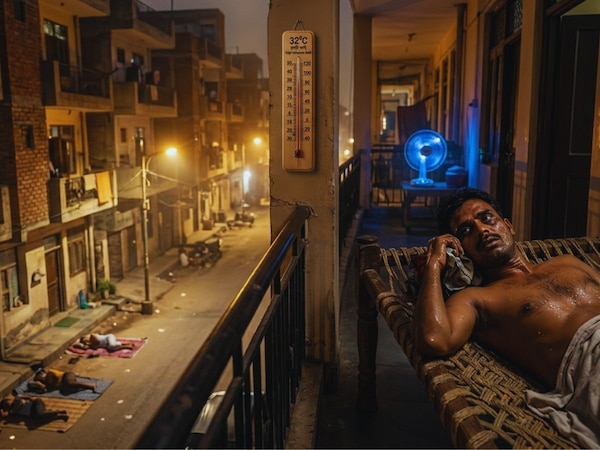
What Is Night Heatwave: The summer season in India is breaking new records every year. Until now, we all have only been preparing to avoid the scorching daytime sun and hot winds, or ‘Heatwave’. But weather scientists and doctors have now warned of a new and invisible threat that is proving to be far more deadly than the daytime heatwave. This new threat is called ‘Night Heatwave’.
After sunset, where people expect relief, due to the night heatwave, nights are becoming as hot as a furnace. When the minimum nighttime temperature remains at 30°C or above, the human body does not get a chance to recover from the day’s fatigue and heat. Let us find out what this night heatwave is, why it is more dangerous than the day heatwave, and what arrangements you need to make to protect yourself from it….
What is ‘Night Heatwave’ and why is its graph rising?
Generally, during the day, the earth heats up due to strong sunlight, and after sunset, it releases its heat (radiation) back into space, making nights cool. But this does not happen during a night heatwave. Three main reasons are responsible for this:
1. Concrete Jungles (Urban Heat Island Effect): The houses and buildings in our cities are made of cement and concrete, which absorb the intense heat of the sun throughout the day. At night, these walls and roads slowly release that heat, causing the temperature in cities to rise several degrees compared to villages.
2. Global Warming and Climate Change: Due to increased levels of greenhouse gases in the atmosphere, the earth’s heat cannot escape at night and gets trapped in the air.
3. High Humidity: When there is too much moisture in the air, sweat does not evaporate, and the humid heat makes nights extremely suffocating.
Why is ‘Night Heatwave’ more dangerous than daytime heatwave?
According to doctors, the human body needs a cool environment at night to survive and function properly. When the nighttime temperature does not drop, the body never gets cool in 24 hours, leading to serious health problems:
1. Stoppage of Physical Recovery: Even while sleeping, our body continuously struggles to cool itself down. This keeps the heart rate high and increases blood pressure.
2. Lack of Complete Sleep: Due to excessive heat and discomfort, deep sleep is not achieved, which mentally and physically breaks down a person.
3. Increased Risk of Heart Stroke: Continuous exposure to heat significantly increases the risk of dehydration, heat exhaustion, and sudden heart failure or heat stroke.
This condition proves most fatal for the elderly, children, patients with high blood pressure, heart disease, diabetes, and laborers who work in the sun all day.
How to protect yourself from Night Heatwave?
To deal with this life-threatening situation, special preparations are necessary not only during the day but also for the night:
1. Prevent the room from becoming a Heat Trap
Open the windows of the house as soon as evening falls so that cool air can come in through cross ventilation. During the day, use thick curtains or reflective film on windows that face the sun. Additionally, lightly sprinkling water on the roof before sleeping at night significantly cools the heat from the cement. If you do not have an air conditioner in your house, be sure to run an exhaust fan along with a cooler so that the hot air from the room can escape.
2. Lower body temperature before sleeping
Take a bath with lukewarm or normal water just before sleeping at night. Keep in mind that very cold water provides immediate relief, but afterward, the body internally generates even more heat to warm itself up. Always wear loose and cotton clothes while sleeping and use a thin sheet instead of a heavy mattress.
3
India
India is a vast South Asian country with a rich history spanning over 5,000 years, home to ancient civilizations like the Indus Valley and later powerful empires such as the Maurya and Mughal. It is renowned for its cultural diversity, including major religions like Hinduism, Buddhism, and Sikhism, as well as iconic landmarks like the Taj Mahal. After British colonial rule, India gained independence in 1947 and is now the world’s largest democracy.