Imminent agreement between the United States and Mali for intelligence gathering
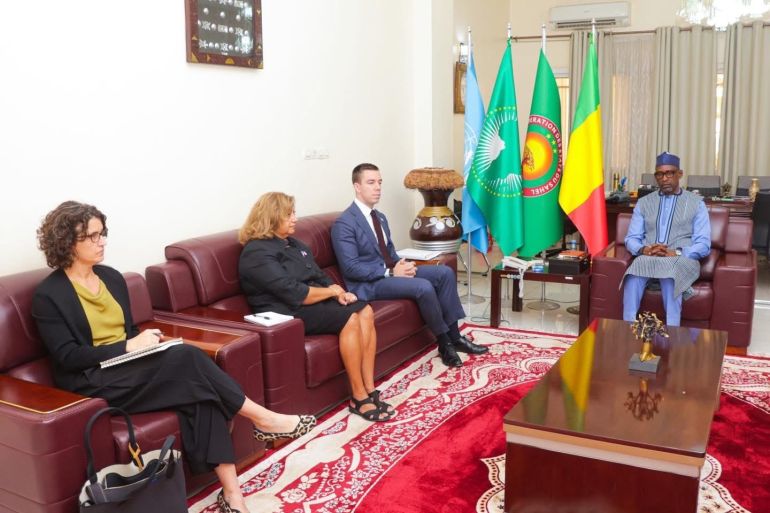
The United States is close to finalizing an agreement with Mali’s government that would allow its drones and fighter jets to resume flights in Malian airspace to gather intelligence on armed groups linked to al-Qaeda, according to Reuters citing U.S. sources.
The move comes after Washington lifted sanctions last month that had targeted Mali’s defense minister and several senior officials, accusing them of cooperating with Russian mercenaries, a key demand. The Malian government viewed the lifting of sanctions as “a step to improve relations between the two countries while respecting national sovereignty.”
Washington seeks to enhance its intelligence capabilities in the Sahel region, where the influence of the al-Qaeda-linked group “Jama’at Nusrat al-Islam wal-Muslimin” is growing. Part of the U.S. move is also linked to attempts to locate an American pilot kidnapped last year, who is believed to be held in Mali by the same group.
Volatile Relations
Relations between Mali and the United States have been tense in recent years, especially following military coups in Sahel countries and their turn towards Russia for security support. Last December, Mali, Niger, and Burkina Faso imposed travel restrictions on Americans in response to being placed on a U.S. travel ban list.
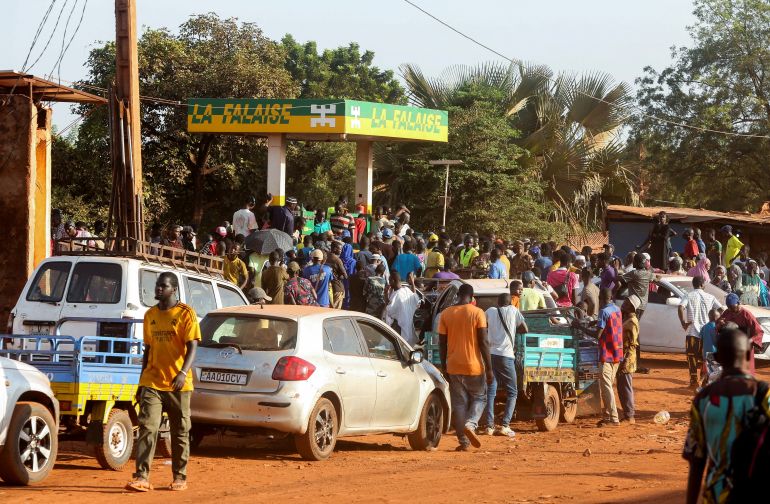
On the other hand, Mali faces increasing pressure as the influence of armed groups expands despite a decade of French and Western intervention, followed by the entry of Russian mercenaries into the conflict. Recent attacks by armed groups have targeted major roads and gold mining sites, leading to a fuel crisis in the capital, Bamako.
Former U.S. officials reportedly believe that allowing the resumption of surveillance flights is in Mali’s interest, as it provides intelligence capabilities the country lacks. The United States previously shared information that helped target group leaders last year. It remains unclear where U.S. aircraft would be based if Bamako proceeds with granting permission, but countries such as Côte d’Ivoire and Ghana have been discussed as potential options.
Mali
Mali is a West African nation historically renowned as the heart of several powerful empires, most notably the Mali Empire (13th-16th centuries), which was a major center of Islamic scholarship, trade, and wealth under Mansa Musa. Today, it is a culturally rich country famous for the ancient city of Timbuktu and its historic mud-brick mosques in Djenné, though these UNESCO World Heritage sites face threats from environmental and security challenges.
Bamako
Bamako is the capital and largest city of Mali, located on the Niger River. Founded by the Bambara people in the 17th century, it grew from a small fishing village into a major administrative and trade center during the French colonial period in the late 19th century. Today, it serves as the nation’s economic and cultural heart, known for its vibrant markets and music scene.
Sahel
The Sahel is a vast semi-arid region in Africa, stretching from the Atlantic Ocean to the Red Sea, acting as a transitional zone between the Sahara Desert to the north and the savannas to the south. Historically, it was a crucial crossroads for trans-Saharan trade routes, fostering powerful empires like Ghana, Mali, and Songhai from the 8th to the 16th centuries. Today, it is home to diverse cultures but faces significant challenges from desertification and climate instability.
Niger
Niger is a landlocked country in West Africa, named after the Niger River that flows through its southwestern region. Historically, it was a crossroads for several major African empires and trans-Saharan trade routes before becoming part of French West Africa, gaining independence in 1960. Culturally, it is renowned for the historic city of Agadez, a UNESCO World Heritage site and a gateway to the Sahara, known for its distinctive Sudano-Sahelian architecture and centuries-old Tuareg heritage.
Burkina Faso
Burkina Faso is a landlocked West African nation known for its rich cultural traditions, including vibrant music, dance, and artisan crafts. Historically, it was home to several powerful kingdoms, such as the Mossi states, before becoming a French protectorate in the late 19th century; it gained independence as Upper Volta in 1960, adopting the name “Burkina Faso” (“Land of Honest People”) in 1984. Today, it features cultural sites like the ancient ruins of Loropéni, a UNESCO World Heritage site linked to the trans-Saharan gold trade.
Côte d’Ivoire
Côte d’Ivoire, also known as Ivory Coast, is a West African nation with a rich history shaped by pre-colonial kingdoms, French colonization from the late 19th century, and independence in 1960. Culturally, it is renowned for its diverse ethnic traditions and is considered a global hub for *coupé-décalé* music and traditional *Gbégbé* masks. Notable sites include the UNESCO-listed historic town of Grand-Bassam, a former colonial capital, and the Basilica of Our Lady of Peace in Yamoussoukro, one of the world’s largest churches.
Ghana
Ghana is a West African nation known for its rich history as the site of several powerful pre-colonial empires, most notably the Ashanti Empire. It gained independence from British colonial rule in 1957, becoming the first sub-Saharan African country to do so, and is celebrated for its pivotal role in Pan-Africanism. Today, it is a stable democracy renowned for its vibrant culture, historic slave trade forts along the Cape Coast, and as a major producer of cocoa and gold.