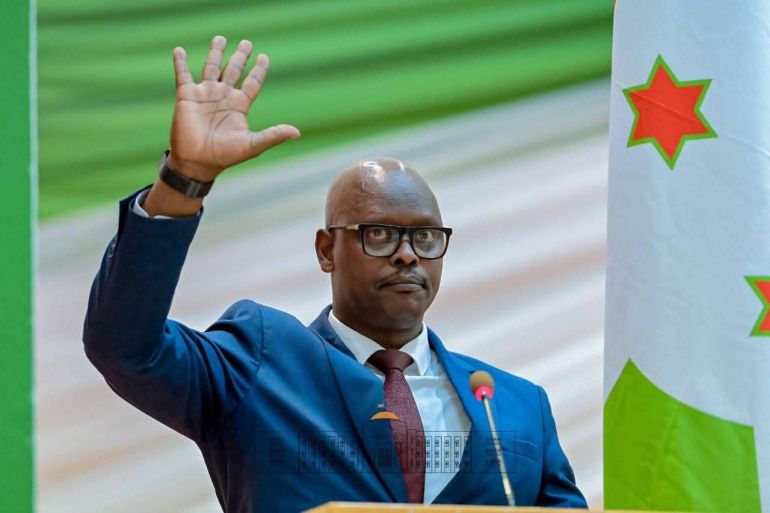
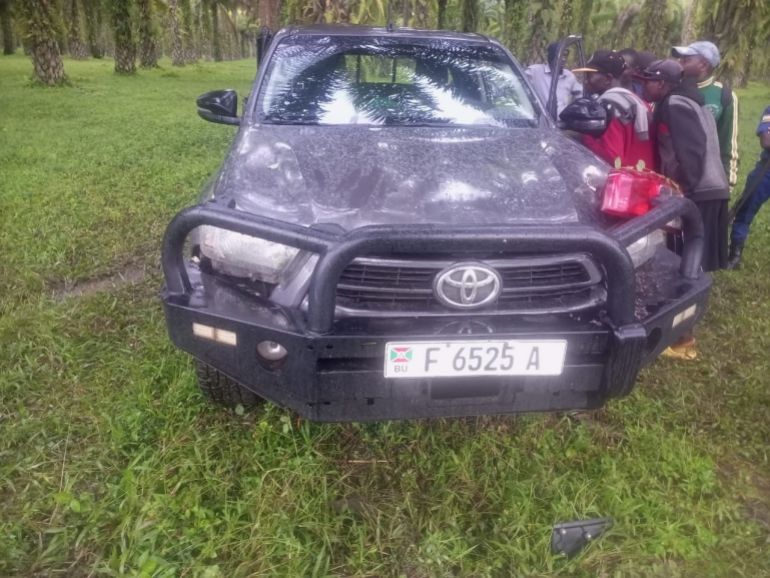
Authorities in Burundi found the body of Minister of Communications and Information Gaby Bugaga inside his car in a remote palm grove north of the economic capital Bujumbura early Thursday morning. The incident sparked widespread questions about the circumstances of his death, after the government described it as a “sudden accident,” while security and human rights sources cast doubt on this account.
According to farmer witnesses, the car was found on a nearly deserted road in the Kivoga area, 10 kilometers from Bujumbura. They posted images of the body on social media platforms before police identified the minister and secured the scene.
Government account and critics’ doubts
Government spokesman Jerome Niyonzima issued a statement expressing “deep regret” over the minister’s death, describing it as an “accident” without further details. President Evariste Ndayishimiye also wrote online, praising Bugaga’s courage and dedication to serving the country.
However, images of the car sparked widespread debate. A police source confirmed to AFP that the death “raises many questions,” noting a severe head injury despite the cabin being undamaged with no signs of impact on the vehicle. The source added that the government “seeks to close the file without an official investigation,” while another administrative official stated an investigation is underway to determine the cause.
Questions intensified when an Africa-focused outlet asked: What was the minister doing alone, without a driver or security, on a desolate road rarely traveled at night?
Several senior officials were at the discovery site Thursday morning, including Minister of Interior and Public Security Leonidas Ndaruzaniye, Minister of Justice Alfred Ahengigeji, along with the public prosecutor and high-ranking security officials.
Human rights responses: Extrajudicial execution style
The human rights organization “Etica,” operating from exile, described the incident as an “extrajudicial execution,” noting documentation of over two thousand similar cases in recent years, and called for an independent investigation. The rights group “King Umurundi Freedom” also rejected the official account, demanding disclosure of the true circumstances.
Another organization stated that Burundi is consistently ranked among the most hostile environments for the press, while UN reports between January 2024 and May 2025 documented hundreds of cases of extrajudicial killings, enforced disappearances, and arbitrary detention, often involving security agencies, according to the organization.
Similar precedent
Bugaga was a former journalist for the national Burundian radio and television, moving through media positions in several government institutions before being appointed to the independent electoral commission, then as Minister of Information and Communications in 2025.
This controversial death does not occur in a political vacuum, as it recalls the 2017 shooting death of Environment Minister Emmanuel Niyonkuru, two years after the severe political crisis that followed former President Pierre Nkurunziza’s bid for a controversial third term.
As of the time of this report, no date has been set for funeral ceremonies, in a scene that encapsulates the extent of the mystery surrounding a case that now casts a shadow over the entire Burundian political landscape.