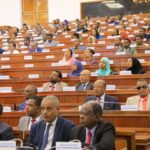
The Popular Front decides to restore rule in Tigray amid warnings of catastrophic conflict in Ethiopia.
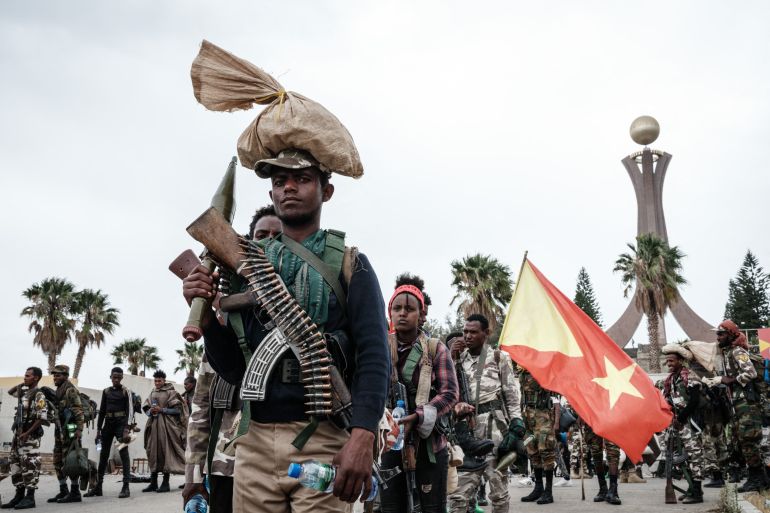
The Tigray People’s Liberation Front (TPLF) in northern Ethiopia has decided to regain control of the regional government, a move that threatens to collapse the peace agreement with the federal government.
In a statement, the TPLF accused the federal government of violating the peace deal, inciting armed conflict in the region, withholding funds needed to pay civil servant salaries in the area, and extending the term of the interim administration’s head without consulting the TPLF.
The TPLF claimed the federal government is rushing to wage another bloody war, asserting it will reclaim executive and legislative authority in Tigray from the interim administration and strengthen friendships with neighboring Ethiopian regions and countries.
Commenting on the TPLF’s announcement, Getachew Reda, advisor to Ethiopian Prime Minister Abiy Ahmed, stated on social media that the TPLF’s statement constitutes a “clear rejection” of the post-war order established by the Pretoria Agreement.
Catastrophic Conflict
Getachew, who served as head of the interim administration in Tigray before his dispute with the TPLF and removal last year, called on the international community to act to avert the risk of a catastrophic conflict in a region that cannot bear it.
The federal government has not commented on the latest developments, but it had previously affirmed its commitment to the Pretoria Agreement and accused the TPLF of conspiring against it with Eritrea, which gained independence from Ethiopia in 1993 and fought a border war with Ethiopia between 1998 and 2000. Both the TPLF and Eritrea deny any cooperation between them.
Pretoria Agreement
The war, which raged between 2020 and 2022 between forces led by the TPLF and the Ethiopian army, claimed the lives of hundreds of thousands of people due to direct violence and the collapse of healthcare, with estimates suggesting at least 600,000 deaths.
The conflict erupted after the breakdown of relations between the TPLF, a former armed movement turned political party that dominated Ethiopian politics for nearly three decades, and Abiy Ahmed, whose appointment as prime minister in 2018 ended the TPLF’s dominance.
In May 2025, the Ethiopian National Election Commission announced the cancellation of the TPLF’s registration as a recognized political party.
The war ended in late 2022 with the Pretoria Agreement, brokered by the African Union, which called for the formation of an interim administration for Tigray through dialogue between the two sides, replacing the region’s elected bodies until new elections could be organized.
Despite some progress in implementing the agreement, the process has come under pressure in recent months, with armed clashes erupting since January between TPLF forces, the federal army, and pro-government fighters.
The Pretoria Agreement ended the two-year war, one of the deadliest conflicts of the 21st century. However, the agreement now faces challenges following recent developments.
In February, signs of conflict in Tigray returned, with massive mutual military buildups between the Ethiopian federal army, which has besieged the region, and Tigrayan forces deployed along its borders.
Tigray Martyr’s Memorial Monument Center
The Tigray Martyrs’ Memorial Monument Center is a memorial site in Mekelle, Ethiopia, dedicated to honoring the lives lost during the Tigray War, which began in 2020. It serves as a solemn reminder of the conflict’s devastating impact, featuring monuments, names of the deceased, and exhibits that document the region’s struggle and resilience. The center aims to preserve the memory of the victims and promote peace and reconciliation in the post-war period.
Mekele
Mekele is a major city in northern Ethiopia and the capital of the Tigray Region. Historically, it served as the capital of the Ethiopian Empire under Emperor Yohannes IV in the late 19th century, and his palace remains a key landmark. Today, Mekele is known for its role in regional culture and politics, as well as for being a hub of trade and education.
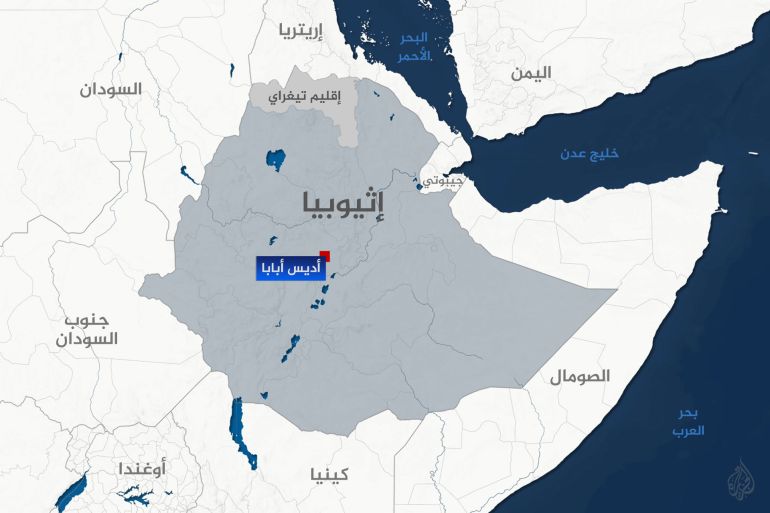
Tigray region
The Tigray region in northern Ethiopia is a historically significant area known for its ancient civilization and stunning rock-hewn churches, some dating back to the 4th century. It was once the heart of the Aksumite Empire, a major trading power, and is home to the famous obelisks of Axum. In recent years, the region has been deeply affected by a devastating civil war that began in 2020, causing widespread humanitarian crises.
Ethiopia
Ethiopia is a historic East African nation known as being one of the oldest independent countries in the world, never fully colonized during the Scramble for Africa. It is the site of the ancient Aksumite Empire and is traditionally considered the resting place of the Ark of the Covenant. Culturally, it is renowned for its unique Orthodox Christian heritage, distinctive cuisine, and the discovery of the early hominid “Lucy.”
Eritrea
Eritrea, a country in the Horn of Africa, is home to the capital city of Asmara, a UNESCO World Heritage site renowned for its well-preserved Italian colonial architecture from the early 20th century. The nation’s history includes ancient kingdoms like the Kingdom of Aksum, followed by periods of Ottoman, Egyptian, and Italian rule, and a long struggle for independence from Ethiopia, which it achieved in 1993. Today, Eritrea’s cultural landscape reflects this blend of indigenous traditions and colonial influences, with sites like the port city of Massawa showcasing both Ottoman and Italian heritage.
Pretoria Agreement
The Pretoria Agreement, signed in August 2002, was a peace accord between the government of the Democratic Republic of the Congo (DRC) and Rwanda, brokered in Pretoria, South Africa. It aimed to end the Second Congo War by securing the withdrawal of Rwandan troops from DRC territory and addressing mutual security concerns, particularly regarding rebel groups. This agreement was a key step toward the broader peace process that eventually led to the formation of a transitional government in the DRC.
African Union
The African Union (AU) is a continental union established in 2002 in Durban, South Africa, succeeding the Organization of African Unity (OAU), which was founded in 1963 to promote decolonization and unity. Headquartered in Addis Ababa, Ethiopia, the AU aims to foster political and economic integration, peace, and development across African nations. It consists of 55 member states and works on issues like trade, security, and human rights, building on the OAU’s legacy of advancing African solidarity.