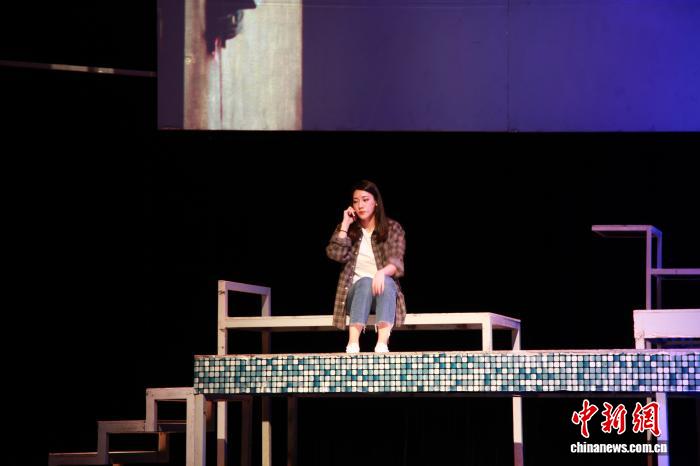
Song Tong, a young artist from Kaohsiung, Taiwan, shared how her parents worried she couldn’t support herself through art in Taiwan, but after coming to mainland China, their views changed significantly.
In 2017, Song Tong toured mainland China with a Taiwanese theater troupe. Her first stop was Shandong. Although nervous and excited to perform in a musical with only a month of rehearsal, the warmth of the locals quickly bridged the gap. “When people heard I was from Taiwan, they were especially warm and eager to chat,” she said.
This novel experience sparked her curiosity about the mainland. In 2018, she worked on the play “Nostalgia,” which tells the stories of veterans who went to Taiwan in 1949. During the creative process, the team interviewed many Taiwanese compatriots and locals, hearing real accounts of families separated across the strait. These stories not only entered the script but also planted a desire in her to stay on the mainland.
After the tour, Song Tong decided to settle there. But striking out alone wasn’t easy. She transitioned from onstage to behind-the-scenes roles, trying her hand at acting, music composition, scriptwriting, and stage directing. Through this, her understanding of Chinese culture deepened.
Take the play “Father’s Letter,” which she helped create. It has been performed over 150 times. The play focuses on family love and filial piety, and the script has been constantly revised from the first to the last performance. Song Tong said, “Its underlying logic is Confucian thought, which is common across the strait, but some details differ. So during each performance, we collected feedback from mainland audiences and made adjustments, eventually turning it into a truly cross-strait collaborative work.”
The mainland’s art market also changed her view of the industry. Compared to Taiwan’s smaller market, limited audience, and often underfilled shows, her work in Shanghai was entirely different. “Before, I often felt good ideas had nowhere to go. But in Shanghai, as a stage director, I’m not limited to musicals. I can also work on commercial art events, with more room for expansion and imagination.”
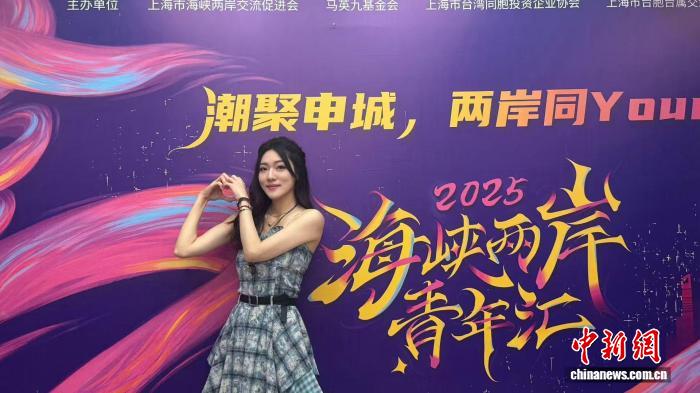
Recently, ten policy measures to promote cross-strait exchanges and cooperation were announced, allowing Taiwanese professionals to participate in mainland micro-drama creation in various ways, and encouraging the screening of film and television works that showcase cross-strait family bonds and a better life.
Song Tong is currently collaborating with a Shanghai theater to bring more young Taiwanese performing artists to create a play that reflects the shared interests, daily struggles, and pursuit of a better life among young people across the strait.
She encourages more Taiwanese youth to bravely try opportunities on the mainland. “Don’t think about failure or success first. Get to know this place, learn to like it, and you’ll slowly discover what you’re meant to pursue.” She believes that industries like culture, arts, and artificial intelligence all offer great platforms on the mainland.