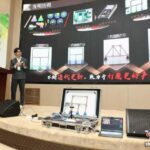
To further enhance policy transparency and better help businesses and the public understand policies, thereby promoting effective implementation, the Shanghai Municipal Government Office will organize “Policy Open Lectures” for policies with broad impact and high public attention, creating a new brand for government transparency in Shanghai. The events will invite policy-making units, experts, and scholars to provide in-depth explanations of policy content through short videos that are popular among businesses and the public, proactively address public concerns, and effectively improve policy transparency and practicality.
How to address the “perception gap” and enhance the experience of businesses is the core question that this Version 8.0 plan aims to answer. We believe that optimizing the business environment requires aligning our goals and efforts with those of enterprises. Through tangible and “perceptible” measures, we aim to convey warmth, improve experiences, and boost confidence.
How does the Version 8.0 plan make the “perceptible” benefits for businesses a reality?
It primarily focuses on two aspects: first, identifying the real problems; second, ensuring genuine implementation, striving to ensure that all 58 task measures are accurately carried out down to the “last mile” without deviation.
During the preliminary research for this Version 8.0 plan, we further emphasized a demand-oriented, problem-oriented, and result-oriented approach. We extensively collected issues and suggestions from all sectors of society, compiling a list of 189 demand recommendations. Concerns raised include areas such as business-friendly policies, enterprise inspections, promoting fair competition, and protecting corporate rights, as well as minor pain points encountered when handling procedures, connecting to networks, or issuing invoices. These concerns from businesses have been actively addressed in Version 8.0.
Including items in the document is only the first step; among countless policies, implementation is paramount. We will employ a “five-in-one” mechanism to ensure genuine implementation. This includes conducting comprehensive training, intensifying supervision and promotion for key tasks, and carrying out third-party evaluations, promotional campaigns for exemplary cases, and media oversight.
A good business environment means inspections that “do not disturb without cause,” policies that offer “benefits without application,” innovative industrial parks, vibrant commercial streets, internationally friendly communities, a mutual commitment between government and businesses, and collaborative efforts from all sectors of society.
Let us work together to build a charming Shanghai that is conducive to both business and living, continuously creating a world-class business environment.