“I spent 999 yuan, and I think it was totally worth it!”
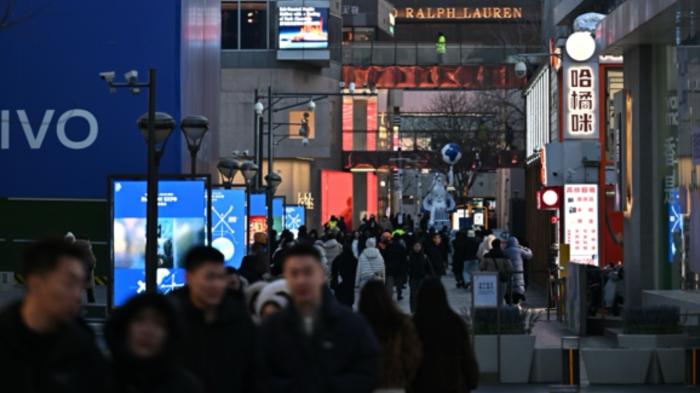
Outside a large supermarket in Beijing, amidst the bustling crowd, a young man walked out carrying shopping bags, a smile on his face.
He started working in Beijing last year and recently took on a new project, so he decided to buy himself some new clothes. He said one has to treat oneself well.
Food, clothing, and daily necessities may seem ordinary, but they are actually connected to the broader picture of consumer spending. This simple statement reflects the warmth of consumption.
Data shows that in the first quarter, total retail sales of consumer goods reached 12.7695 trillion yuan, a year-on-year increase of 2.4%, accelerating by 0.7 percentage points compared to the fourth quarter of the previous year.
At a recent press conference, an official commented on this, stating that the consumer market is stable and improving, with demand for service consumption accelerating.
The words are plain, but their weight is significant.
Looking around the world, many regions are shrouded in conflict, unable to guarantee basic livelihoods. Some countries inflict heavy losses on themselves while harming others, with persistently high prices and downward revisions to economic growth forecasts. Some countries have begun scrambling for fuel, imposing travel restrictions, and even items like toilet paper and plastic bags have become hot commodities.
Against this backdrop, this achievement is particularly noteworthy. Upon closer inspection, many of the growth drivers are especially bright.
First, service consumption.
In the first quarter, service retail sales increased by 5.5% year-on-year. Retail sales for cultural, sports, and leisure services, as well as tourism consulting and rental services, both saw double-digit growth. Retail sales for communication and information services grew by over 10%.
Consumers now not only buy goods but also value experiences. In several regions, service sales revenue related to the ice and snow economy during the Spring Festival period increased by 62.4% year-on-year.
Another driver is new forms of consumption.
Now, online shopping and live-streaming e-commerce orders are part of daily consumption. In the first quarter, online retail sales of goods and services increased by 8% year-on-year, significantly faster than the growth rate of total retail sales of consumer goods.
Digital and intelligent consumption is leading new trends. AI-powered food delivery ordering, robot meal delivery, and drone courier services let people feel the convenience of technology. Retail sales for new retail models like unattended stores and warehouse membership stores maintained double-digit growth.
Goods consumption also has its highlights.
Particularly for basic living necessities and some upgraded goods. In the first quarter, retail sales for grain, oil, and food; clothing, shoes, hats, and textiles; communication equipment; and gold, silver, and jewelry by enterprises above designated size increased by 10.0%, 9.3%, 20.8%, and 12.6% year-on-year, respectively.
One might ask, in an environment intertwined with various uncertainties, why has consumption been able to hold steady?
On the surface, it’s because measures have been taken to enable, encourage, and make people willing to spend.
In the first quarter, the national per capita disposable income was 12,782 yuan, a nominal increase of 4.9% year-on-year, and a real increase of 4.0% after deducting price factors.
With money in their pockets, people have the motivation to spend. In the first quarter, the national per capita consumption expenditure was 7,955 yuan, a nominal increase of 3.6% compared to the same period last year, and a real increase of 2.6% after deducting the impact of price factors.
Coupled with abundant holidays, public consumption became even hotter. This year’s Spring Festival holiday lasted 9 days, with both the number of domestic tourist trips and tourism spending hitting record highs, and the total number of Spring Festival film screenings also setting a new record.
Looking deeper, it’s due to the continuous improvement of the consumption environment.
This benefits from the ongoing optimization of the market environment. For instance, recent coordinated efforts involving over 30 departments introduced