230 MPs vote in opposition, blocking the Nari Shakti Reservation Bill in the Lok Sabha. PM Modi criticizes the opposition. Read full details and the impact on women.
Nari Shakti Reservation Bill Rejected in Lok Sabha: PM Modi Launches Sharp Attack on Opposition
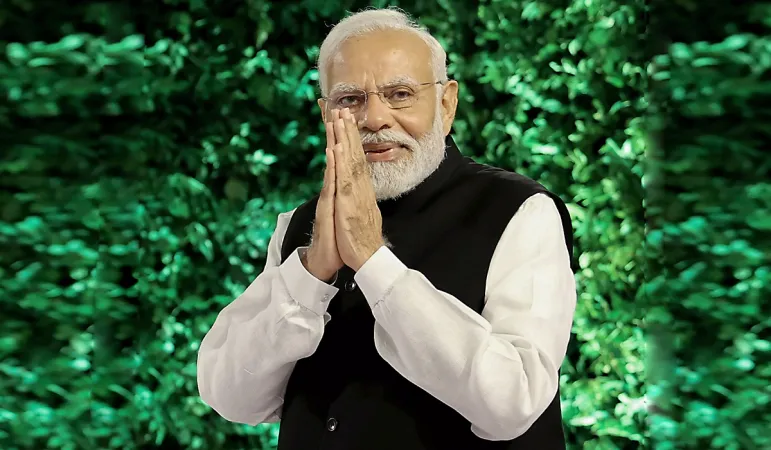
New Delhi: Prime Minister Narendra Modi launched a sharp attack on the opposition after the Nari Shakti Reservation Bill was rejected in the Lok Sabha. PM Modi stated that despite the government’s sincere efforts, the opposition has “crushed” the dreams of women. Addressing the nation on Saturday, the Prime Minister said this defeat of the bill is a direct attack on the self-respect of women, an insult that women voters will always remember.
PM Modi Accuses Opposition of Committing a “Sin”
Prime Minister Modi stated that “women can forget everything, but they never forget an insult to their dignity.” He accused the opposition that the public will punish “the sin committed by the opposition.” PM Modi added that the women of India understand evil intentions well and will hold these politicians strictly accountable in the future.
Discussing the details of the transformative vision of the Nari Shakti Reservation Bill, PM Modi said this law was a grand effort to provide long-pending rights and create new opportunities for half the population. He mentioned that this bill was meant to remove systemic barriers and equally enhance the political power of all states, regardless of size or geography.
What Was in the Bill: 33% Women’s Reservation and Delimitation
The Lok Sabha had introduced the Constitution (One Hundred and Thirty-First Amendment) Bill, the Delimitation Bill, and the Union Territories Law (Amendment) Bill — all three to be passed together. After discussion on all three bills, the vote on the constitutional amendment bill saw 298 members voting in favor and 230 members voting against. After the constitutional amendment bill was rejected, the government refused to proceed with the remaining two linked bills.
The objective of these bills was to increase Lok Sabha seats from 543 to 816, with a provision for 33% women’s reservation. Delimitation was to be based on the 2011 population census. The government stated that all states would see a proportional increase in seats.
Nari Shakti Vandan Adhiniyam: A Major Reform for Women’s Empowerment
PM Modi stated that “this amendment was a sincere effort to make women equal partners in India’s development journey.” The Nari Shakti Reservation Bill was described as a historic step towards women’s political empowerment. This bill was considered the most important step to increase women’s political participation in India.
Opposition’s Stance: 230 Members Voted Against in the Division
Opposition parties in the Lok Sabha voted against the constitutional amendment bill on Friday. The division saw 298 members voting in favor and 230 members voting against, leading to the rejection of the Nari Shakti Reservation Bill. This vote has been described as a step against women’s empowerment.
PM Modi’s Sharp Attack on Congress
Prime Minister Modi specifically targeted the Congress. He stated that whatever decision is necessary for the country, the Congress “sweeps it under the carpet.” PM Modi alleged that due to this attitude of the Congress, India has not been able to achieve the heights of development it should have.
He mentioned that many countries became free around the same time as us and most of them have moved far ahead of us. PM Modi said the reason for this was that the Congress obstructed every reform. “Delay, distract, disrupt — this was the Congress’s principle, this was the Congress’s work culture,” he alleged.
Future Outlook: Accountability of Women Voters
PM Modi gave a clear signal that the consequence of blocking the Nari Shakti Reservation Bill will be faced by the opposition in the elections. He stated that women will never forget this insult and will teach a tough lesson to accountable politicians in future elections. The importance of the Nari Shakti Reservation Bill for the direction of women’s political empowerment in India is considered extremely high, and this issue is expected to remain central in Indian politics in the coming times.