Seize the Momentum, Tackle Challenges, Strive for Excellence and Practical Results
Strive to Create a New Phase in the Development of the New Western Land-Sea Corridor in the Opening Year of the “16th Five-Year Plan” Period
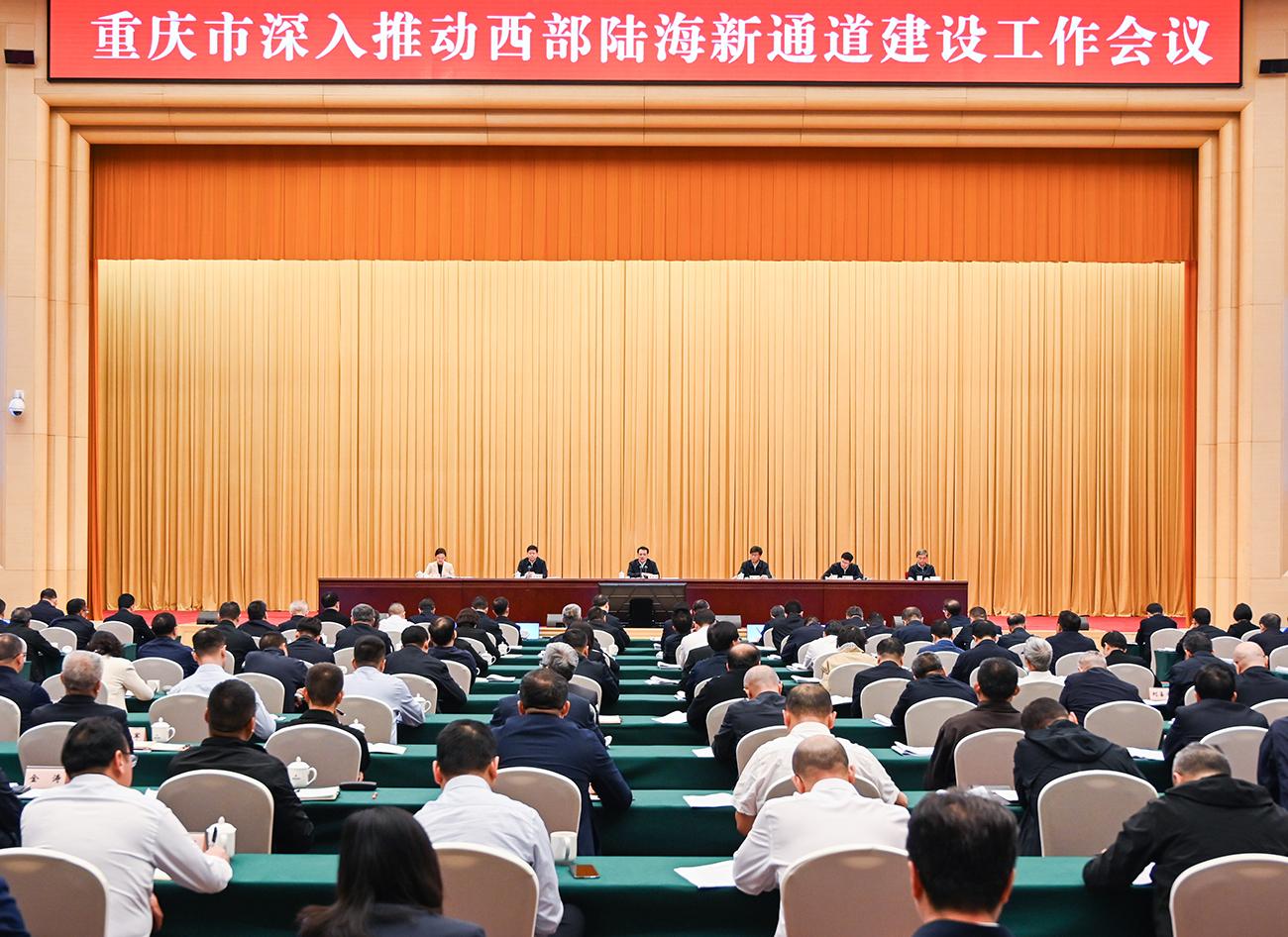
On the morning of April 17, a work conference was held to further promote the development of the New Western Land-Sea Corridor. It was emphasized at the conference that it is necessary to thoroughly implement the guiding principles of the Party’s National Congress and its plenary sessions, deepen the implementation of the important instructions from the inspection visit, focus on solidifying the “two major positioning” and leveraging the “three roles,” and center on building a comprehensive hub linking the Eurasian economic corridor. Guided by the construction of an international logistics hub and driven by deepening reforms and digital-intelligent empowerment, efforts should continue to solidify the “one park, two systems” framework and build a logistics hub economic zone. There should be active exploration of a new system of land trade rules to enhance the level of institutional opening-up in inland regions, striving to create a new phase in the development of the New Western Land-Sea Corridor in the opening year of the “16th Five-Year Plan” period.
The conference heard reports on the coordinated advancement of the Corridor’s construction work, as well as key work arrangements for the “16th Five-Year Plan” period and the year 2026. Exchanges and speeches were made by representatives from Shapingba District, Jiulongpo District, Jiangjin District, the Chongqing Branch of the People’s Bank of China, China Railway Container Transport Co., Ltd., and the New Land-Sea Corridor Operation Company.
It was pointed out that over the past year, remembering the earnest instructions, the city has consistently regarded the in-depth and substantive advancement of the New Western Land-Sea Corridor as a key support for solidifying the “two major positioning” and leveraging the “three roles.” The functions of the corridor’s logistics and operation organization center have been continuously amplified. Integrated with the construction of the “Nine Key Hubs,” work has been carried out in a coordinated manner to build the corridor, strengthen hubs, facilitate trade and economy, and promote industries, striving to create landmark achievements in building an inland opening-up international cooperation leading zone. Chongqing’s hub visibility in connecting the Eurasian economic artery has been effectively enhanced. The integrated development system of “corridor + trade/economy + industry” has seen continuously increasing effectiveness. Breakthroughs have been made in exploring land trade rules. Landmark achievements in the comprehensive service system construction have continuously emerged. International exchange and cooperation have been further deepened. The synergy for all-round consultation, co-construction, and shared efforts has significantly improved, promoting the basic completion of an economical, efficient, convenient, green, and safe New Western Land-Sea Corridor.
It was emphasized that it is necessary to thoroughly study and implement the important instructions and requirements regarding the construction of the New Western Land-Sea Corridor, fully implement the deployments of the Party’s plenary sessions, and be guided by serving the overall situation, integrating resources, and creating value. Seizing the momentum, tackling challenges, and striving for excellence and practical results, efforts should be made to achieve significant improvements in the comprehensive service efficiency of linking the Eurasian economic corridor, the energy level and competitiveness of the hub economy, the practical capabilities of the digital corridor, the level of institutional opening-up in inland regions, and the synergy for cross-regional and cross-level collaborative co-construction. The pace should be accelerated to create landmark achievements where the inland opening comprehensive hub and the New Western Land-Sea Corridor mutually reinforce each other.
It was emphasized:
● Focus on enhancing the hub capacity to serve and support the connection of the vast Eurasian market. Highlight the integrated advancement of rail, road, water, and air transport. Plan and implement a batch of major collection and distribution projects. Increase density and expand capacity of the interconnected network linking Eurasia. Highlight trunk-branch connectivity to enhance the overall transport capacity of the corridor. Iteratively upgrade the corridor’s comprehensive service system. Comprehensively improve the networked collection and distribution capability for external connection and internal smooth flow.
● Focus on promoting the initial formation and momentum of the logistics hub economic zone construction. Adhere to the principle of planning, improving, and acting simultaneously. Vigorously develop hub-preferential industries. Rely on hub port industrial parks and the concentrated layout of national logistics hubs to establish hub economic functional zones. Accelerate the construction of a high