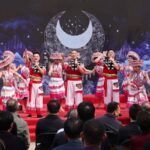
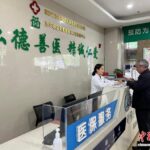
On December 15, 2025, the China-Singapore Bilateral Cooperation Mechanism Meeting was held in Chongqing. This is the highest-level mechanism platform for coordinating cooperation across various fields between China and Singapore. The fact that a meeting of such a high level was held in Chongqing is naturally related to the third inter-governmental cooperation project between China and Singapore—the China-Singapore (Chongqing) Demonstration Initiative on Strategic Connectivity (hereinafter referred to as the Chongqing Connectivity Initiative).
Since its official launch in Chongqing in 2015, the Chongqing Connectivity Initiative has completed ten years, with a cumulative total of 347 government and commercial cooperation projects signed, amounting to $26 billion. It has also explored and formed 33 pioneering and distinctive institutional opening-up achievements.
Beyond these “tangible results,” the Chongqing Connectivity Initiative also embodies “soft connectivity.” This “soft connectivity” acts like invisible bridges, bringing Chongqing and Singapore closer together across time and distance.
The Bridge of Standards
The Key to New Energy Vehicle Exports
In November of this year, a batch of new energy commercial vehicles, the EQ2, rolled out of the gates of Qingling Motors and headed for Singapore. This made Qingling the second commercial vehicle brand in China and the first from Chongqing to enter the Singaporean market, following BYD.
This was not a simple export of goods, but a “reshaping” of standards.
In March 2024, facilitated by the Chongqing Connectivity Initiative Administration, Qingling Motors, Chongqing Nuoxin, and Singapore’s Motorway company joined hands, with the clear goal of helping Qingling’s new energy vehicles enter the Singaporean market. The Singaporean automotive market has high entry requirements regarding regulations, safety, and performance. For Qingling to enter this market, it was not as simple as switching from left-hand to right-hand drive.
Qingling began making changes from the initial design phase, fully aligning its research, development, and testing with EU certification standards. The president of Motorway explained that the Qingling Group was responsible for tackling technical challenges, immediately raising any issues encountered, with Motorway providing assistance. After eighteen months, Qingling finally obtained EU standard certification, meeting Singapore’s roadworthiness standards.
This story illustrates that for “Made in Chongqing” products to better reach overseas markets, they must align with international standards. Singapore serves as the best “platform” for Chongqing to access these “standards.”
A relevant official from the Chongqing Connectivity Initiative Administration stated that Singapore has stringent standards in many fields. Leveraging the “soft connectivity” behind the Chongqing Connectivity Initiative, Chongqing can more easily align with international rules and high-level certification standards, thereby improving itself and allowing “Made in Chongqing” products to reach the global market more smoothly.
This concept has also been validated in the export of Chongqing’s meat products.
Regarding meat import standards, Singapore is globally recognized as being in the most stringent “first tier.” Many of Chongqing’s meat product enterprises export to over ten countries and regions worldwide but had not entered Singapore.
Starting in 2023, relying on the Chongqing Connectivity Initiative and the China-Singapore (Chongqing) Agricultural Cooperation Plan, Chongqing continuously communicated with Singapore’s Ministry of Trade and Industry regarding meat product exports. In September 2024, the Singapore Food Agency formally replied, recognizing the regional access application materials submitted by Chongqing, and conducted a food safety system verification for the Chongqing region in November.
To pass the verification, departments including the Municipal Commerce Commission, Chongqing Customs, and the Municipal Agricultural Commission stationed personnel at the enterprises to help them improve production lines and processes. Ultimately, two representative enterprises passed the verification and were approved to export meat products to Singapore in March of this year.
“Now, it’s much easier for us to undergo access certification from other countries,” said the chairman of one of the verified companies, Chongqing Dejia Meat Technology Development Co., Ltd. He stated that through this process, the company enhanced its production capacity and technical standards. In June of this year, the company signed a cooperation agreement with the Singaporean side, with the expected value of its products exported to Singapore reaching $10.8 million by 2026.
The Bridge of Dialogue
Enterprises from Both Sides Explore Cooperation Opportunities
In March 2025, over 30 Singaporean enterprises involved in finance, trade, technology, education, and other fields came to the Chongqing Lianglu Cuntan Free Trade Port Zone to explore cooperation opportunities.
The Singapore Chinese Chamber of Commerce & Industry was the organizer of this event.