As one of the first pilot cities for the coordinated development of smart city infrastructure and intelligent connected vehicles, Beijing is advancing the construction of the “Smart City + Smart Mobility” 4.0 phase. This includes giving traffic intersections the ability to autonomously perceive and analyze in real time, making traffic lights increasingly “smart.” The smart traffic scenario piloted in Haidian District last year has now been scaled up for implementation this year.
On a display screen at a technology company in Beijing’s Haidian District, it is visually evident that the “Smart City + Smart Mobility” traffic intelligent agent is optimizing traffic light timing at intersections in real time.
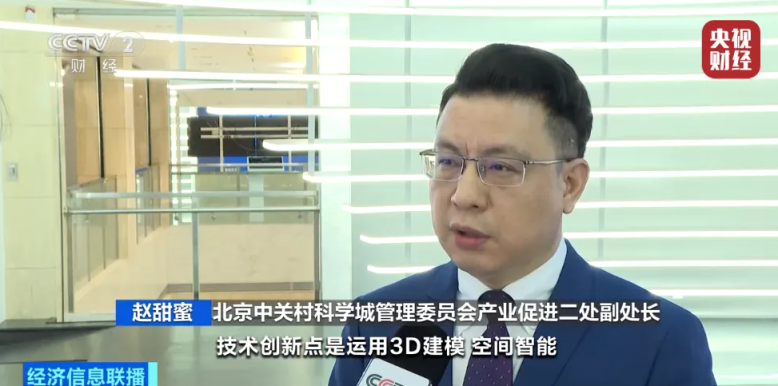
Deputy Director of the Second Division of Industrial Promotion at Beijing Zhongguancun Science City Management Committee, Zhao Tianmi: The technological innovation lies in applying 3D modeling, spatial intelligence, digital twin, and other technologies to create digital twins of road traffic participants, including vehicles and pedestrians. AI cameras then capture road conditions in real time with precision, and artificial intelligence algorithms perform accurate calculations to control traffic lights via AI, achieving a shift from “cars watching lights” to “lights watching cars.”

In addition to making traffic lights smarter, this smart traffic system has also upgraded traffic enforcement. The enforcement model has shifted from “single-point capture” to “full-area automatic tracking.” For example, when dealing with illegal U-turns, traditional single cameras are easily affected by lighting, distance, or obstructions, often failing to capture license plates clearly, creating enforcement blind spots. The new multi-camera stitching technology can lock onto the same vehicle based on its continuous trajectory, cross-referencing camera feeds to capture license plates. The 3D trajectories generated by AI technology make violation detection more efficient and accurate, significantly reducing enforcement costs.