United Nations: South Sudan on the brink of famine as fighting escalates
Tom Fletcher, UN Under-Secretary-General for Humanitarian Affairs and Emergency Relief Coordinator, warned that South Sudan stands at a “dangerous crossroads” as the specter of famine grows, calling for urgent action to avert what he described as the “collapse” threatening the country.
Speaking in a briefing to the Security Council, Fletcher said that steps must be taken to “prevent South Sudan from sliding into widespread famine and general collapse,” noting that “the grip of hunger is tightening across all of South Sudan.”
The UN official explained that the dry season, extending until the end of July, threatens to push segments of the population in the country’s ten states to emergency levels of food insecurity, adding that more than 7.5 million people will need food assistance this year.
These warnings came after a week-long field visit by Fletcher to South Sudan, during which he expressed concern that his next briefing to the Security Council might include an official declaration of famine.
He noted that areas around Akobo town in Jonglei State have seen “looting of humanitarian compounds and destruction of nutrition centers,” while more than 140,000 people in the region are in “critical need of assistance.” Fletcher warned that expected continued flooding would further complicate the situation by isolating entire communities and undermining their livelihoods “once again.”
Fletcher urged the Security Council to press for ensuring unimpeded humanitarian access, increasing flexible funding, and demanding that all parties fully respect international humanitarian law and protect civilians and infrastructure.
Civilians Pay the Price
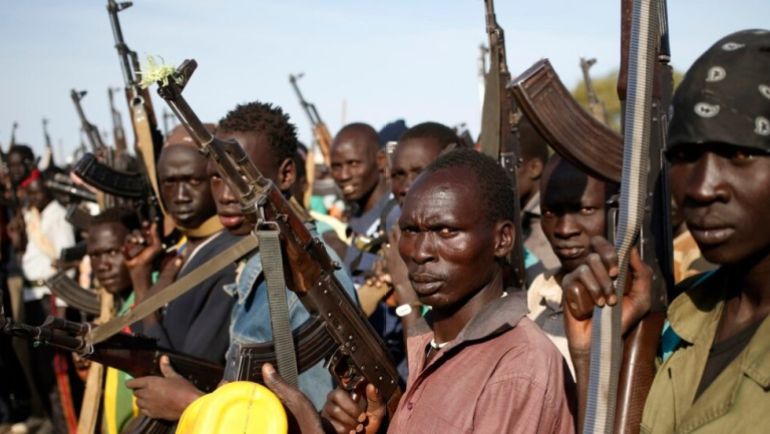
Meanwhile, the head of the UN Mission in South Sudan (UNMISS), Anita Kiki Gbeho, told the Security Council that “civilians continue to bear the brunt” of escalating clashes between the South Sudan People’s Defense Forces and the opposition Sudan People’s Liberation Army, particularly in Jonglei State.
Fighting in the country escalated late last year, about seven years after the peace agreement that ended five years of conflict in 2018. In December, a coalition of opposition forces seized government positions in Jonglei State, prompting a military operation in late January that forced more than 280,000 civilians to flee the area.
As the Security Council considers extending the mandate of UNMISS, which expires on April 30, Gbeho acknowledged that “the scale and urgency of needs on the ground are not yet matched by the required level of sustained commitment and investment that the joint effort to put the country on a path to sustainable peace demands.”
Berlin
Berlin, the capital of Germany, is a city with a rich and turbulent history, having been a center of the Prussian Kingdom, the German Empire, and a key battleground during World War II. Post-war, it was divided by the Berlin Wall until 1989, symbolizing the Cold War divide, and later reunified to become a vibrant cultural and political hub. Today, Berlin is known for its diverse art scene, historic landmarks like the Brandenburg Gate, and its role as a symbol of reconciliation and modernity.
Foreign Ministry in Berlin
The German Foreign Ministry in Berlin, officially located at the Werderscher Markt, has a complex history tied to the country’s divided past. Its main building, originally constructed in the 1930s for the Reichsbank, later served as the headquarters for the East German government. After German reunification, the site was renovated and has housed the Federal Foreign Office since 1999, symbolizing modern Germany’s diplomatic role.
United Nations (UN)
The United Nations (UN) is an international organization founded in 1945 after World War II to promote peace, security, and cooperation among nations. Its headquarters in New York City serves as a global forum for diplomacy, with key bodies like the Security Council and General Assembly addressing issues from conflict resolution to human rights. The UN replaced the League of Nations and has since grown to include 193 member states, working through specialized agencies such as UNICEF and the WHO.
Security Council
The United Nations Security Council is one of the six principal organs of the United Nations, established in 1945 after World War II to maintain international peace and security. It has the authority to impose sanctions, authorize military action, and adopt binding resolutions on member states. The Council consists of five permanent members (the United States, the United Kingdom, France, Russia, and China) with veto power, along with ten rotating non-permanent members elected for two-year terms.
South Sudan
South Sudan is the world’s youngest nation, having gained independence from Sudan on July 9, 2011, after decades of civil war. Its cultural heritage is deeply rooted in diverse ethnic groups, such as the Dinka and Nuer, who maintain traditional customs and languages. Despite ongoing challenges with conflict and development, the country is known for its rich natural resources, including the vast Sudd wetland and the White Nile.
Jonglei State
Jonglei State is a region in South Sudan, known for its vast wetlands and the Sudd swamp, one of the world’s largest. Historically, it was a major site of conflict during the Second Sudanese Civil War and has faced significant challenges, including tribal violence and flooding. The state is named after the Jonglei Canal, a partially constructed project intended to drain the Sudd for irrigation, which remains incomplete due to political and environmental issues.
Akobo town
Akobo is a town in the Greater Upper Nile region of South Sudan, located near the border with Ethiopia. Historically, it served as a key trading post and was the site of a significant battle during the Second Sudanese Civil War in 1987, where the Sudan People’s Liberation Army (SPLA) clashed with government forces and local militias. Today, Akobo remains a remote area affected by ongoing conflict and humanitarian challenges, with its population relying on subsistence farming and cross-border trade.
United Nations Mission in South Sudan (UNMISS)
The United Nations Mission in South Sudan (UNMISS) was established in July 2011, shortly after South Sudan gained independence, to support peace and security in the new nation. Its mandate was expanded during the civil war that erupted in 2013, focusing on protecting civilians, facilitating humanitarian aid, and monitoring human rights. UNMISS continues to operate amid ongoing instability, working to foster lasting peace and stability in South Sudan.