Oil-rich Libya sinks into poverty amid monopoly of power and wealth
In the mornings of Libyan cities, the same scene repeats with almost no change. Old cars stand in front of schools, exhausted fathers wait for their children between the start and end of the school day, and faces are weighed down by anxiety for tomorrow.
The scene appears ordinary on the surface, but at its core, it reveals a much larger story: the story of a country rich in resources whose citizens live in hardship, an economy controlled by monopolistic and corrupt networks, and a state whose institutions are unable to convert its vast resources into a dignified life for its people.
Over more than a decade, neither the outgoing government nor the Presidential Council has succeeded in presenting a model of governance capable of addressing the economic and social collapse. In fact, the policies followed in recent years have contributed to deepening the crisis and turning Libya into a fragile economy dependent on oil rents without any real reform.
And while oil exports continue to flow, Libyans increasingly feel that the country’s wealth does not reach them, and that the state, which was supposed to be an umbrella for their protection, has become an additional burden on their daily lives.
This reality is directly reflected in the daily life of families. Tables that were abundant years ago have become more modest, and purchasing power has declined to unprecedented levels.
One citizen in Tripoli, a government employee in his mid-forties, says:
“We no longer think about improving our lives. All we want now is to live with dignity and provide food for our children.”
In the city of Benghazi, a retired teacher says:
“The state talks about huge budgets, but we see nothing of it in our lives.”
These daily testimonies reflect the large gap between official rhetoric and the reality of living conditions.
A fragile economy and a market affected by rumors
The economic imbalance is not limited to the standard of living alone; it extends to the very structure of the market.
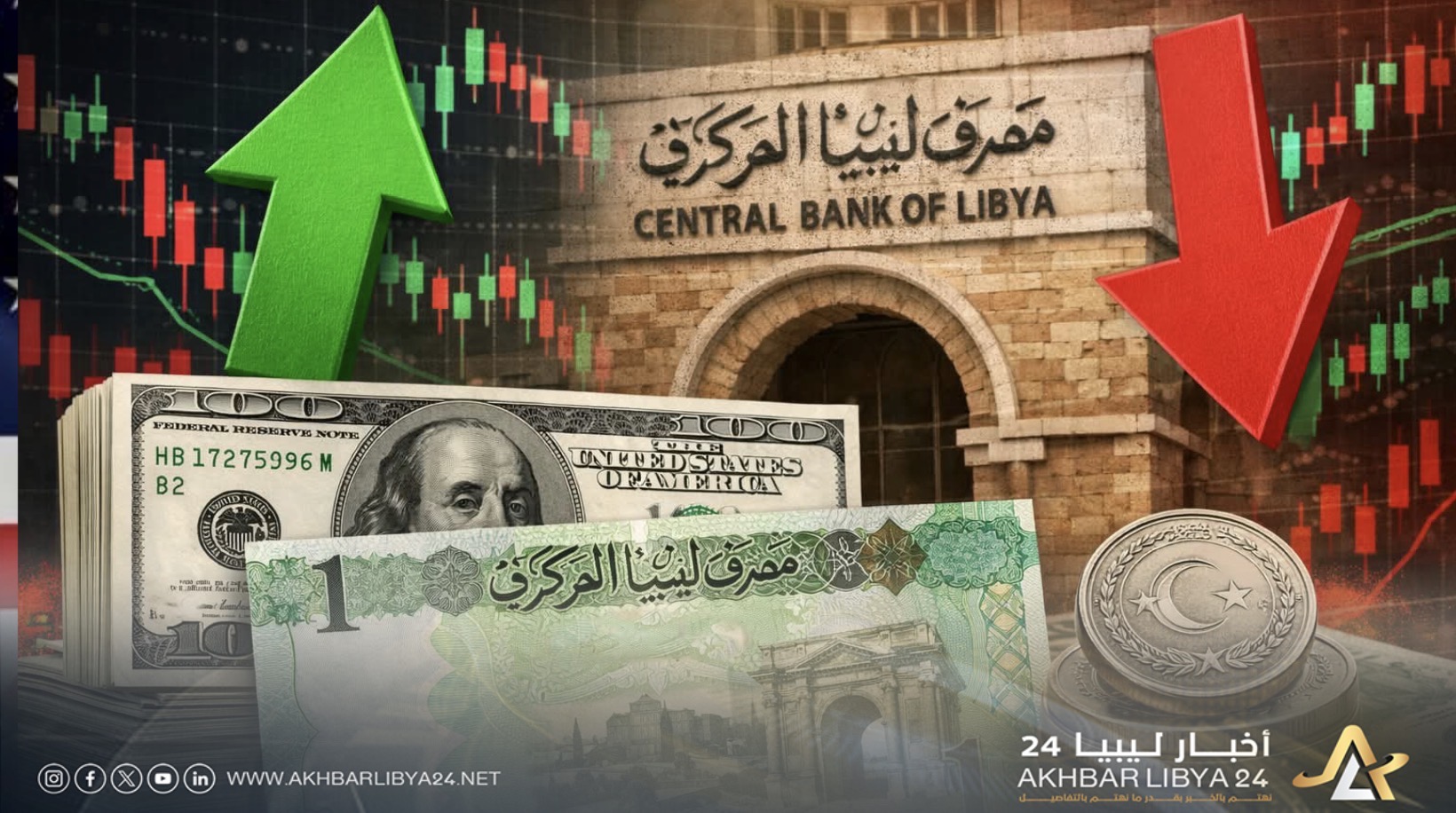
The parallel currency market in Libya has become fragile to an unprecedented degree.
The mere spread of a set of images or rumors can lead to sharp movements in the exchange rate within a few hours.
Financial speculation has become one of the most dangerous manifestations of economic chaos, described as a destructive activity no less dangerous than administrative corruption and manipulation of financial credits.
This situation reflects the absence of clear and capable monetary policies to regulate the market, as well as weak oversight of the movement of funds and credits.
A trader in the Misrata market says:
“Every day there is a different price, and no one knows where the economy is heading.”
A small business owner says:
“You cannot plan for any business when the currency price is so volatile.”
The salary scandal: The Libyan retiree between economic humiliation and betrayal
One of the most controversial issues in the Libyan economic scene is the level of salaries, especially pensions for retirees.
The monthly pension of a retiree, who spent his life in the service of the state, does not exceed the equivalent of about one hundred dollars.
This figure is not enough to cover
<div class="my-4 p-4 rounded-lg shadow-md bg-blue-50