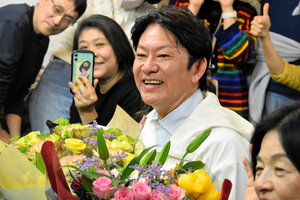
In the mayoral election held on the 12th, independent newcomer and kindergarten director Kenichi Yoshida (59) won his first term, defeating former metropolitan assembly member Kohei Ojima (37) and company executive Kyohei Mikami (43).
Ojima had been endorsed by several major political parties. For one of these parties, this marks another defeat for a recommended candidate in Tokyo, following a mayoral election in March.
Yoshida campaigned as a “completely independent” candidate without party endorsement, stating, “I want to fairly and impartially listen to everyone’s voices.” His campaign was supported by several citizen groups. On the contentious issue of rebuilding the ward-operated art museum, he took a negative stance, arguing, “Amidst the current situation, there are more pressing matters such as child-rearing support and housing assistance that must be addressed first.”
Ojima had received the endorsement of the incumbent mayor and was recommended by several parties. He also received full support from his former boss, for whom he once worked as a secretary, but it was not enough.
Kyohei Mikami (43) failed to gain traction.
Final Vote Count
Elected 123,164 Kenichi Yoshida 59 Ind New (1)
90,135 Kohei Ojima 37 Ind New
6,811 Kyohei Mikami 43 Ind New
*Number in parentheses indicates times elected.
Ward-Operated Art Museum
A ward-operated art museum is a local public art institution managed by a municipal ward or district government, rather than a national or prefectural authority. These museums typically focus on collecting and exhibiting works related to the area’s local history, artists, and community culture. They were often established in the post-war period in Japan as part of efforts to promote cultural accessibility and regional identity at a grassroots level.
Ward-Operated Art Museum
A ward-operated art museum is a local public art institution managed by a municipal ward or district government, rather than a national or prefectural authority. These museums typically focus on collecting and exhibiting works related to the area’s history, culture, and artists, serving as community cultural hubs. Their history is often tied to post-war Japan’s cultural policy, where local governments established such museums from the mid-20th century onward to promote regional identity and public access to the arts.
Ward-Operated Art Museum
A ward-operated art museum is a local public art institution managed by a municipal ward or district government, rather than a national or prefectural authority. These museums typically focus on collecting, preserving, and exhibiting works related to the area’s local artists, history, and community culture. They emerged in Japan, particularly in post-war Tokyo, as a way for wards to foster local identity and make art accessible to residents.
Ward-Operated Art Museum
A ward-operated art museum is a community-focused public gallery typically funded and managed by a local city ward or district. These museums often showcase regional artists and collections, with histories rooted in post-war Japan’s cultural democratization, where local governments established such institutions to make art accessible to residents. They serve as vital cultural hubs, preserving and promoting local artistic heritage.
<h3
ward-operated art museum
A ward-operated art museum is a local public art institution managed by a municipal ward or district government, rather than a national or prefectural authority. These museums typically focus on collecting, preserving, and exhibiting works related to the area’s local artists, history, and community culture. They emerged in Japan, particularly in Tokyo’s special wards, as a way to foster regional cultural identity and provide accessible art education following post-war administrative reforms.