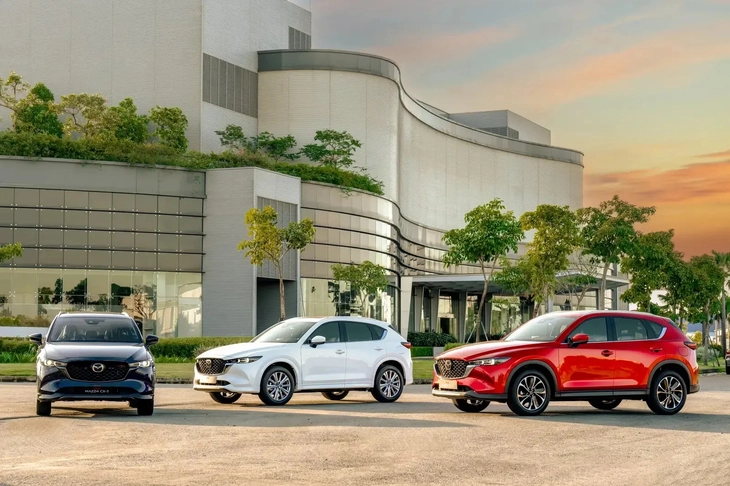
If the April promotion is factored in, the starting price of the Mazda CX-5 becomes more competitive, even approaching and surpassing the advantage compared to some B-segment SUVs on the market.
Mazda Vietnam has unexpectedly added a new version for the Mazda CX-5 called the 2.0L Deluxe. This version will become the standard, while the previous standard version is now named the 2.0L Deluxe Optional.
The Mazda CX-5 2.0L Deluxe has a listed price of only 699 million VND, while the 2.0L Deluxe Optional remains at 749 million VND. With this price, the CX-5 becomes the C-segment SUV with the most accessible starting price on the market.
| Version | Price |
|---|---|
| CX-5 2.0L Deluxe | 699 million VND |
|
CX-5 2.0L Deluxe Optional |
749 million VND |
|
CX-5 2.0L Luxury |
789 million VND |
|
CX-5 2.0L Premium |
829 million VND |
|
CX-5 2.0L Premium Sport |
849 million VND |
|
CX-5 2.0L Premium Exclusive |
869 million VND |
|
CX-5 2.5L Signature Sport |
959 million VND |
|
CX-5 2.5L Signature Exclusive |
979 million VND |
According to sales consultation at a Mazda dealership, the difference between the Deluxe and Deluxe Optional versions of the CX-5 is mainly in equipment. Specifically, the higher version is supplemented with heat-insulating film, floor mats, a first aid kit, roof rails, dual exhaust tips, and a hood strut, while the 699 million VND version only has floor mats and a hood strut.
Not only that, in April, customers buying the car receive an additional 10 million VND discount, meaning the actual price is only 689 million VND. Furthermore, the remaining versions also receive discounts of up to 43 million VND.
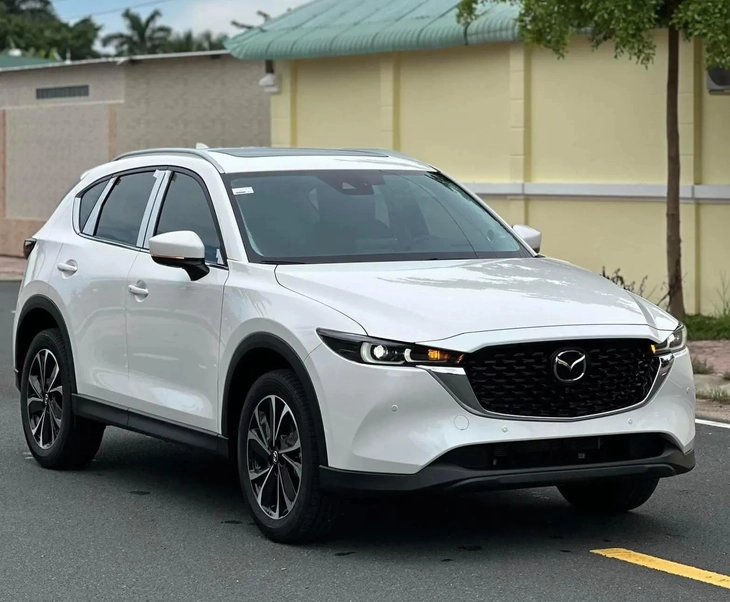
The new price is expected to create more momentum in the CX-5’s sales race. With a starting price from 699 million VND (actually 689 million VND), the model not only widens the gap with competitors in the same segment but also puts pressure on the B-segment SUV group like the Mitsubishi Xforce, Hyundai Creta, or Toyota Yaris Cross. In fact, the CX-5 even creates direct competitive pressure on the CX-30 – a model from the same brand with a similar selling price.
Regarding business results, in March, 1,531 CX-5 units were delivered to customers, ranking third in the segment. In total for Q1 2026, the CX-5 temporarily leads the segment with sales of 4,643 units.
In the late stage of its life cycle, although it does not possess too many outstanding points, the Mazda CX-5