Kondratyev and Lyubimova discussed the reconstruction of the Krasnodar Circus.
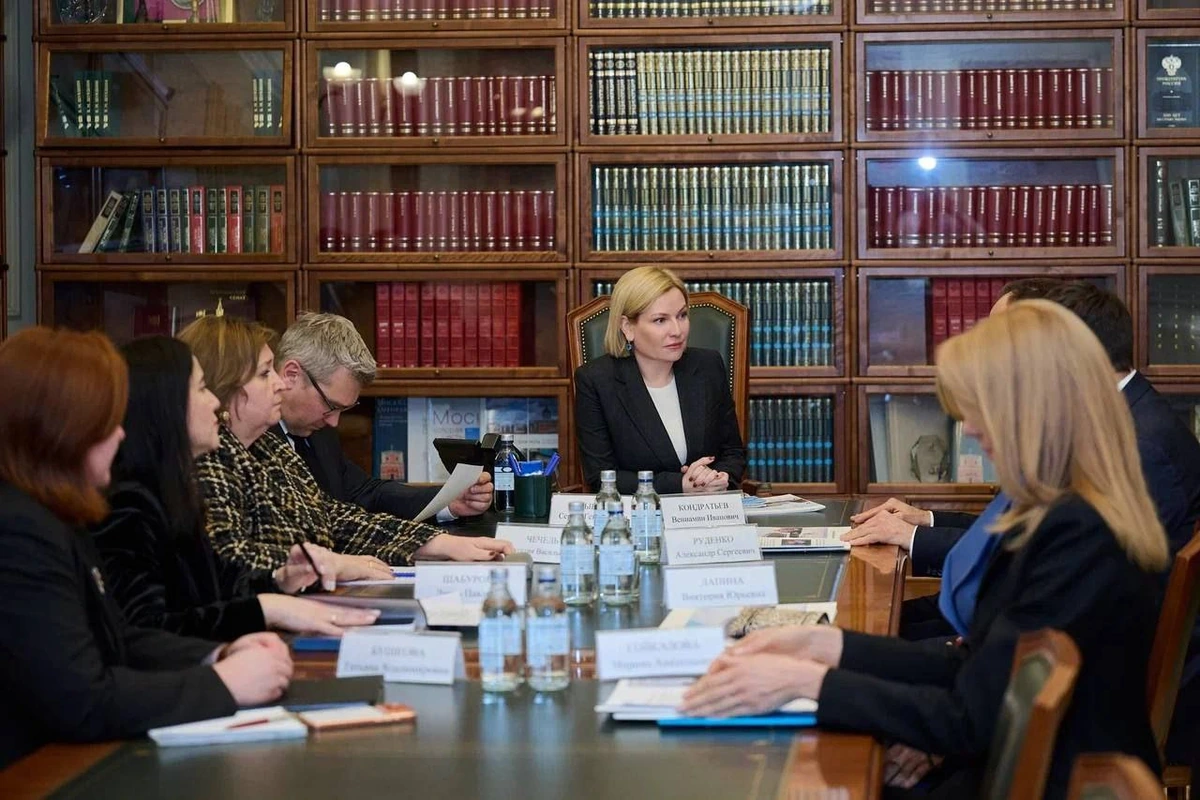
On February 20, the Governor of Krasnodar Krai met with the Minister of Culture of the Russian Federation in Moscow.
During the meeting, the Governor spoke about the development of the cultural sector in the region and thanked the Minister for her attention to the region. The meeting was also attended by the Vice-Governor of the region and the Minister of Culture of Kuban.
“Krasnodar Krai demonstrates consistent development of cultural infrastructure. Our common task is to ensure equal access for the region’s residents to modern cultural institutions and to preserve its unique heritage,” noted the Minister of Culture.
The Governor noted that Krasnodar Krai is one of the country’s major cultural centers, with 2.5 thousand various rural cultural centers, theaters, museums, libraries, and children’s art schools operating. As part of the national project “Culture,” 20 model libraries have been opened and 76 children’s art schools have been equipped.
“Over the past 10 years, we have increased state support for the repair and equipment of cultural facilities by 140 times — from 15 million in 2015 to 2 billion in 2025. In total, we allocate 20 billion rubles annually for cultural development,” reported the head of Kuban.
The Governor reported to the Minister of Culture on the renovation of the region’s iconic cultural sites, including the recently opened Defender of the Fatherland Theater in Krasnodar and the large-scale restoration of the “Malaya Zemlya” memorial in Novorossiysk.
The meeting also discussed possible methods and mechanisms for financing the reconstruction of the Krasnodar Circus and the Winter Theater in Sochi.
The reconstruction of the Krasnodar Circus is estimated at 7.3 billion rubles. The building was closed in the winter of 2023. The reconstruction will take about 48 months, and the circus is planned to be reopened in 2029.
Krasnodar Circus
The Krasnodar Circus is a prominent cultural institution in southern Russia, first established in 1970. It is housed in a distinctive modern building designed to resemble a giant circus tent, and it has hosted generations of performers in traditional circus arts like acrobatics, animal acts, and clowning. As a key venue in a region with a strong circus tradition, it continues to be a major center for family entertainment and performing arts in the city of Krasnodar.
Defender of the Fatherland Theater
The Defender of the Fatherland Theater is a major cultural venue in Moscow, Russia, primarily serving the Russian Armed Forces. It was established in 1929 as the Central Theater of the Red Army, with its iconic building constructed in the 1930s in the shape of a five-pointed star. Today, it hosts a wide repertoire of plays, operas, and ballets, maintaining its deep historical connection to the Russian military.
Malaya Zemlya memorial
The Malaya Zemlya memorial is a Soviet-era monument in Novorossiysk, Russia, commemorating the fierce seven-month defense of a small beachhead by Soviet troops against German forces during World War II (1942-1943). The striking concrete monument, shaped like the bow of a landing ship, was opened in 1982 and contains a museum inside dedicated to the heroes of the battle. It remains a major landmark honoring the resilience and sacrifice of the Red Army soldiers in the Battle of the Caucasus.
Winter Theater
The Winter Theater, located in Sochi, Russia, is a historic cultural landmark built in 1937 in the grand Stalinist Empire style. It was originally designed as a premier venue for concerts and performances, hosting many significant Soviet-era cultural events. Today, it remains an active theater and a notable architectural symbol of the city’s heritage on the Black Sea coast.
Krasnodar Krai
Krasnodar Krai is a federal subject and historical region in southern Russia, located on the fertile Kuban Plain between the Sea of Azov and the Caucasus Mountains. Historically part of the Kuban Cossack Host, its territory was formally incorporated into the Russian Empire in the late 18th century following conflicts with the Ottoman Empire. Today, it is a major agricultural, industrial, and tourism center, known for its Black Sea resorts like Sochi.
Kuban
Kuban is a historical and geographical region in southern Russia, centered around the Kuban River and primarily encompassing the Krasnodar Krai territory. Historically, it was a contested frontier, inhabited by Circassian peoples before coming under the control of the Russian Empire in the late 18th and 19th centuries, later becoming a major Cossack settlement area. Today, it is known as a vital agricultural region and a popular tourist destination for its Black Sea resorts and unique blend of Russian and Cossack cultural traditions.
Novorossiysk
Novorossiysk is a major port city on Russia’s Black Sea coast, founded in 1838 as a military fortification during the Russian Empire’s expansion. It gained prominence for its strategic naval importance and later became a crucial hub for cement production and grain exports. The city is also a noted historical site for the fierce battles fought there during World War II, particularly the defense of the “Malaya Zemlya” bridgehead.
Sochi
Sochi is a major resort city on Russia’s Black Sea coast, historically developed as a premier health and vacation destination under the Soviet Union. It gained significant global recognition after hosting the 2014 Winter Olympics, which led to extensive modern infrastructure development. The surrounding region also features the UNESCO-listed Western Caucasus mountains and was historically part of ancient Colchis.