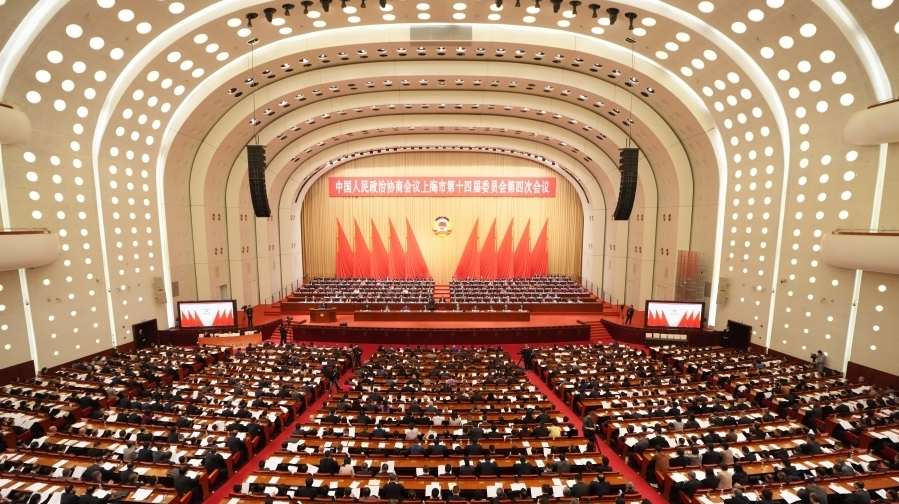
The 4th Session of the 14th Shanghai Municipal Committee of the Chinese People’s Political Consultative Conference Opens, Uniting Efforts to Support a Strong Start for the 15th Five-Year Plan.
15 overseas Chinese actively offered suggestions on topics such as enhancing Shanghai’s “five centers,” strengthening cultural soft power, and optimizing the business environment, contributing “overseas Chinese wisdom” to Shanghai’s construction as a modern international metropolis.
At the fourth session of the 16th Shanghai Municipal People’s Congress, the topic of building a fertility-friendly society garnered significant attention.
Currently, the publishing industry is undergoing a profound transformation from “form iteration” to “ecological restructuring.” “High-quality content is the foundation of the publishing industry and the core key to breaking through the dilemma of homogenization.”
Over the past year, Shanghai formulated and implemented cultivation plans for future industries in areas such as brain-computer interfaces, quantum computing, silicon photonics, and 6G. This year, there will be a strong push to cultivate and develop future industries like brain-computer interfaces and fourth-generation semiconductors.
At the ongoing Shanghai Two Sessions, topics related to artificial intelligence (AI) have drawn the joint attention of members of the Shanghai Municipal Committee of the Chinese People’s Political Consultative Conference and deputies to the Shanghai Municipal People’s Congress.
As an important track in China’s new round of technological revolution and industrial transformation, the low-altitude economy has been widely applied in various fields including short-distance delivery, medical emergency services, and firefighting and disaster relief.
Shanghai
Shanghai is a major global financial hub and port city on China’s east coast, which grew from a small fishing village into a treaty port opened to foreign trade after the First Opium War in the mid-19th century. Its iconic skyline, exemplified by the Bund’s historic buildings and Pudong’s modern towers like the Oriental Pearl, reflects its unique history as a crossroads of Eastern and Western influence. Today, it stands as a symbol of China’s rapid economic development and modern urban culture.
Shanghai Municipal People’s Congress
The Shanghai Municipal People’s Congress is the local legislative body of Shanghai, established in accordance with China’s constitutional framework. It serves as the highest organ of state power in the municipality, responsible for enacting local regulations, approving budgets, and overseeing the local government. Its modern form and functions were solidified following the adoption of China’s current constitution and the Organic Law of the Local People’s Congresses.
Shanghai Two Sessions
The “Shanghai Two Sessions” refers to the annual meetings of the Shanghai Municipal People’s Congress and the Shanghai Municipal Committee of the Chinese People’s Political Consultative Conference. These sessions are key political events where delegates discuss and decide on major local policies, economic plans, and social development initiatives for the city. Rooted in China’s political system, they reflect the local implementation of the national governance model, with their modern format evolving alongside Shanghai’s development since the late 20th century.
Shanghai Municipal Committee of the Chinese People’s Political Consultative Conference
The Shanghai Municipal Committee of the Chinese People’s Political Consultative Conference (CPPCC) is a key political advisory body in Shanghai, operating under the national CPPCC framework. It brings together representatives from various political parties, social organizations, and public figures to conduct political consultation, democratic supervision, and participation in the deliberation and administration of state affairs. Historically, such local committees were established following the founding of the national CPPCC in 1949, which played a pivotal role in the establishment of the People’s Republic of China.