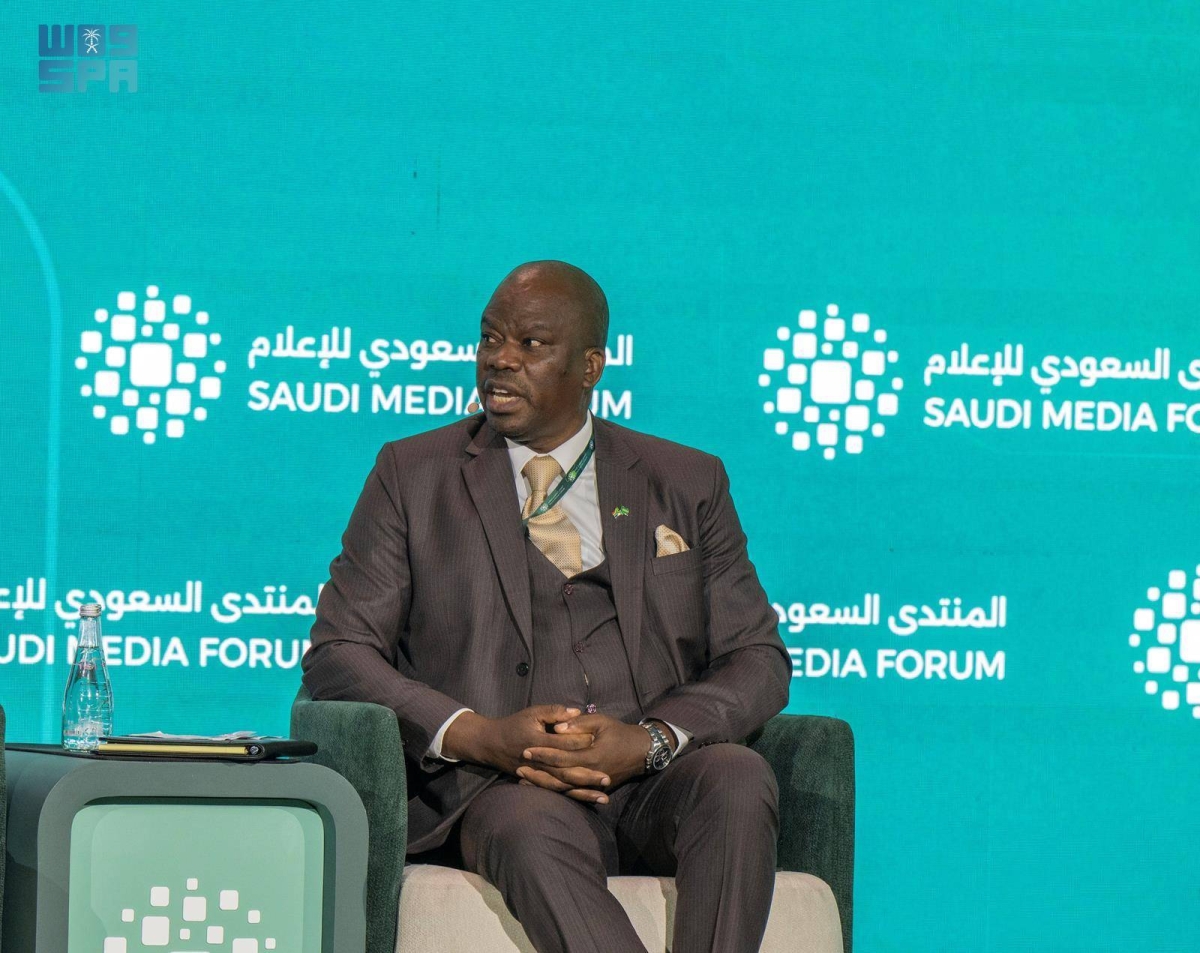
During the second day of the fifth edition of the Saudi Media Forum, a dialogue session titled “Diplomacy of Influence… Media and Image Shaping” was held. It discussed the role of media in crafting mental images and enhancing the soft power of nations, with the participation of a number of ambassadors accredited to the Kingdom.
It was stated that diplomacy has witnessed significant evolution, moving from its traditional framework to public diplomacy, confirming that “soft power” has become a primary tool for nations to introduce themselves and serve their political and economic interests.
It was explained that Saudi Arabia presents a prominent model in the diplomacy of influence through organizing international forums and investing in culture and sports, particularly football, which has contributed to extending Saudi presence across the world. It was emphasized that the success of media and diplomatic discourse depends on honesty and building trust, noting that digital media today makes exposing falsehood faster, and that only an honest narrative is capable of influencing and building a sustainable relationship with public opinion.
It was affirmed that the relationship between media and diplomacy is historical and has become more complex and influential in the age of modern communications and social media. It was clarified that media has never been merely a transmitter, but an active and influential player, pointing out that political action cannot be separated from managing media presence.
It was stressed that building a mental image and crafting an impression represent the essence of public and cultural diplomacy, explaining that delivering the right message to the right audience is the key to influence, and that art and national cuisine are among the effective tools of soft power.
It was clarified that mutual respect and dialogue form a fundamental pillar of diplomatic work, pointing out that the two main challenges facing diplomacy today are the spread of misinformation and the accelerated pace of modern media, compared to the nature of diplomatic work which is based on gradualism and building long-term relationships.
Saudi Media Forum
The Saudi Media Forum is an annual conference launched in 2019 in Riyadh, organized by the Saudi Journalists Association. It serves as a major platform for regional and international media professionals to discuss industry trends, innovations, and the evolving role of media in line with Saudi Arabia’s Vision 2030 transformation. The forum reflects the Kingdom’s focus on developing its media sector as part of its broader social and economic reforms.
Kingdom
The term “Kingdom” is too broad for a specific summary, as it could refer to a historical nation (e.g., the Kingdom of France), a modern constitutional monarchy (e.g., the United Kingdom), or a theme park (e.g., Magic Kingdom). In general, a kingdom is a sovereign territory ruled by a monarch, a form of government that was historically dominant across the world, with many evolving into modern nation-states or parliamentary democracies. For example, the United Kingdom has a history spanning the union of England, Scotland, Wales, and Northern Ireland, evolving from absolute monarchy to a constitutional monarchy after centuries of political development.
Saudi Arabia
Saudi Arabia is a modern nation-state founded in 1932 by King Abdulaziz Al Saud, unifying the Arabian Peninsula’s central regions. It is the birthplace of Islam, home to the religion’s two holiest cities, Mecca and Medina, which have been spiritual and pilgrimage centers for over 1,400 years. The country’s history and culture are deeply intertwined with its role as the custodian of these sites and its vast oil reserves, which transformed its economy and global influence in the 20th century.
international forums
“International forums” typically refer to global conferences or organizations where nations collaborate on shared issues, such as the United Nations or the World Economic Forum. Historically, they emerged prominently after World War II to foster diplomacy and collective problem-solving, though earlier examples like the League of Nations also laid groundwork. Today, they serve as key platforms for addressing challenges like climate change, security, and economic policy.
culture
“Culture” refers to the shared customs, arts, beliefs, and social institutions of a particular group of people, rather than a single physical place. Its history is the collective story of human development, evolving over millennia through language, tradition, and creative expression. It is embodied in sites like museums, temples, and festivals, which preserve and transmit this heritage across generations.
sports
“Sports” as a cultural concept refers to the global tradition of organized physical competition and recreation, with ancient roots in rituals, military training, and social cohesion, such as the Olympic Games in Greece. It has evolved into a fundamental aspect of modern society, encompassing professional leagues, international events, and community activities that reflect and shape cultural identities, economics, and politics.
football
“Football” as a cultural site refers not to a single location but to the global sport and its iconic stadiums, such as England’s Wembley or Brazil’s Maracanã, which serve as modern cathedrals for fans. The modern game originated in 19th-century England with the standardization of rules, but early ball games date back centuries in cultures worldwide. Today, it is the world’s most popular sport, deeply intertwined with national identity, community, and shared passion across continents.
national cuisine
“National cuisine” refers to the collective culinary traditions and dishes that are characteristic of a specific country, often shaped by its history, geography, and cultural exchanges. For example, Italian cuisine evolved from ancient Roman practices and later incorporated ingredients like tomatoes from the Americas, while Japanese cuisine was influenced by centuries of isolation and a deep respect for seasonal, local ingredients. These cuisines serve as a living record of a nation’s past, reflecting periods of trade, colonization, migration, and agricultural development.